India slams UN's failure to ban Pak terrorist Masood Azhar
08 Nov 2016
India has accused the UN Security Council, the UN's top decision-making body, for failure to come out of a time warp wrought on by politics of vested interests while demanding united action against Pakistan-based Masood Azhar, who heads the Jaish-e-Mohammed.
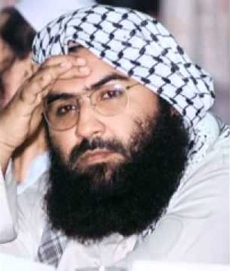 The UN Security Council, which has blacklisted the Jaish has failed to place Azhar, 48, on a list of individuals and groups linked to the al Qaeda or Islamic State.
India's Permanent Representative to the UN ambassador Syed Akbaruddin said the United Nations Security Council (UNSC) is taking a long time to consider whether to sanction leaders of terror organisations or not.
The UN must recognise the significance of the move, he said, in reference to India's efforts to get Jaish-e-Mohammad chief Masood Azhar banned by the UN.
Earlier, China had protracted the ''technical hold'' on the move to get Azhar banned by the UN. After the technical hold's validity lapsed last month, China again extended the hold by three months.
Twice this year, China, one of the five permanent members of the Security Council, blocked India's move to ban Azhar, who is responsible for two deadly terror attacks this year - on an air force base in Pathankot in January, and at an army camp in Uri in September. The attacks claimed the lives of 26 military personnel.
"While our collective conscience is ravaged everyday by terrorists in some region or another, the Security Council gives itself 9 months to consider whether to sanction leaders of organisations it has itself designated as terrorist entities," he said while slamming the Council's inability to sanction the leaders of terrorist organisations.
In April, China first placed a "technical hold" - effectively a veto - against Azhar's ban and then renewed it in September for another three months.
"The Security Council, stuck in its own time warp and politics, can only be described as working randomly on the basis of a mix of ad-hocism, scrambling and political paralysis," said the Indian envoy.
China looked hell bent on blocking action against the Pakistani terrorist when it indicated at a crucial meeting in Vienna, on Friday, that it will also not change its stand blocking India's membership of the Nuclear Suppliers Group, a 48-nation bloc that controls trade in sophisticated nuclear technology and material.
Akbaruddin felt that it was time to break the impasse to reform the unresponsive organisation to the current global situation.
The UNSC can be better said to be working on a mix of ad-hocism, scrambling and political paralysis. Need one say more about the urgency of the need for reform of this relic which has long been unresponsive to the needs of our time, he added.