Strait of Hormuz: how one chokepoint controls the global economy
By Axel Miller | 06 Apr 2026
Summary
- The Strait of Hormuz carries a critical share of global oil and gas supplies
- Disruptions can trigger immediate volatility in energy and financial markets
- The chokepoint remains central to geopolitical and economic stability
LONDON / DUBAI / WASHINGTON — April 6, 2026 — Few geographic locations carry as much economic weight as the Strait of Hormuz, a narrow maritime corridor that has become one of the most critical chokepoints in the global energy system.
Its significance extends beyond energy markets, shaping global trade flows, financial stability, and geopolitical strategy.
Connecting the Persian Gulf to the open ocean, the strait serves as a vital transit route for oil and liquefied natural gas exports from major producers in the Middle East. At its narrowest point, the passage is just a few dozen kilometers wide — yet it handles roughly one-fifth of the world’s oil and gas flows.
As geopolitical tensions rise in the region, the vulnerability of this corridor has once again come into focus. Even limited disruptions to shipping can ripple across global markets, affecting everything from fuel prices to inflation expectations.
A corridor that powers the world
The strategic importance of the Strait of Hormuz lies in its role as a gateway for energy exports. Countries including Saudi Arabia, Iraq, the United Arab Emirates, and Kuwait depend heavily on the route to transport crude oil to international markets.
Energy shipments moving through the strait are essential not only for Asia’s industrial economies but also for Europe and global supply chains more broadly. A sustained disruption would force rerouting, reduce available supply, and increase transportation costs.
While alternative pipelines exist, their combined capacity is limited and cannot fully replace maritime flows through the strait.
Shipping risk and security dynamics
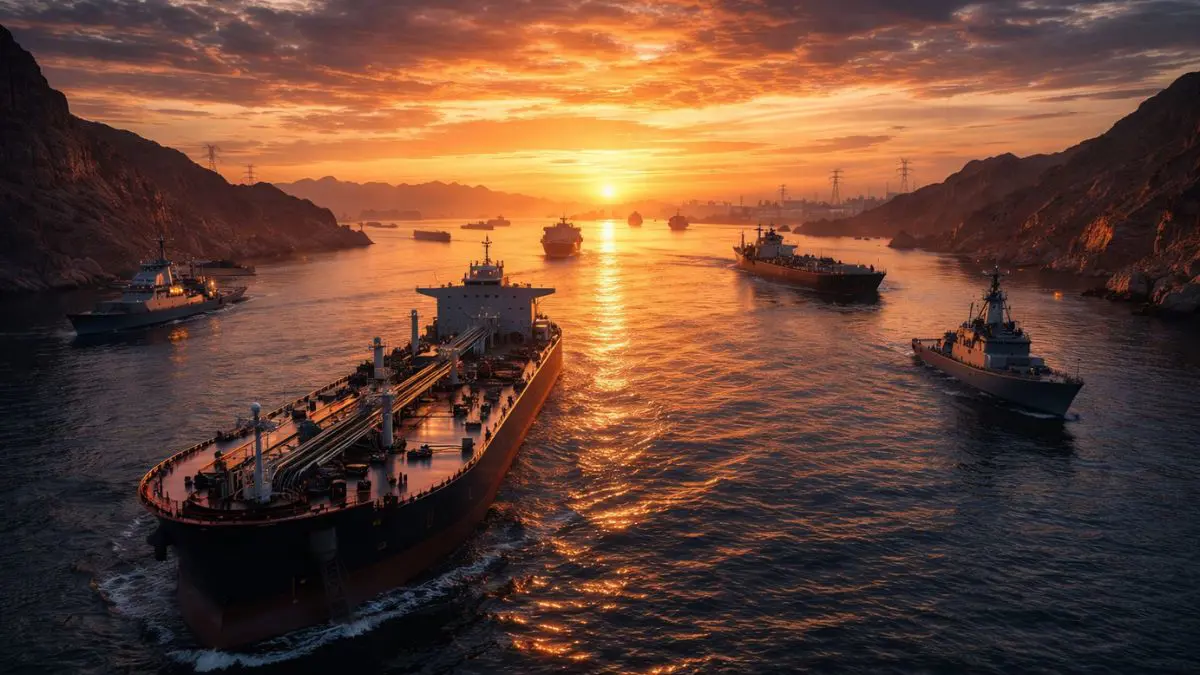
The narrow geography of the strait makes it particularly sensitive to geopolitical tensions. Commercial vessels must pass through designated shipping lanes, leaving little room for rerouting in the event of conflict or obstruction.
Periods of heightened tension have historically led to increased military presence in the region, with naval forces deployed to secure shipping routes. Insurance premiums for tankers often rise sharply during such periods, reflecting elevated risk.
Even without a full closure, disruptions such as delays, inspections, or localized incidents can slow the flow of shipments, tightening supply and amplifying market uncertainty.
Market impact: oil, inflation, and volatility
Because of its central role in global energy supply, the Strait of Hormuz has a direct impact on financial markets. Oil prices tend to react quickly to any perceived threat to the corridor, often rising sharply in response to geopolitical developments.
Higher energy prices can feed into broader inflation, affecting transportation, manufacturing, and consumer costs worldwide. For central banks, such shocks complicate monetary policy decisions, particularly in economies already dealing with price pressures.
Equity markets may also experience volatility, especially in sectors sensitive to energy costs, while energy producers and related industries may see short-term gains.
A geopolitical pressure point
Control over, or influence on, the Strait of Hormuz carries significant geopolitical weight. Regional powers view the corridor not only as an economic asset but also as a strategic lever.
Tensions involving Iran and other regional actors have repeatedly brought the strait into focus, highlighting its role as both a transit route and a potential flashpoint.
Global powers, including the United States and its allies, maintain a presence in the region to ensure freedom of navigation, underscoring the international importance of the waterway.
Why alternatives fall short
Efforts to reduce dependence on the Strait of Hormuz have included pipeline projects and diversification of energy sources. However, these alternatives face limitations.
Pipeline capacity is constrained, and many routes do not connect directly to major export terminals. Additionally, the global energy system remains heavily reliant on maritime transport, particularly for large-volume shipments.
As a result, the strait continues to function as an irreplaceable artery in the global economy.
Why this matters
- The Strait of Hormuz is a critical chokepoint for global energy supply
- Disruptions can rapidly impact oil prices and inflation
- Shipping risks affect global trade and insurance costs
- The region remains central to geopolitical stability
FAQs
Q1: What is the Strait of Hormuz?
It is a narrow waterway connecting the Persian Gulf to global shipping routes, used for transporting oil and gas.
Q2: Why is it so important?
It carries roughly 20% of the world’s energy supply, making it essential to global markets.
Q3: What happens if it is disrupted?
Oil prices can rise sharply, and supply chains may face delays and increased costs.
Q4: Are there alternatives?
Some pipelines exist, but they cannot fully replace the volume transported through the strait.
Q5: Who controls the strait?
The waterway lies between Iran and Oman, with international naval presence ensuring access.