Germany prepares Nvidia pact to advance industrial AI and robotics
By Cygnus | 16 Oct 2026
Summary
- Planned AI partnership: Germany is preparing a cooperation agreement with Nvidia to accelerate the adoption of artificial intelligence across its industrial sector.
- Focus on physical AI: The proposed initiative is expected to support AI tools for training robots and autonomous vehicles, alongside the development of advanced AI models for industrial applications.
- Investment plans: Reports indicate that the project could involve investments worth several hundred million euros, including public-sector funding. The final financial commitments remain subject to confirmation.
- SOOFI initiative: The agreement is expected to build on Germany’s Sovereign Open Source Foundation Models (SOOFI) initiative, which aims to develop large-scale AI models through collaboration among research institutions, universities and AI companies.
- Existing computing infrastructure: Germany already has an operational Industrial AI Cloud in Munich, developed by Deutsche Telekom with Nvidia and data-centre partner Polarise.
Germany prepares a new AI agreement with Nvidia
Germany is preparing a cooperation agreement with US chipmaker Nvidia to expand the use of artificial intelligence across its industrial economy. The initiative is expected to bring together the German government, Nvidia and additional industry partners to strengthen the country’s industrial AI capabilities.
According to reports published by Reuters on October 15 and 16, 2026, the proposed agreement is expected to be announced at the Invest in Germany conference in Berlin the following week. Nvidia chief executive Jensen Huang is expected to attend the event.
The planned cooperation is intended to address two main areas: physical AI technologies used to train robots and autonomous vehicles, and the development of powerful AI models for industrial applications.
German business newspaper Handelsblatt reported that the initiative could involve investments worth several hundred million euros. The reported plans include government support for computing capacity and AI model development. However, the final investment structure, implementation arrangements and partner commitments had not been fully confirmed in the reports available on October 16.
The proposed agreement reflects Germany’s efforts to strengthen its industrial competitiveness by integrating AI into manufacturing, engineering and other technology-intensive sectors.
Physical AI could support industrial automation
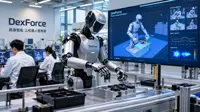
Physical AI refers to artificial intelligence designed to understand, simulate or interact with the physical world. It can be used to train robots, develop autonomous systems and simulate complex environments before technologies are deployed in real-world settings.
For manufacturers, these capabilities could support more advanced automation, improve the testing of robotic systems and help engineers assess production processes in virtual environments.
AI models designed for industrial use could also support engineering tasks, technical simulations and the analysis of complex manufacturing operations. Such applications are increasingly relevant to companies seeking to improve productivity and develop more sophisticated automated systems.
The proposed German-Nvidia cooperation is expected to provide a foundation for developing these technologies and the computing resources required to train them.
However, the practical impact will depend on the projects ultimately funded, the industrial partners involved and how the resulting AI systems are adopted by businesses. Specific commercial deployments and productivity gains have not yet been established.
SOOFI initiative forms part of Germany’s AI strategy
The proposed agreement is expected to build on SOOFI, which stands for Sovereign Open Source Foundation Models. The initiative was established in 2025 to support the development of large-scale AI models through cooperation among research institutions, universities and AI companies.
Its broader objective is to strengthen the development of AI models in Germany and Europe and support their use in research and industrial applications.
According to reporting by Handelsblatt, the proposed cooperation could help advance the development and training of additional SOOFI models. The work is expected to involve access to computing resources and the development of AI models suited to industrial requirements.
The project also connects with the wider European effort to strengthen digital sovereignty: the ability to develop, operate and govern important digital technologies and infrastructure within Europe.
For Germany, developing its own AI models and expanding access to computing infrastructure could help businesses and research organisations build AI applications while retaining greater control over how sensitive data is handled.
The precise division of responsibilities among the government, Nvidia and participating companies will depend on the final agreement.
Germany’s existing Industrial AI Cloud provides computing capacity
Germany already has an operational AI computing facility that could support industrial AI research and development.
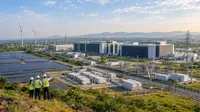
Deutsche Telekom officially launched its Industrial AI Cloud in Munich on February 4, 2026. The facility was developed with Nvidia and data-centre partner Polarise to provide high-performance computing resources for businesses, research institutions and public-sector organisations.
According to Deutsche Telekom, the infrastructure contains nearly 10,000 Nvidia Blackwell GPUs, including Nvidia DGX B200 systems and RTX PRO server GPUs. The company says the facility can deliver computing performance of up to 0.5 exaflops.
The cloud is designed to support AI workloads, including the development and training of models. Deutsche Telekom also says the infrastructure operates under data-protection, security and availability requirements on German soil.
The existing facility is relevant because training advanced AI models and developing physical AI applications require substantial computing resources. Access to such infrastructure can help research teams and industrial companies test and refine AI systems.
However, the existing cloud’s reported GPU count and computing performance should not be interpreted as new capacity promised under the proposed Nvidia agreement. Any additional infrastructure or computing commitments will need to be established through the final terms.
Nvidia’s technology could support German manufacturing
Nvidia supplies specialised chips and software used to train and operate many advanced AI systems. Its technology can support the computing-intensive workloads involved in developing foundation models, running simulations and training AI systems for robotics.
For German manufacturers, access to these capabilities could help accelerate research into industrial automation and AI-assisted engineering.
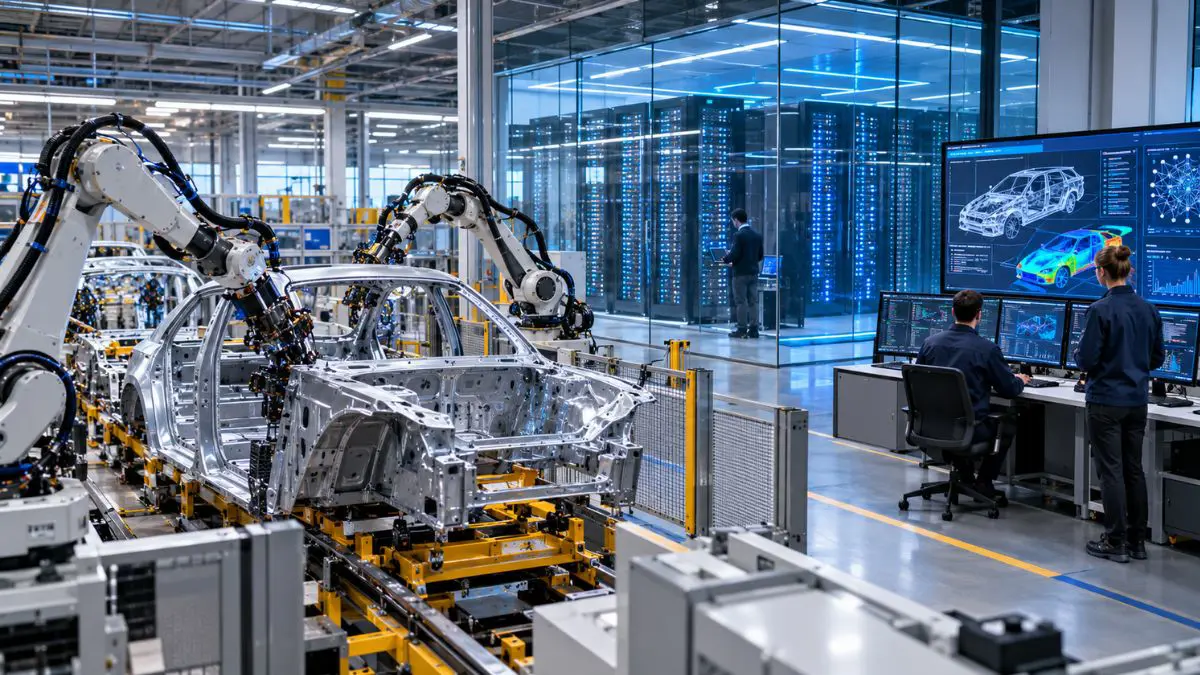
Germany’s industrial base includes companies operating in automotive manufacturing, machinery, engineering and other sectors where robotics and simulation are important. The proposed agreement could create opportunities to connect these industrial requirements with AI computing infrastructure and model development.
Handelsblatt reported that around a dozen German companies were expected to participate, including Siemens, Audi and Black Forest Labs. The final participant list and the responsibilities of individual organisations should be confirmed when the agreement is formally announced.
The initiative’s commercial significance will depend on whether the resulting technologies can be integrated into industrial workflows and deliver measurable benefits for participating businesses.
Digital sovereignty remains a strategic priority
Germany’s planned cooperation with Nvidia comes amid broader European efforts to strengthen domestic AI capabilities and reduce dependence on externally controlled digital infrastructure.
Access to computing power, AI models and specialist software has become an important consideration for countries seeking to develop competitive AI ecosystems. For industrial businesses, these resources can influence the speed and cost of deploying AI applications.
Developing local research capabilities and operating AI infrastructure within Germany could help organisations manage sensitive industrial data and build expertise in advanced AI technologies.
At the same time, cooperation with a major US technology provider highlights the balance European policymakers must strike between accessing established AI technology and building stronger domestic capabilities.
The proposed agreement could help connect Nvidia’s computing ecosystem with German research and manufacturing expertise. Its contribution to digital sovereignty will depend on the ownership and governance of the resulting capabilities, access arrangements and the extent to which AI models and applications can be developed and maintained within Europe.
Why this matters
Germany’s planned Nvidia agreement highlights the growing role of AI in industrial competitiveness. As manufacturers explore robotics, autonomous systems and AI-assisted engineering, access to computing infrastructure and specialised models is becoming increasingly important.
The initiative could strengthen collaboration between German industry, research institutions and AI technology providers. It may also help advance the SOOFI project and support the development of AI models for industrial applications.
For Nvidia, the proposed cooperation could expand the use of its technology in one of Europe’s major industrial economies. For German companies, the potential benefits include improved access to AI development resources and opportunities to test new automation technologies.
The outcome will depend on the final investment commitments, the projects selected and the ability of participating organisations to turn research into practical industrial applications.
Frequently asked questions
Q1: What is Germany’s proposed agreement with Nvidia?
It is a planned cooperation initiative intended to expand AI adoption in German industry, with a focus on physical AI, robotics, autonomous vehicles and advanced AI models for industrial applications.
Q2: How much investment could the agreement involve?
Reports indicate that the project could involve investments worth several hundred million euros. The final funding structure and commitments had not been fully confirmed as of October 16, 2026.
Q3: What is physical AI?
Physical AI involves AI systems that interact with or model the physical world. Applications include training robots, developing autonomous vehicles, industrial automation and simulating real-world environments.
Q4: What is SOOFI?
SOOFI stands for Sovereign Open Source Foundation Models. The initiative aims to develop large-scale AI models through collaboration among research institutions, universities and AI companies.
Q5: Does Germany already have an AI computing facility?
Yes. Deutsche Telekom launched its Industrial AI Cloud in Munich in February 2026. The company says it includes nearly 10,000 Nvidia Blackwell GPUs and provides computing performance of up to 0.5 exaflops.
Q6: Which German companies are expected to participate?
Handelsblatt reported that around a dozen German companies were expected to participate, including Siemens, Audi and Black Forest Labs. The final list and each company’s role require confirmation.
Q7: When is the agreement expected to be announced?
Reuters reported on October 16, 2026, that Germany was set to announce the cooperation agreement the following week at the Invest in Germany conference in Berlin. The final announcement and terms should be checked when officially released.