Houthi missile ambitions challenge Saudi air defenses and infrastructure
By Axel Miller | 16 Oct 2026
Summary
- Saudi infrastructure under attack: Houthi missile and drone strikes have targeted King Khalid International Airport in Riyadh and Saudi Aramco facilities, increasing security concerns and disrupting confidence in the kingdom’s investment environment.
- Missile production ambitions expand: Conflict Armament Research reported that the Houthis are seeking to develop advanced ballistic missiles using components sourced from China. The components appear to support efforts to manufacture a missile based on Iran’s Kheibar Shekan design, although the extent of operational deployment remains unclear.
- Air defense pressures grow: Saudi Arabia faces the challenge of protecting a large territory and critical infrastructure while regional conflict places additional pressure on missile-interceptor supplies.
- AI raises further security concerns: Anthropic reported that users in northern Yemen attempted to use Claude to support the development of guided weapons. The incident highlights the potential misuse of commercial AI tools, but does not establish that an operational hypersonic weapon was developed.
RIYADH, October 16, 2026 — A renewed wave of missile and drone attacks by Yemen’s Houthi movement has exposed the security challenges facing Saudi Arabia as it seeks to protect critical infrastructure, maintain aviation operations and sustain its position as an international investment destination.
Recent attacks have targeted King Khalid International Airport in Riyadh and facilities associated with Saudi Aramco, the kingdom’s state-controlled oil company. The incidents have intensified concerns about the ability of Saudi air defenses to protect widely dispersed civilian, military and energy assets amid escalating regional hostilities.
Reuters reported on October 15 that the attacks had highlighted vulnerabilities in Saudi Arabia’s defenses. Analysts cited a combination of Iranian military assistance, the Houthis’ growing ability to assemble weapons locally, diversified supply chains and pressure on regional interceptor stocks. These factors have contributed to the group’s expanding military capabilities.
The security situation also carries economic implications. Saudi Arabia’s Vision 2030 programme depends in part on attracting foreign investment, expanding non-oil industries and establishing the kingdom as a destination for international business. Attacks on airports and energy infrastructure can undermine those ambitions by increasing operational uncertainty for companies, airlines and investors.
Chinese components and expanding missile ambitions
A recent investigation by Conflict Armament Research (CAR) has drawn attention to the Houthis’ efforts to acquire components for more advanced ballistic missiles.
According to CAR’s October 2026 findings, Yemeni authorities intercepted shipments containing specialised components, raw materials and equipment that investigators linked to the group’s ambitions to manufacture advanced missiles. The shipments included components associated with a missile design resembling Iran’s Kheibar Shekan, which has a reported range exceeding 1,000 kilometres.
The findings suggest that the Houthis are seeking to expand their domestic weapons-production capabilities rather than relying exclusively on finished weapons supplied from abroad. Commercial supply networks can make it more difficult for authorities to identify and disrupt procurement, particularly when specialised equipment and materials move through international trade channels.
However, the evidence of procurement and manufacturing ambitions should not be confused with proof that the Houthis have completed and deployed a fully operational domestically manufactured version of the Iranian missile. The extent to which the components have been incorporated into a working weapons system remains an important distinction.
Reuters reported that Iran has provided the Houthis with weapons, funding and training over more than a decade. Analysts cited by the news agency said this assistance helped the group develop the technical knowledge needed to assemble and maintain drones and missiles locally.
The resulting capabilities may make it harder to contain the group through the interception of individual shipments alone. Disrupting procurement networks, tracking component transfers and limiting access to specialised military technology are likely to remain important parts of regional security efforts.
AI use in weapons development draws scrutiny
The Houthis’ expanding technical ambitions have also raised questions about the misuse of commercial artificial intelligence tools.
In September 2026, Anthropic reported that a group of users in northern Yemen had attempted to use its Claude AI system to support several weapons-development projects. The reported activities included work involving guided-weapon software and proposed missile systems, one of which included a hypersonic-glide-vehicle concept.
Anthropic said it identified the activity and blocked the accounts involved. Separate reporting indicated that the group had conducted a test of a guided rocket that appeared to fail. The available evidence does not establish that the users successfully developed an operational hypersonic weapon.
The episode illustrates a broader security concern: commercially available AI tools may be misused in attempts to reduce the time or expertise needed for certain technical tasks. It also demonstrates the limits of drawing conclusions about actual military capability from attempted development projects.
For governments and technology companies, the challenge is to prevent the misuse of commercial software while maintaining legitimate access to AI systems for research, business and other lawful purposes.
Saudi air defenses face a difficult protection task
Saudi Arabia must defend a large territory containing airports, oil facilities, military installations, coastal infrastructure and population centres. Protecting these sites requires multiple layers of surveillance, detection and interception.
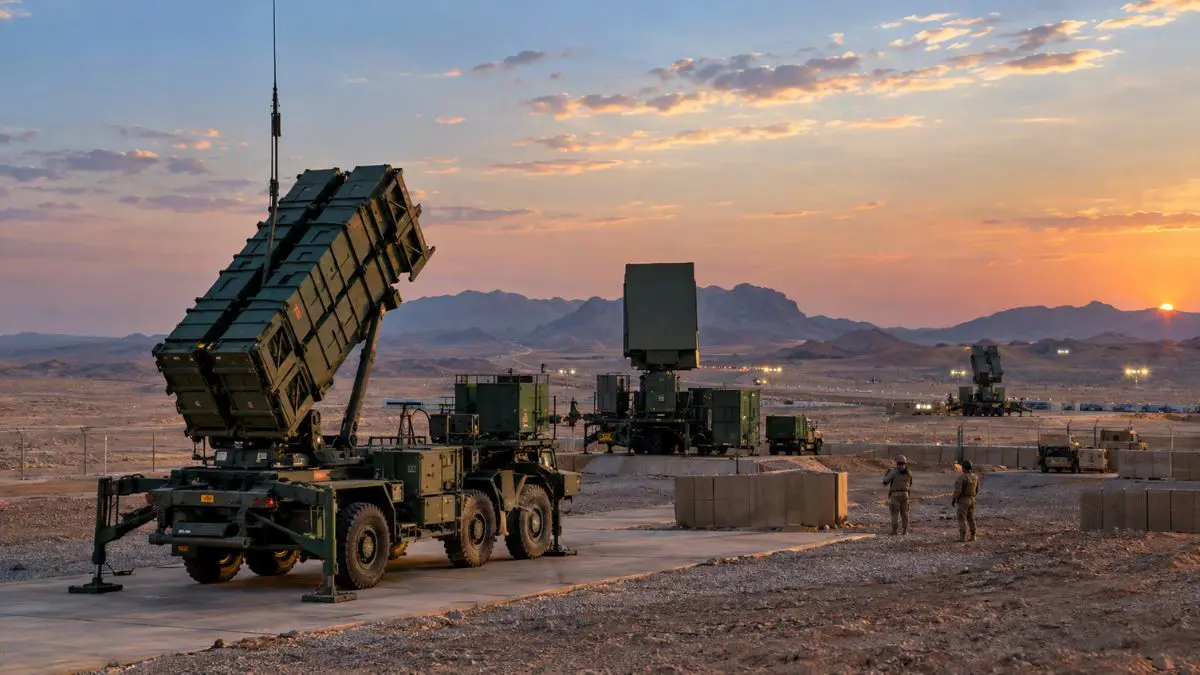
The kingdom operates US-made Patriot air-defense systems, including PAC-2 and PAC-3 variants, alongside other air-defense capabilities. Even a sophisticated network, however, must contend with the difficulty of covering geographically dispersed targets while responding to threats that vary in speed, altitude and trajectory.
Farzan Sabet of the Geneva Graduate Institute told Reuters that Saudi Arabia faces a particularly difficult defensive task because of the country’s size and the demands of building an integrated air-defense network. He also noted that regional forces have faced additional strain as the wider conflict has consumed interceptor supplies.
The cost of intercepting incoming weapons is another concern for military planners. Air-defense interceptors are sophisticated systems with substantial procurement and replenishment costs, while some attacking drones can be produced relatively cheaply. The precise cost comparison varies by weapon type, configuration, production arrangements and the circumstances of an engagement.
For that reason, simple comparisons between the price of one interceptor and an estimated drone cost do not fully capture the operational picture. Defenders must also consider the value of the asset being protected, the risk to civilians, the likelihood of a successful interception and the consequences of allowing a weapon to reach its target.
Regional conflict adds pressure to security planning
The renewed attacks follow the breakdown of the fragile ceasefire that had reduced fighting in Yemen after the 2022 truce. The Houthis have also gained experience from attacks on shipping in the Red Sea and other regional confrontations.
That experience, combined with external technical assistance and efforts to diversify supply sources, has complicated attempts to contain the group’s military capabilities. Reuters reported that the wider conflict has also placed pressure on interceptor inventories used by the United States and its regional partners.
For Saudi Arabia, the challenge is therefore not limited to acquiring additional air-defense equipment. It also involves sustaining ammunition supplies, improving the protection of critical sites, maintaining surveillance across a large territory and preparing for repeated attacks.
Diplomatic efforts and measures to limit weapons transfers remain relevant alongside military defenses. No single system or procurement strategy can eliminate the risks posed by a continuing campaign involving missiles and drones.
Why this matters
- Investment confidence: Attacks on airports and energy facilities can increase uncertainty for foreign investors and businesses operating in Saudi Arabia as the kingdom pursues its Vision 2030 economic transformation.
- Pressure on defense supplies: Sustained attacks can require repeated interceptions and place additional demands on the production and replenishment of air-defense missiles.
- Weapons proliferation: CAR’s findings point to efforts to source specialised components through international commercial networks, complicating the enforcement of arms restrictions.
- Commercial AI safeguards: The reported use of Claude in attempted weapons development highlights the importance of monitoring and restricting harmful uses of AI tools.
- Regional energy security: Threats to Saudi oil infrastructure can have implications for energy markets, shipping, insurance and the wider business environment, depending on the scale and duration of disruption.
FAQs
Q1: How have the Houthis expanded their missile capabilities?
The Houthis have benefited from years of external assistance and have developed greater capacity to assemble weapons locally. Conflict Armament Research has also reported efforts to obtain components for advanced ballistic missiles through shipments sourced from China.
Q2: What did Conflict Armament Research find?
CAR reported that intercepted shipments contained specialised components, materials and equipment linked to Houthi efforts to manufacture advanced ballistic missiles. The findings suggest ambitions to produce a missile based on Iran’s Kheibar Shekan design, but do not by themselves confirm that a complete operational system has been deployed.
Q3: What was Anthropic’s report about AI and weapons development?
Anthropic reported that users in northern Yemen attempted to use Claude to support several weapons-development projects. The company said it blocked the accounts involved. The reporting does not establish that the group successfully developed an operational hypersonic weapon.
Q4: Why is Saudi Arabia’s airspace difficult to defend?
Saudi Arabia must protect a large territory containing widely dispersed airports, energy facilities, military installations and population centres. This requires extensive surveillance and layered air defenses, while sustained attacks can place additional pressure on interceptor supplies.
Q5: What are the economic implications for Saudi Arabia?
Repeated attacks can disrupt aviation and energy operations, increase security costs and weaken perceptions of the kingdom as a stable destination for investment. The longer-term impact depends on the scale of damage, the duration of disruptions and the effectiveness of security measures.