UK defence ministry develops robot mannequin to test protective suits and equipment
05 Apr 2014
The UK's ministry of defence has unveiled a robotic mannequin that has the ability to run, sit and even mimic the movement of a soldier, BBC reported.
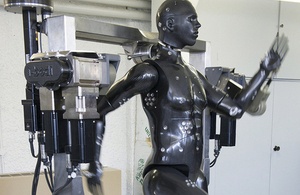 The £1.1-million robot has been developed using Formula 1 technology and would test protective suits and equipment.
The body of the "Porton Man" is covered with over 100 sensors that help record data during tests.
According to developers, it would help them create the next generation of protective equipment.
According to the ministry of defence, the new animatronic mannequin was unique to the UK.
It has been made by the Defence Science and Technology Laboratory (DSTL), which tested clothing systems against chemical warfare agents.
In addition to raising its arms to imitate signals given by soldiers, the robot can also march and kneel.
Mannequins that were used in the late 1990s had helped to influence the design of the chemical, biological and radiological suits currently used by the armed forces.
The latest, though had a better movement range than previous models, including that of its head, Sky News reported.
It is hoped the latest mannequins would go a long way in helping produce a new, lighter protective suit for the military.
According to Dr Colin Willis, principal for the Chemical Biological Protection Group at the DSTL, testers would be able to put "more realistic stresses" on the robot for achieving better results, Sky News reported.
The Porton Man takes its name from Porton Down, Wiltshire, where it was made by UK firm i-bodi Technology (formally Crawley Creatures Ltd) .
The DSTL had used mannequins in the past, but the new animatronic version besides featuring many improvements is also much lighter than its predecessor - 14kg (30 pounds) instead of 80 kg.
Jaime Cummins of DSTL's Chemical and Biological Physical Protection group hopes the mannequin would help produce a new, lighter-weight protective suit for the future.
According to Jez Gibson-Harris, chief executive of i-bodi Technology, his firm was tasked with producing a lightweight robotic mannequin based on data collected from 2,500 soldiers. The robot was required to be easy to handle and to have a wide range of movement.
He added there were a number of challenges associated with this and one way the company looked to tackle the challenges was through the use of Formula One technology.
He said using the same concepts as those used in racing cars, the company was able to produce very light but highly durable carbon composite body parts for the mannequin.