Trump Launches ‘Board of Peace’ in Davos as Diplomats Warn It Could Rival UN
By Axel Miller | 22 Jan 2026
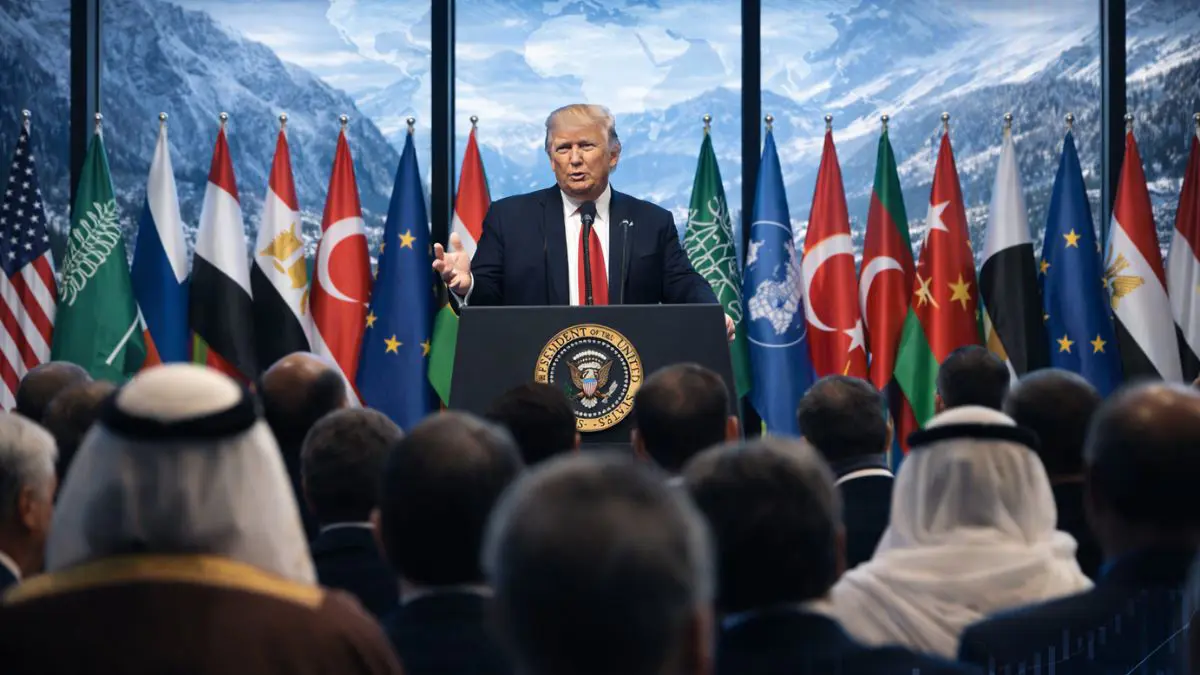
U.S. President Donald Trump on Thursday launched a new international initiative called the “Board of Peace” at the World Economic Forum in Davos, pitching it as a faster, more action-oriented conflict-resolution platform — a move that has sparked concerns among European diplomats that it could rival or undermine the United Nations.
Trump said the board would work alongside existing global institutions, including the UN, but added that it would depart from approaches that have “too often failed,” remarks widely interpreted as a critique of multilateral diplomacy.
The board was initially conceived as part of Trump’s Gaza peace framework, but has now been positioned as a wider global mechanism intended to respond to conflicts beyond the Middle East.
$1 billion permanent membership model raises alarms
One of the most controversial features is its funding model.
Under the charter, countries can join by invitation for fixed terms, while permanent members would be required to contribute $1 billion each to a dedicated “Board of Peace Fund,” according to officials familiar with the plan.
A U.S. official said the funds would support stabilisation and reconstruction efforts in conflict zones, but European diplomats have raised concerns that the model risks creating a parallel, U.S.-led diplomatic channel outside established UN frameworks — with influence linked to financial contribution.
Support is broad — but key allies cautious
Traditional U.S. allies have responded cautiously. Some declined invitations outright, while others signaled a wait-and-see approach.
Reuters reported that around 35 countries have committed to the initiative so far, including nations such as Saudi Arabia, the UAE, Egypt, Turkey, and Belarus, while major UN Security Council powers have either stayed cautious or remained absent.
- France has declined to join
- The UK is holding off for now
- Russia expressed interest but has not confirmed
- China has not responded publicly
A UN spokesperson said the United Nations had endorsed the board’s creation only within the context of the Gaza initiative, stressing that broader engagement would be limited.
Why This Matters
- The Board of Peace could become a parallel power centre in global diplomacy
- The $1B permanent seat structure raises governance and legitimacy questions
- The initiative reflects how geopolitics is shifting toward bloc-based institutions
Summary
Donald Trump launched the “Board of Peace” at Davos on Jan 22, 2026, presenting it as a global conflict-resolution body initially linked to Gaza. The board includes a controversial $1 billion permanent membership funding model and has drawn commitments from about 35 countries. European diplomats and UN-linked officials have warned that its structure could undermine or rival traditional UN-led frameworks.
FAQs
Q1: What is the Board of Peace?
A Trump-led international body launched at Davos intended to coordinate conflict resolution and post-conflict stabilisation efforts.
Q2: Is the $1 billion fee mandatory?
No. The $1 billion contribution applies to countries seeking permanent member status, according to officials.
Q3: How many countries have joined?
Around 35 countries have committed so far, according to Reuters reporting.
Q4: Is the UN involved?
A UN spokesperson said endorsement was limited to the Gaza initiative context, not broader global ambitions.
Q5: Why are some countries concerned?
Diplomats worry the structure could create a parallel diplomacy track that competes with UN mechanisms and weakens multilateral governance.

























