NATO Commander Warns Russia-China Arctic Push Is a ‘Front Line’ as Greenland Tensions Ease
By Cygnus | 22 Jan 2026
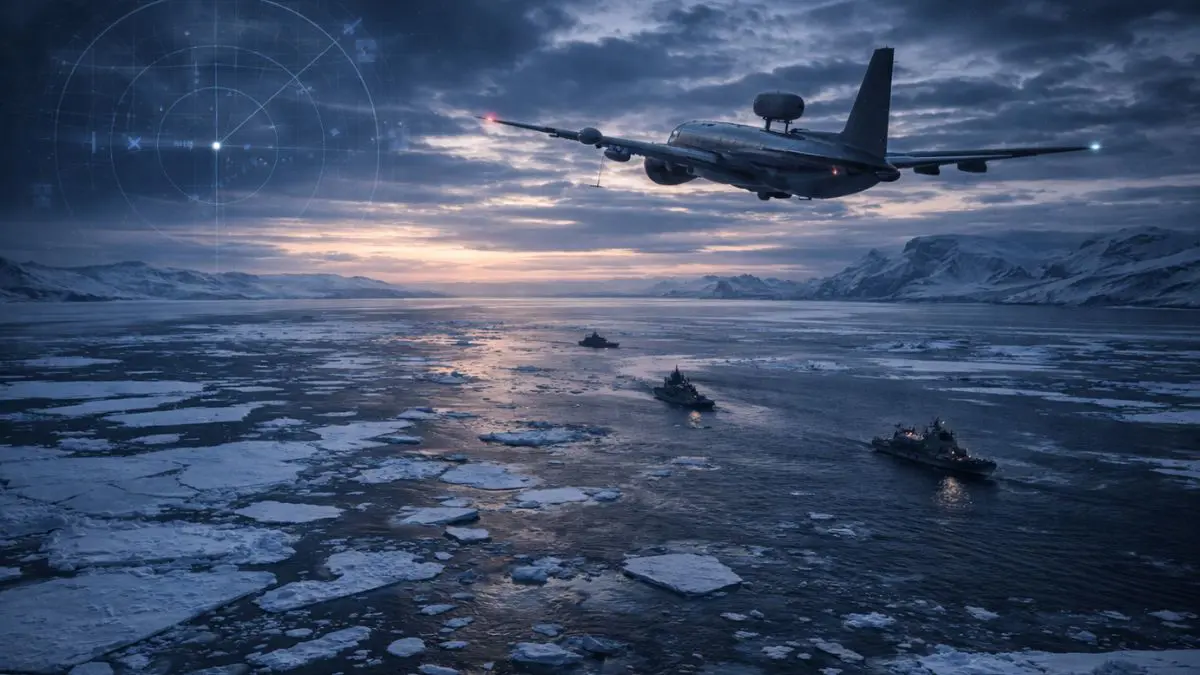
NATO’s top military commander warned on Thursday that the Arctic is rapidly turning into a new strategic front line, citing a sharp rise in military cooperation between Russia and China, including joint bomber flights and maritime patrol activity.
General Alexus Grynkewich, NATO’s Supreme Allied Commander Europe (SACEUR), said the alliance has observed deepening coordination between Moscow and Beijing in both air and sea domains in the High North — activity he described as increasingly operational rather than symbolic.
“Over the past several years, we’ve observed increased collaboration in both the maritime and air domains,” Grynkewich told journalists. “This is not for peaceful purposes. They are out there doing bathymetric surveys to figure out how they can counter NATO capabilities.”
Bathymetric surveying — the mapping of undersea terrain — is a sensitive capability in the Arctic, where seabed data can support submarine operations, undersea cable strategy, and anti-submarine warfare planning.
Greenland tensions ease — but NATO stays on alert
Grynkewich’s warning comes as geopolitical tensions around Greenland appeared to soften in the past 24 hours.
U.S. President Donald Trump, speaking at the World Economic Forum in Davos on Wednesday, said he would not use force in connection with U.S. interest in Greenland and signaled a shift toward diplomacy, after earlier public comments and tariff threats raised alarm among European allies.
“I don’t want to use force. I won’t use force,” Trump said, adding that a framework for a deal with Denmark was now “in sight.”
Despite the easing rhetoric, NATO officials say the alliance remains focused on ensuring that Russia and China do not gain strategic footholds — military or economic — in Greenland or other parts of the High North.
NATO: Arctic security now a 2026 priority
NATO Secretary General Mark Rutte, also speaking in Davos, said the emerging Greenland framework means allies will have to move faster on Arctic security, with commanders now expected to propose tangible steps that can be implemented within 2026.
Rutte said he was confident that even NATO members outside the Arctic would contribute, as the security challenge has evolved into a broader alliance priority rather than a regional issue.
Admiral Giuseppe Cavo Dragone, Chair of the NATO Military Committee, said NATO commanders are still awaiting clarity on the U.S.-Denmark framework and what practical defense or surveillance steps may follow.
Russia-China partnership reshapes Arctic risk
NATO’s concern reflects a wider strategic shift: Russia and China are increasingly coordinating Arctic activity at a time when melting ice is opening new shipping corridors and intensifying competition over strategic minerals and future trade routes.
China declared itself a “near-Arctic state” in 2018 and has expanded polar research, shipping interest, and partnerships with Russia — developments NATO officials increasingly see through a security lens.
Why This Matters
- The Arctic is turning into a strategic trade corridor
Melting sea ice is opening future shipping routes, making the region critical for global logistics and supply chain security. - Undersea mapping signals long-term military planning
Bathymetric surveys can support submarine operations and undersea cable strategy — making it a red flag for NATO. - Greenland has become a geopolitical asset
Its location, air bases, and mineral reserves give it strategic value for both military positioning and industrial supply chains. - Russia-China cooperation is creating a two-front security problem
NATO increasingly sees Moscow-Beijing coordination as a multiplier that could pressure Europe from multiple theatres. - Arctic security may drive new defense spending and alliances
If NATO accelerates Arctic posture, it could unlock fresh procurement, surveillance infrastructure, and defense investment cycles.
Summary
NATO’s top commander Gen. Alexus Grynkewich warned Jan 22 that the Arctic has become a strategic “front line,” citing expanded Russia-China military cooperation including joint bomber and maritime patrol activity and undersea mapping. The warning comes as Greenland-related tensions eased after Trump said he would not use force and hinted at a diplomatic framework with Denmark. NATO leadership, including Secretary General Mark Rutte, said Arctic security will now be accelerated as a major 2026 priority.
FAQs
Q1: Why is NATO concerned about Russia-China Arctic cooperation?
Because NATO is observing increased joint activity, including maritime patrols and long-range bomber flights, and undersea mapping that could have military applications.
Q2: What did Trump say about Greenland?
Trump said he would not use force and suggested a framework for a deal with Denmark is “in sight,” after earlier tensions raised concerns among allies.
Q3: Why are bathymetric surveys important?
Bathymetric mapping helps understand seabed terrain and is relevant for submarine operations, undersea infrastructure, and maritime strategy.
Q4: What is NATO doing now?
NATO leaders said Arctic security efforts must speed up, with concrete steps expected within 2026.

























