Citi to Match Government Seed Funding for Children’s ‘Trump Accounts’
By Axel Miller | 06 Feb 2026
Summary
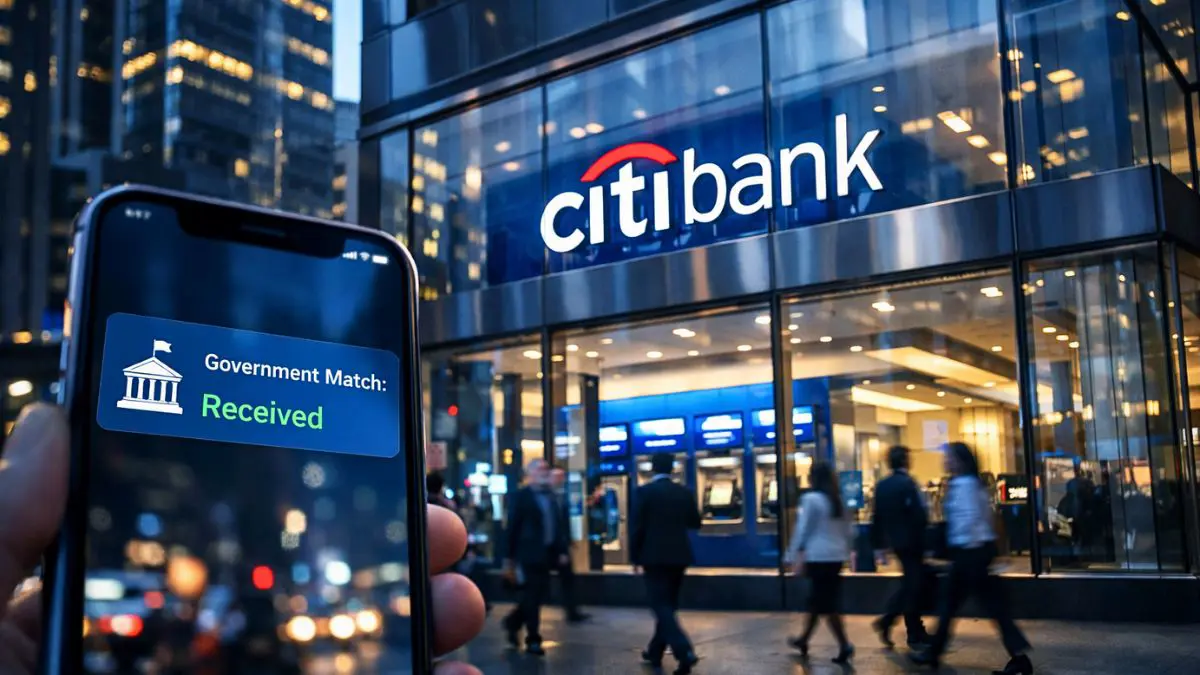
Citigroup announced on February 5 that it will match the U.S. government’s $1,000 seed contribution to new “Trump Accounts” (Section 530A accounts) for eligible employees’ families. Joining rivals JPMorgan Chase and Bank of America, Citi is also committing $5 million via the Citi Foundation to drive enrollment in what is being marketed as the nation’s 250th-anniversary gift to its newest citizens.
NEW YORK, Feb 6 — Citigroup has become the latest Wall Street powerhouse to throw its weight behind the “One Big Beautiful Bill Act” (OBBBA), announcing a matching program for the newly established Trump Accounts.
The program, set to officially launch on July 4, 2026—America’s 250th anniversary—provides a one-time $1,000 federal deposit into a tax-advantaged investment account for every child born between January 1, 2025, and December 31, 2028. Citi’s commitment to match this $1,000 for its eligible U.S. workforce mirrors recent moves by Bank of America, Wells Fargo, and JPMorgan Chase to integrate the program into their core employee benefit packages.
The 530A Mechanism: Wealth from Day One
Technically designated as Section 530A accounts, Trump Accounts function as a specialized hybrid of a traditional IRA and a 529 plan.
- Annual Limits: Parents and relatives can contribute up to $5,000 annually.
- Employer Incentive: Under the OBBBA, employers can contribute up to $2,500 per year per dependent tax-free, a move Citi intends to utilize to boost employee retention and family stability.
- Investment Mandate: Funds are required to be invested in low-cost U.S. stock index mutual funds or ETFs, such as those tracking the S&P 500, to ensure long-term compound growth.
Citi Foundation: Bridging the Enrollment Gap
Beyond the internal matching for employees, the Citi Foundation has pledged $5 million to support nonprofit organizations tasked with national outreach. The goal is to assist low-income families in navigating the enrollment process, which involves filing the new IRS Form 4547.
“Matched savings programs are a proven tool for building financial resilience,” a Citi spokesperson noted. “Our foundation’s goal is to ensure that the circumstances of a child’s birth do not preclude them from participating in this generational wealth-building opportunity.”
Political and Economic Friction
While the White House projects that a $1,000 seed could grow to over $500,000 by retirement through market compounding, the program is not without its detractors. Critics argue that the “unrestricted” access recipients gain at age 18—allowing funds to be used for first-time home purchases, education, or business startups—lacks sufficient guardrails to prevent mismanagement.
Furthermore, with midterm elections approaching, the rapid rollout of “Trump Accounts” is viewed by analysts as a key pillar in the administration’s “Affordability and Mobility” platform, aimed at addressing long-term cost-of-living concerns.
FAQs
Q1. What is the official name of the “Trump Account”?
In the tax code, they are referred to as Section 530A accounts. They were established under the One Big Beautiful Bill Act signed on July 4, 2025.
Q2. Who is eligible for the $1,000 government seed?
Any American child born between January 1, 2025, and December 31, 2028, with a valid Social Security number. Children born outside this window can still open an account but will not receive the federal seed money.
Q3. When can families start opening these accounts?
While the pilot program is active, the official public enrollment portal at trumpaccounts.gov and the ability to fund accounts begin on July 4, 2026.
Q4. Does Citi’s match apply to everyone?
The $1,000 match is currently announced for eligible U.S.-based employees of Citigroup whose children were born during the federal eligibility window.
Q5. Can the money be used for anything at age 18?
Under current rules, once the beneficiary turns 18, the account transitions to traditional IRA rules. It can be used without penalty for first-time home purchases (up to $10k), education, or starting a business.

























