The New Airspace Economy: How Geopolitics Is Rewriting Aviation Costs in 2026
By Axel Miller | 22 Jan 2026
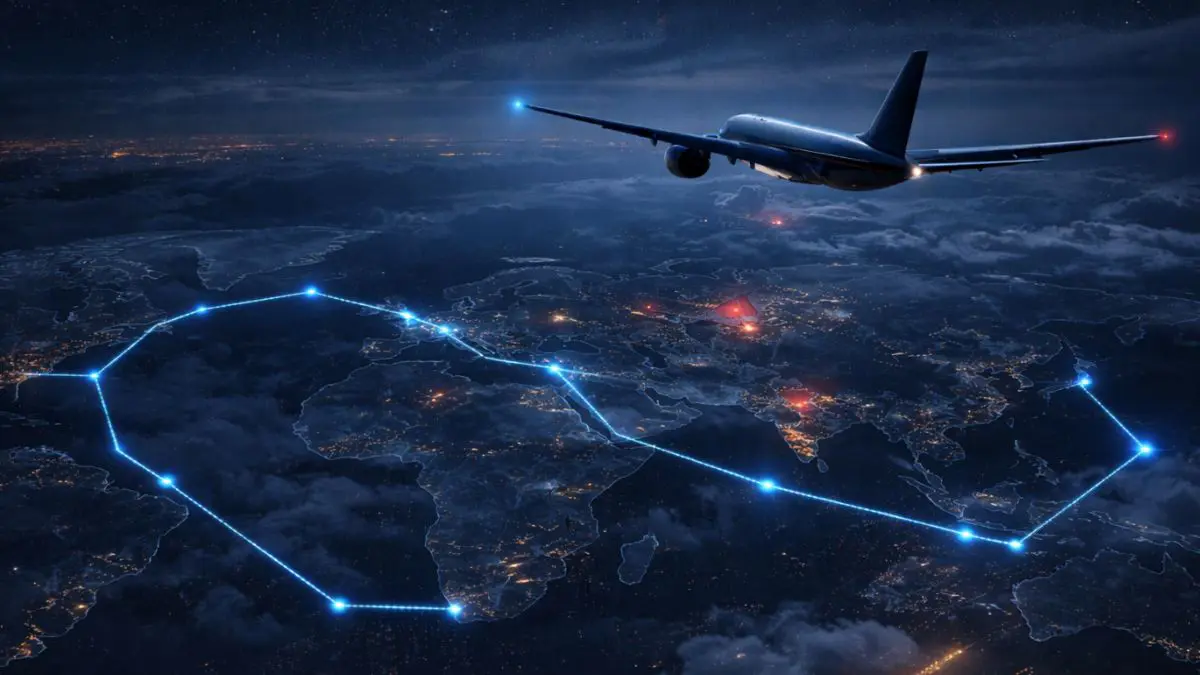
In commercial aviation, the shortest route is money. For decades, airlines competed on efficiency — squeezing margins through faster turnarounds, leaner maintenance cycles, and precise route planning. But in 2026, a new force is reshaping the airline balance sheet: geopolitics.
Across Europe, Asia, and the Middle East, airspace has become a contested economic asset. In a world of sanctions, airspace bans, shifting conflict risk, and insurance volatility, aviation has entered a new era — the airspace economy — where airlines no longer just sell flights. They manage risk-adjusted corridors.
What’s changed in early 2026
The global route map has become more fragile. Airlines are seeing increased exposure to sudden changes in airspace access, rerouting advisories, and regulatory compliance pressures — all of which translate into longer flight times and higher operating costs. Even when demand remains strong, route economics are being re-written mid-season.
Aviation’s invisible cost: the “detour tax”
Airspace restrictions break the core assumptions of airline profitability. A detour of 60–120 minutes on a long-haul route creates a ripple effect of double hits:
1) The direct costs
- Higher fuel burn: Longer flight times consume thousands of additional gallons.
- Crew utilisation: Longer routes often trigger additional duty-time requirements and crew rotations.
- Maintenance wear: Increased flight hours accelerate engine and component cycles, raising maintenance intensity.
2) The opportunity cost
- Reduced frequency: A plane that flies 14 hours instead of 12 performs fewer weekly rotations.
- Fleet strain: More aircraft are required to maintain the same schedule, increasing capital intensity.
- Network fragility: Tight hub connections become harder to protect, raising disruption risk.
In 2026, this detour tax is often large enough to determine whether a route stays in a carrier’s network — or gets cut.
The airspace risk scorecard (Q1 2026 outlook)
Editorial estimates based on current disruption levels, routing constraints, and risk premiums.
| Corridor | Detour Impact | Risk Score | Primary Cost Driver |
|---|---|---|---|
| Europe ↔ Asia | High | 9/10 | Eurasian airspace restrictions + longer routings |
| India ↔ North America | High | 8/10 | Extreme fuel burn + extended duty hours |
| India ↔ Europe | Medium-High | 7/10 | West Asia corridor risk + rerouting uncertainty |
| Middle East ↔ Europe | Medium | 6/10 | Dynamic risk premiums + disruption risk |
| China ↔ West | Medium | 5/10 | Compliance friction + routing optimisation |
Strategic shift: winners and losers
In the airspace economy, geography is competitive advantage.
The winners: hub carriers with flexibility
Gulf carriers benefit structurally from hub locations between East and West. Their model offers:
- route and scheduling flexibility
- modern wide-body fleets
- multi-corridor operational experience
- faster capacity redeployment in disruptions
In 2026, hub geography increasingly acts like a resilience moat.
The losers: airlines trapped by bans and fixed constraints
Legacy carriers exposed to airspace restrictions face a structural disadvantage:
- longer routings
- higher fuel and crew costs
- lower utilisation per aircraft
- reduced pricing flexibility
The result is a widening gap between airlines with route privilege and airlines paying a permanent detour premium.
Aviation’s new risk layer: insurance and compliance
Airspace is no longer just a navigation question. It is now an insurance and compliance question.
A single risk signal in a corridor can:
- Sharply raise aviation war-risk premiums
- Trigger compliance checks for codeshares and partnerships
- Reduce operational flexibility through routing limitations and approvals
For airlines operating into regulated markets, risk management has become as important as the flight plan.
The state of play in 2026
As of early 2026, airspace access has become one of the most volatile variables in aviation economics — alongside fuel prices.
The industry is increasingly bifurcating into:
- carriers with geopolitical route privilege
- carriers burdened by detour economics
For travellers, this means:
- a higher pricing floor for long-haul travel
- fewer direct routings in some corridors
- increased reliance on major hub airports
For the industry, aviation is no longer just transport infrastructure.
It is now geopolitical infrastructure — where politics shapes the route as much as the aircraft does.
Why This Matters
- Airspace restrictions are inflationary
Longer routes mean higher fuel burn, crew costs, and maintenance intensity — pushing up ticket prices and cargo rates even if oil stays stable. - Geopolitical routing has become a competitive moat
Airlines with access to shorter corridors can price more aggressively and run higher utilisation — giving them structural advantage over rivals. - Aircraft utilisation is the hidden battlefield
A detour doesn’t just add cost per flight — it reduces weekly rotations per aircraft, forcing carriers to deploy extra jets and raising capital intensity. - Global connectivity is becoming hub-dependent
As direct routes become riskier or costlier, passengers increasingly rely on major hubs, reshaping global aviation flows and network dominance. - Aviation is now geopolitical infrastructure
Airlines are no longer only transport providers — they are operating within a global risk map where politics and compliance dictate flight economics.
Summary
In 2026, airspace access has become a strategic economic asset. Geopolitical restrictions and corridor risk are forcing longer routings that increase fuel burn, crew cost and aircraft wear, while reducing utilisation. This “detour tax” is reshaping airline profitability and creating a structural advantage for hub carriers with routing flexibility.
FAQs
Q1: What is the “airspace economy”?
It’s the shift where airspace access becomes an economic moat. Geopolitics — not just distance or wind — increasingly dictates costs, schedules and risk premiums.
Q2: Why are detours so damaging to airline profits?
Because long-haul profitability depends on tight schedules and aircraft utilisation. A 2-hour detour doesn’t just cost fuel — it can break the weekly rotation, forcing airlines to deploy extra aircraft just to maintain timetables.
Q3: How does this affect India specifically?
Airlines serving India face higher complexity on westward routes to Europe and North America. When corridor risks rise, these routes become fragile, pushing fares up and increasing delays or technical refuelling scenarios.
Q4: Who benefits most from the new landscape?
Carriers with strong hub geography and operational flexibility benefit structurally, as they can reroute while protecting network connectivity.
Q5: Will “cheap long-haul” travel return?
Unlikely in the near term. Added layers of detour fuel burn, insurance risk and compliance costs have created a new pricing floor for global connectivity.

























