The New Oil (Part 4): Can Technology Break the Dependency?
By Cygnus | 16 Jan 2026
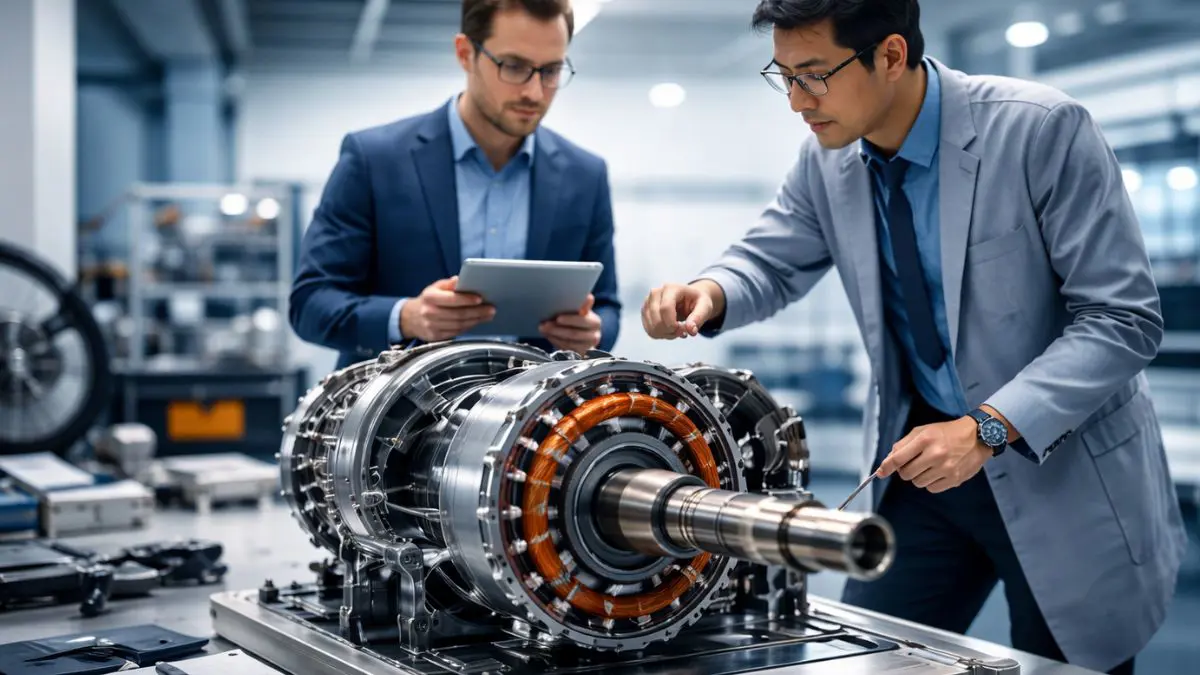
Magnet recycling, rare-earth-free motors, and the thin line between breakthrough and hype
In the race for strategic resources, the world has spent the last decade chasing a familiar answer: mine more.
But by 2026, it has become increasingly clear that mining alone cannot solve the new energy dependency. Even if new deposits are discovered, projects permitted, and capital deployed, the mineral crisis still bottlenecks at refining, processing, and geopolitics — as Part 3 showed.
So the question powering boardrooms, national security briefings, and industrial policy circles is shifting fast:
Can technology reduce our reliance on strategic minerals — before supply shocks hit again?
The hopeful answer is yes. The realistic answer is: only partially, and not fast enough to prevent near-term disruption.
Because while the world searches for new lithium, graphite, and rare earths, a parallel revolution is quietly underway — one aimed at reshaping the demand side of the equation.
1) Why magnets became a geopolitical weapon
A modern clean-energy economy runs on more than batteries.
It runs on motors — and many of the most efficient, compact motors rely on rare earth permanent magnets, especially neodymium-praseodymium (NdPr). Add dysprosium and terbium for heat resistance and durability, and you get the magnetic backbone of:
- Electric vehicle drive trains
- Wind turbines
- Advanced drones and aircraft systems
- High-performance industrial robotics
- Precision defense guidance systems
What makes this uncomfortable is not that these materials are rare.
It’s that supply chains are geopolitically concentrated.
Even today, the magnet chain is heavily concentrated — not just in mining, but in processing and finished magnet manufacturing, which is far harder to replicate quickly.
In other words: rare earths aren’t the new oil because they are scarce.
They are the new oil because supply concentration creates leverage — including the ability to restrict flows.
2) Magnet recycling: the “urban mine” nobody scaled — yet
If the new resource scramble has a moonshot, it’s this:
Stop treating old magnets as waste.
In theory, rare-earth magnets are among the most recyclable strategic materials in the industrial economy. They hold high value, they’re chemically consistent, and they exist in enormous quantities inside end-of-life products.
The magnet recycling promise
Recycling could create a new supply stream from:
- scrapped EV motors
- wind turbine generators
- industrial equipment
- old hard disk drives (the “classic feedstock”)
- manufacturing scrap from magnet factories
This is sometimes called “urban mining” — extracting strategic materials not from earth, but from the industrial system itself.
So why isn’t it everywhere?
Because magnet recycling isn’t like recycling aluminium cans.
It’s costly because magnets are:
- embedded inside devices
- glued, coated, welded
- hard to extract without contamination
- expensive to sort at scale
- challenging to recycle while maintaining performance standards
The best systems don’t just recover rare earth elements — they recover the magnet as a magnet, preserving structure and reducing processing steps.
This is called direct recycling, and it is one of the most strategically valuable versions of the technology.
But in 2026, there’s still a harsh reality:
Magnet recycling works.
Magnet recycling at global scale is still early.
Right now, recycling can help smooth shortages — but it cannot eliminate dependency.
3) Rare-earth-free motors: breakthrough or compromise?
The bigger play is not recycling.
It’s substitution.
If magnets become the strategic choke point of the EV era, the rational response is simple:
Build electric motors that don’t need rare earth magnets at all.
And that race is already happening.
The alternatives being explored
- Induction motors
- no permanent magnets
- proven at scale
- slightly lower efficiency in some conditions
- Synchronous reluctance motors
- efficient
- cheaper materials
- requires sophisticated control electronics
- Switched reluctance motors
- rugged
- magnet-free
- issues: torque ripple, noise, control complexity
- Ferrite magnet motors
- uses non-rare-earth magnets
- cheaper and more abundant
- performance limitations in high-end EV use cases
What’s the catch?
Permanent magnet motors remain dominant because they offer:
- high torque density
- strong efficiency in compact space
- excellent performance across driving conditions
So the future isn’t one substitute.
It’s a segmented market:
- premium EVs want performance → magnets remain attractive
- mass-market EVs want cost → reluctance + ferrite options rise
- buses, industrial motors, some fleets → magnet-free adoption is easier
Technology can reduce dependency — but not fully eliminate magnets.
4) The hype problem: timelines don’t match headlines
If you follow technology headlines, the dependency story seems solvable.
Every month brings announcements:
- “magnet-free motor breakthrough”
- “new extraction method”
- “battery chemistry revolution”
- “solid-state is coming”
- “sodium will replace lithium”
- “silicon anodes change everything”
But supply chain reality is brutal.
A lab breakthrough can happen in 18 months.
But industrial transformation requires:
- manufacturing redesign
- supplier qualification
- safety testing
- durability testing
- warranty confidence
- global scaling
- regulatory certification
- toolchain upgrades
- supplier ecosystems
That takes years.
For automakers, it’s not enough to build a motor that works.
They must build a motor that works for a decade, in all weather, at mass scale.
The timeline gap becomes the real strategic risk:
Politics and markets move faster than industrial conversion.
5) So… can technology actually break dependency?
The answer depends on what “break” means.
Scenario A: reduce dependency
This is realistic — and already happening.
By 2030, we are likely to see:
- more diversified motor designs
- higher recycling volumes
- lower NdPr per vehicle
- more efficient magnet use
- more reuse of manufacturing scrap
This reduces the power of a highly concentrated supply chain.
Scenario B: eliminate dependency
This is harder.
Rare earth magnets exist because they solve a real engineering problem.
If the world wants maximum efficiency, compact design, and high performance — magnets will remain part of the system.
Dependency will be reduced — but not erased.
6) The strategic conclusion: demand-side innovation is the only fast lever
Mining is slow.
Permitting is slower.
Refining is the bottleneck.
So for governments and companies, the fastest lever is not supply.
It is demand engineering.
That means:
- designing products that use fewer critical minerals
- building substitution-ready manufacturing
- incentivizing recycling as national strategy
- stockpiling smarter
- treating magnets like strategic assets
In the next decade, the real winners in the “new oil” war won’t be just the ones who control mines.
They’ll be the ones who control technology designs that need fewer strategic inputs.
Final takeaway
Technology won’t end the mineral war.
But it can weaken the weapon.
Magnet recycling will grow. Rare-earth-free motors will expand. Efficiency will improve. Waste will become supply.
But in 2026, the truth is simple:
Dependency will shrink slowly — while geopolitical risk moves fast.
And that is why the battle for strategic resources will continue, even in a world of innovation.
Brief Summary
Technology may not end the global battle for strategic minerals — but it can shrink dependency. Part 4 of The New Oil examines how magnet recycling, rare-earth-free motor designs, and demand-side innovation could reduce exposure to rare earth chokepoints. It also warns that while headlines promise breakthroughs, industrial scale-up is slow — meaning geopolitical risk may move faster than technology adoption.
Also Read (The New Oil Series):
- Part 1: Rare Earths — The First Shock
- Part 2: Lithium & Graphite — The EV Bottleneck
- Part 3: Inside the Processing Gap
- Part 4: Can Technology Break the Dependency?
- Part 5: Friend-Shoring, Supply Chain Fragmentation and the Cost of Resilience
Frequently Asked Questions (FAQs)
Q1: What dependency is this article talking about?
It refers to the global reliance on a highly concentrated supply chain for rare earth permanent magnets, which are crucial for EV motors, wind turbines, industrial robotics, and defense systems.
Q2: Why are rare earth magnets strategically important?
Because rare earth magnets (especially NdPr) provide high efficiency and compact power, making them hard to replace at scale. Supply chain concentration also increases geopolitical leverage.
Q3: What is magnet recycling and why is it a “moonshot”?
Magnet recycling is recovering rare earth magnets from scrap EV motors, wind turbines, electronics, and factory waste. It’s a moonshot because it could create a “new supply source” without new mining — but scaling remains difficult and expensive.
Q4: What does “direct recycling” mean?
Direct recycling aims to recover the magnet as a magnet, preserving its structure and avoiding heavy chemical processing — making it faster and potentially more cost-effective than element-level recovery.
Q5: Are rare-earth-free motors real today?
Yes. Alternatives such as induction motors, synchronous reluctance, switched reluctance, and ferrite-based motors already exist. However, trade-offs include efficiency, control complexity, noise, and performance at high-end requirements.
Q6: Why can’t technology eliminate rare earth dependency quickly?
Because industrial adoption takes years. Even after breakthroughs, companies must redesign products, qualify suppliers, pass durability tests, meet regulations, and scale manufacturing reliably.
Q7: What is the key takeaway for policymakers and companies?
Mining is slow — so the fastest lever is demand-side innovation, including substitution-ready designs, recycling policy, and more resilient supply chains.