Arctic Fever: How ‘Greenland Tariff’ Politics Sparked a Global Flight to Safety
By Axel Miller | 20 Jan 2026
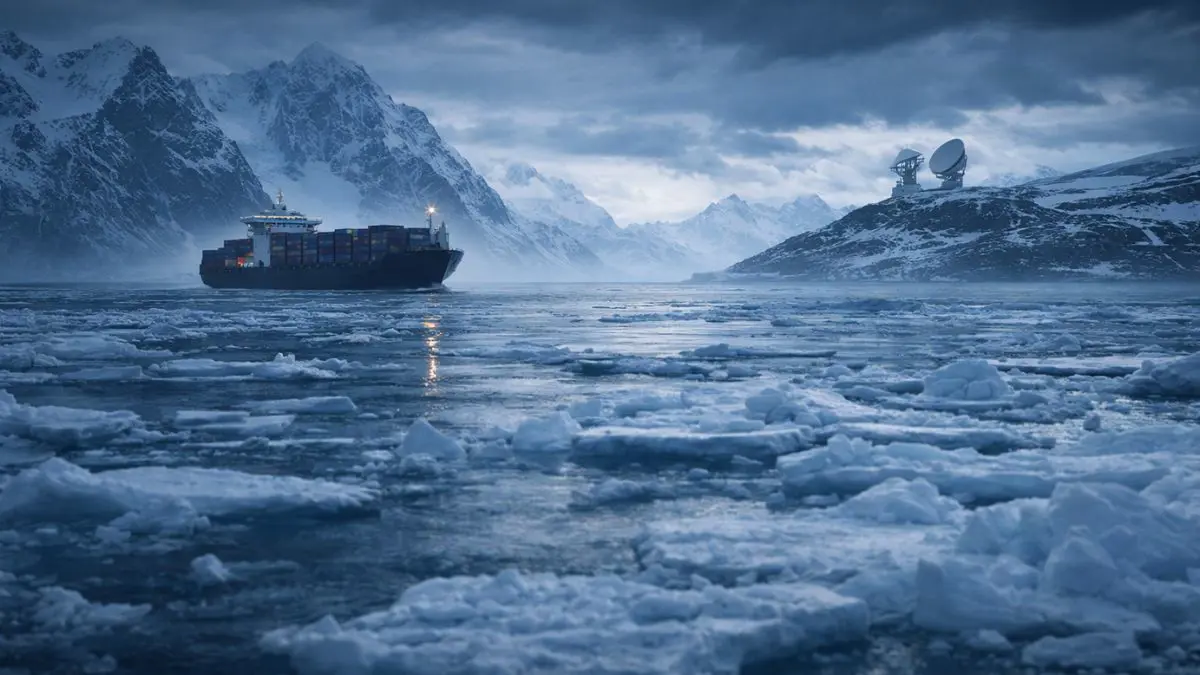
DAVOS, SWITZERLAND — The World Economic Forum usually thrives on predictable drama: interest rates, inflation, supply chains, and the careful choreography of corporate diplomacy.
This year, Davos has been shaken by something different — a geopolitical storyline with the power to reprice markets in real time.
Over the last few days, U.S. President Donald Trump has repeatedly linked trade policy to Greenland, turning a long-running strategic question — who controls the Arctic’s future — into a form of tariff diplomacy. The result has been a sharp surge in uncertainty, a renewed focus on safe-haven assets, and a growing fear among executives that global trade is entering a new phase: territory-driven economics.
From a political message to a market catalyst
What startled policy watchers was not simply the mention of Greenland — a semi-autonomous Danish territory with enormous geopolitical importance.
It was the framing: that tariffs could be deployed not only as economic protection, but as leverage tied to sovereign decisions and security alignment.
In markets, narrative matters. Investors can model inflation or earnings. They struggle to price sudden geopolitical linkage — especially when trade restrictions appear connected to diplomacy rather than industry.
That is why the “Greenland tariff” rhetoric quickly became one of the most discussed topics in Davos corridors, not just among diplomats, but among portfolio managers and corporate procurement heads.
Why Greenland matters far beyond the map
Greenland is not just a cold island at the edge of the Atlantic.
It sits at the intersection of three long-term strategic shifts:
- Arctic shipping routes that become more viable as climate patterns change
- security positioning in an increasingly contested northern region
- critical minerals and resource potential that feed advanced manufacturing supply chains
For years, Greenland has quietly moved up the priority list of major powers. What has changed now is that the debate has moved from strategic papers into tariff threats.
Safe havens return — and volatility follows
The immediate financial effect has been a renewed “risk-off” market mood: investors shifting toward defensive assets and away from exposure that depends on stable trade conditions.
In such environments, gold and other safe havens tend to attract inflows, particularly when tariffs and geopolitical uncertainty collide. Currency markets also become more sensitive: trade disputes can push volatility into the euro, the dollar, and emerging market currencies that depend on stable global capital flows.
This is not simply about tariffs on goods. It is about a broader message that trade rules can change quickly — and that political bargaining may reach deeper into the economy than previously assumed.
Europe’s counterplay: retaliation tools back on the table
European officials have signalled that retaliation remains an option if U.S. tariff threats turn into formal measures.
One key mechanism frequently raised in European policy discussions is the EU Anti-Coercion Instrument (ACI) — a framework designed to deter and respond when economic pressure is used to influence sovereign decisions.
In a normal trade dispute, the conflict is about market access. In a coercion-style dispute, the conflict becomes political — and the response toolkit expands accordingly.
Technical Sidebar: What the EU Anti-Coercion Instrument (ACI) does
| Feature | What it means |
|---|---|
| Purpose | Allows the EU to respond when trade pressure is used to influence political choices |
| Tools | Tariffs, restrictions on services, limits on procurement access, investment-related responses |
| Strategic intent | Increase deterrence by making coercion expensive |
| Real-world effect | Raises the cost of escalation for both sides |
Davos reality: executives can’t hedge sovereignty
The corporate response in Davos has been cautious but intense.
Executives are used to managing:
- inflation shocks
- freight disruptions
- sanctions-driven rerouting
- regulatory divergence
But they are far less comfortable with something else: trade policy tied to territorial politics.
That is because this kind of risk is harder to manage through contracts. Businesses cannot simply “dual-source” their way out of geopolitical escalation when the underlying dispute is about sovereignty and security alignment.
The deeper trend: geopolitics is now a pricing variable
For much of the last decade, boardroom strategy assumed geopolitics was a background factor — important, but rarely decisive.
That assumption is collapsing.
When tariffs become negotiating weapons in diplomatic disputes, companies are forced to treat foreign policy as a real-time business risk — not a distant macro theme.
For supply chains, it changes the framework:
- risk moves from cost to continuity
- from efficiency to alignment
- from optimisation to resilience
The “lowest cost supplier” may not win if it carries geopolitical exposure.
Conclusion: the Arctic isn’t a sideshow — it’s the next frontier
It is tempting to dismiss Greenland headlines as political theatre. But the intensity of reaction in Davos suggests otherwise.
Because this is not only about one territory.
It is about what it represents:
- the Arctic becoming a strategic theatre
- trade being used as leverage in security disputes
- markets being forced to reprice political risk
- and executives adjusting to a world where economic planning depends on alliances
In 2026, globalisation is no longer just a network of shipping lanes and contracts.
It is an ecosystem of politics, minerals, and security — and the map is back on the board.
Brief Summary
Davos discussions have been dominated by renewed trade uncertainty after the U.S. president linked tariff threats to Greenland, intensifying geopolitical tensions. The episode has triggered a broader “risk-off” market mood, with investors and executives reassessing exposure to transatlantic trade volatility. European officials have indicated that retaliation tools, including the EU Anti-Coercion Instrument, remain part of the response toolkit if trade measures escalate.
Why this matters
- Trade risk is being redefined: Tariffs are increasingly framed as geopolitical leverage, not only economic protection, forcing companies to model political alignment risk.
- Safe-haven dynamics return: When transatlantic trade becomes unstable, capital tends to rotate toward defensive assets and away from risk-on exposure.
- Supply chains face new rules: Boards must audit suppliers not only for cost and carbon footprint, but for sanctions, tariff exposure and diplomatic volatility.
- Europe’s retaliation toolkit matters: Mechanisms such as the EU Anti-Coercion Instrument increase escalation risk and raise uncertainty for exporters and importers.
- The Arctic becomes boardroom relevant: Greenland’s strategic location elevates Arctic politics into the mainstream of energy security, shipping routes and critical minerals competition.
FAQs
Q1) Why is Greenland suddenly central to trade discussions?
Because Greenland is strategically important in the Arctic, and recent U.S. statements have linked trade policy to geopolitical and security concerns around the region.
Q2) What are “Greenland tariffs”?
It refers to tariff threats that are being discussed in connection with Greenland-related diplomatic positioning, rather than a traditional trade dispute over a specific industry.
Q3) Why did markets react so strongly?
Markets are sensitive to unpredictable tariff policy, especially when it appears tied to sovereignty and foreign-policy bargaining rather than clear economic objectives.
Q4) Why does this push investors toward safe havens?
Geopolitical shocks can raise the probability of trade disruption, slower growth, and currency volatility — conditions that often increase demand for safe-haven assets.
Q5) How could the EU respond if tariffs escalate?
European policymakers have signalled that retaliation remains an option. The EU also has tools such as the Anti-Coercion Instrument designed to respond to economic pressure tactics.
Q6) What is the EU Anti-Coercion Instrument (ACI)?
The ACI is an EU mechanism intended to deter and respond when economic measures are used to influence political or sovereign decisions.
Q7) What should businesses watch next?
Any formal tariff announcement, EU response signals, and language emerging from Davos about trade alignment, supply-chain “de-risking,” and Arctic geopolitical priorities.

























