Biotech & pharma

Insulin that doesn't need a fridge or a needle
07 Jul 2010
The new insulins could one day become the basis of treatments taken in pill form, eliminating the need for injections

Spiders at the nanoscale: molecules that behave like robots
23 Jun 2010
A team of scientists from Columbia University, Arizona State University, the University of Michigan, and the California Institute of Technology (Caltech) have programmed an autonomous molecular "robot" made out of DNA to start, move, turn, and stop while following a DNA track
New pancreatic cancer mechanism discovered
19 Jun 2010
Bayer Schering to develop anti-cancer stem cell therapeutics with OncoMed Pharmaceuticals
17 Jun 2010
Faulty Gene Stops Cell ‘Antennae’ From Transmitting
By Debra Kain | 03 Jun 2010

Newly discovered kinase may hold key to spread of cancer cells
03 Jun 2010
Researchers say novel enzyme may provide new target for future anticancer therapies. By Scott Lafee
India's first dental stem cell bank launched
27 May 2010
India's first dental stem cell bank launched
27 May 2010
Study uncovers optimal ecology of bio-insecticide
25 May 2010
BBSRC funded researchers at the University of Oxford and Royal Holloway University of London have discovered that the commonly used and naturally occurring bacterial insecticide
Team led by Scripps research scientists discovers body’s qwn molecular protection against arthritis
22 May 2010

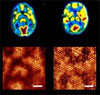
New microscopy technique reveals mechanics of blood cell membranes
21 May 2010
Thanks to an interdisciplinary team of researchers, scientists now have a more complete understanding of one of the human body’s most vital structures: the red blood cell.
Lessons from the brain: toward an intelligent molecular computer
20 May 2010
A team of researchers from Japan and Michigan Technological University has built a molecular computer using lessons learned from the human brain.
Lessons from the brain: toward an intelligent molecular computer
20 May 2010
A team of researchers from Japan and Michigan Technological University has built a molecular computer using lessons learned from the human brain.

Biologists unravel mechanisms of immune cell movements
By By Kim McDonald | 18 May 2010
A team of biologists has uncovered the biochemical processes within these immune cells that allow them to speed their way to bacteria and the sites of wounds and infections, often causing inflammation By Kim McDonald

Latest articles









Featured articles

The decoupling paradox: Why Wall Street keeps funding AI despite $100 oil
By Axel Miller | 11 May 2026
AI infrastructure stocks continue rallying despite $100 oil as investors bet on productivity gains and semiconductor demand in 2026.

Hybrid bonding gains attention as AI chip packaging demand grows
By Cygnus | 23 Apr 2026
Hybrid bonding is driving AI chip packaging demand as backend technologies gain importance in the semiconductor supply chain.

The agentic transition: how enterprises are scaling AI from pilot to profit
By Cygnus | 22 Apr 2026
AI has entered its execution era. Discover how companies like Valeo and Microsoft are scaling agentic AI systems—from copilots to autonomous workflows driving real business impact.

Post-splashdown: What Artemis II taught us about the ‘deep space wall’
By Axel Miller | 15 Apr 2026
Artemis II splashdown marks a breakthrough in deep space exploration. Discover AVATAR radiation data, Orion’s distance record, and insights shaping NASA’s 2028 Moon mission.

Can aviation go green? The multi-billion dollar race for sustainable fuel
By Cygnus | 10 Apr 2026
Airlines are racing to adopt sustainable aviation fuel, but limited supply and high costs challenge the future of green aviation.

The battery race: who will control the future of electric vehicles?
By Axel Miller | 08 Apr 2026
The global battery race is reshaping the electric vehicle industry, with China, the US, and Europe competing for control over supply chains and technology.

AI vs governments: Who controls the future of intelligence?
By Cygnus | 07 Apr 2026
Governments and AI companies like OpenAI and Anthropic are shaping the future of intelligence amid rising policy conflicts and global competition.

Strait of Hormuz: how one chokepoint controls the global economy
By Axel Miller | 06 Apr 2026
The Strait of Hormuz is a critical global chokepoint. Learn how disruptions impact oil prices, shipping, and the global economy.

The $2 trillion AI infrastructure race: Who will control global compute?
By Cygnus | 06 Apr 2026
AI spending is set to exceed $2 trillion in 2026, driving a global race in data centers, chips, and energy infrastructure.






