EU brokers Ukraine president’s exit in peace deal
22 Feb 2014
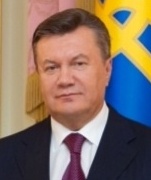 Ukraine ended days of violent protests following a breakthrough peace deal between the government led by Russia-backed President Viktor Yanukovich and protestors backed by western allies, including the European Union and the United States.
After two days of violence that that turned the centre of the capital Kiev into a war zone and killed 77 people, President Viktor Yanukovich agreed to give up powers, hold early elections and form a government of national unity, meeting most of the demands of the pro-European opposition.
Ukraine's parliament voted for changes to the legal code that could see the release of jailed opposition leader Yulia Tymoshenko.
Although Yanukovych agreed to dilute his powers and form a caretaker government and hold early elections, the EU-backed demonstrators are asking for more; they want nothing short of his ouster.
The agreement is a big blow to Yanukovych's decision to move closer to Russia and turn away from an alliance with European Union and the West.
Ukraine, however, faces a critical moment. There is no deal between Russia and the EU that would guarantee the preservation of Ukraine within its present borders and assume responsibilities for some of the difficult problems that the present government cannot resolve.
The crisis began with protests in November after Yanukovich opted out of a far-reaching economic deal with the European Union in favour of closer ties with Russia.
EU has now won back the deal with assurance of the stepping down and a national government with representation from both the Ukraine-speaking and Russian speaking sections taking part in government formation.
The mediation efforts of the foreign ministers of France, Germany and Poland, mark a victory for Europe in a tug-of-war with Moscow for influence in the divided ex-Soviet state of 46 million people.
And the demonstrators are still holding out in the Independence Square demanding that Yanukovich quit the government once for all.
The peace deal, which is not endorsed by Russia, will cost Ukraine a $15 billion Russian financial lifeline it needs to stave off bankruptcy.
"There are no steps that we should not take to restore peace in Ukraine," Yanukovich said in announcing his concessions before the agreement was signed. "I announce that I am initiating early elections."
EU and the US praised the deal but Russia's comments were guarded and grudging.
European foreign ministers signed the document as witnesses, but Russian envoy Vladimir Lukin did not, and acknowledged that Moscow had fallen behind the EU in diplomacy.
"The EU representatives were in their own way trying to be useful, they started the talks. We joined the talks later, which wasn't very right. One should have agreed on the format of the talks right from the start," Interfax news agency quoted Lukin as saying.
Polish foreign minister Radoslaw Sikorski described the agreement as a "good compromise for Ukraine". It "gives peace a chance. Opens the way for reform and to Europe," he tweeted.