Climate Risks Shift from Insurance Challenge to Broader Financial Stability Concern: MSCI Institute
By Cygnus | 08 Apr 2026
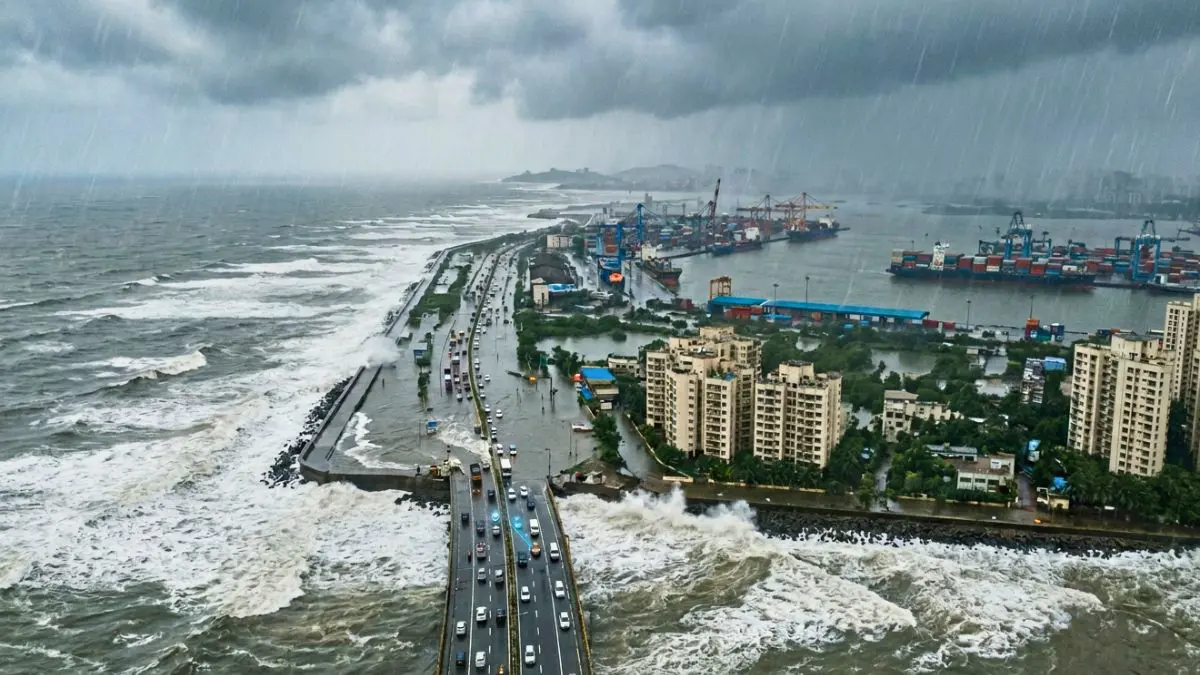
Summary
- A study by the MSCI Institute indicates insurers are increasingly concerned about physical climate risks and their potential financial impact.
- Global insured losses from natural catastrophes reached approximately $107 billion in 2025, continuing a multi-year trend of elevated losses.
- The report highlights growing concerns that rising climate risks could affect infrastructure financing and long-term asset values if adaptation measures lag.
LONDON / NEW YORK, April 8, 2026 — Physical climate risks are emerging as a significant concern for the global insurance sector, with potential implications for broader financial stability, according to a new report by the MSCI Institute.
Rising Losses and Changing Risk Models
The report notes that insured losses from natural catastrophes totaled about $107 billion in 2025, marking another year of elevated claims. A substantial share of these losses has been linked to so-called “secondary perils,” including floods, wildfires, and severe storms, rather than singular large-scale events.
Insurers are increasingly acknowledging that historical data alone may no longer provide a reliable basis for pricing risk, prompting a shift toward forward-looking climate modeling and scenario analysis.
Implications for Infrastructure and Financing
The findings suggest that increasing climate-related risks could influence how insurers assess coverage for large infrastructure projects. Insurance availability and pricing play a critical role in enabling project financing, and any tightening in coverage conditions may affect investment decisions in certain high-risk regions.
The report highlights the importance of adaptation measures and resilient design in maintaining the insurability of assets over the long term.
Technology and Risk Assessment Evolution
Insurers are also expanding the use of advanced tools to better assess climate exposure. For example, solutions developed by firms such as AXA focus on improving risk evaluation through high-resolution data and modeling techniques.
Additionally, parametric insurance solutions—where payouts are triggered by predefined environmental metrics—are gaining traction as a complementary risk management approach, particularly for climate-sensitive regions.
Focus on Adaptation and Governance
The report underscores that integrating climate considerations into corporate strategy and governance remains a work in progress across the industry. Strengthening risk frameworks, improving data transparency, and aligning incentives are seen as key steps to address evolving climate challenges.
Why this matters
- Financial Stability: Climate-related risks are increasingly being viewed through the lens of systemic financial exposure.
- Infrastructure Investment: Insurance availability remains a critical enabler for long-term infrastructure development.
- Risk Innovation: Advanced modeling and parametric solutions are reshaping how insurers manage climate exposure.
FAQs
Q1. Are high insured losses becoming more frequent?
Recent data indicates that annual insured losses from natural catastrophes have remained elevated in recent years, reflecting both increased exposure and changing climate patterns.
Q2. What role does insurance play in infrastructure projects?
Insurance is typically required for financing large projects, helping lenders manage risk. Limited availability or higher costs of coverage can influence project viability.
Q3. What is parametric insurance?
It is a form of insurance where payouts are triggered automatically based on predefined parameters such as rainfall levels or wind speeds, rather than assessed damages.

























