The Hormuz hedge: how energy insecurity is accelerating global clean-tech adoption
By Cygnus | 13 Apr 2026
Summary
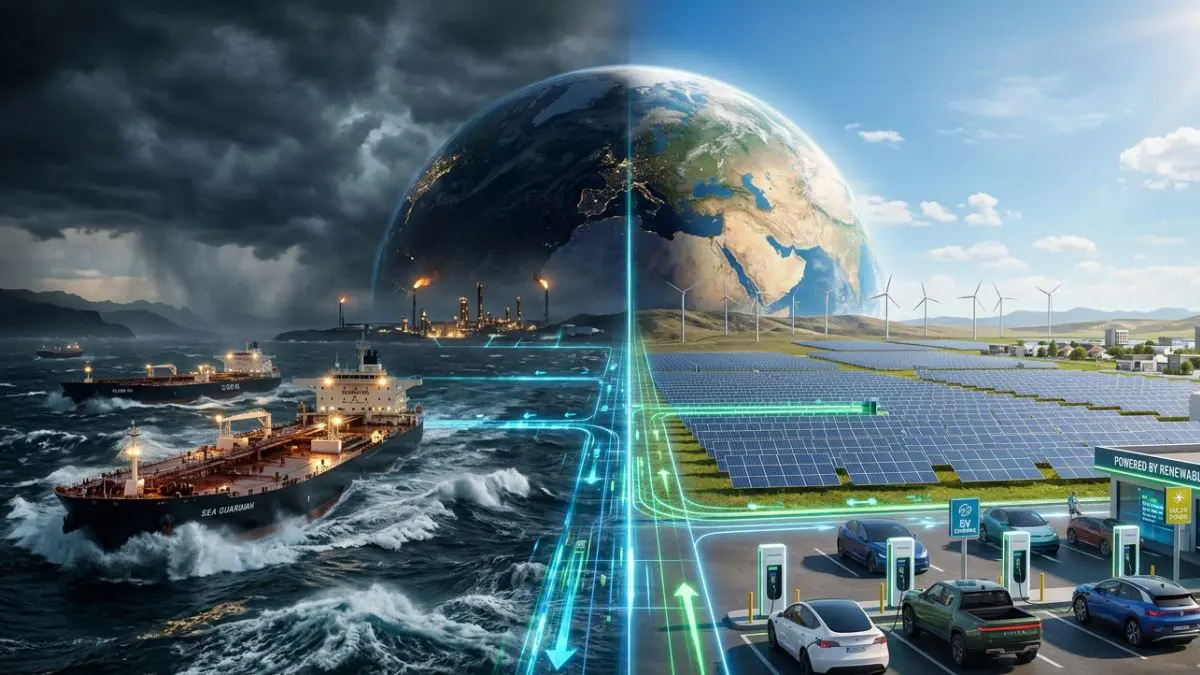
- Rising geopolitical tensions in the Middle East and volatility in oil markets are reinforcing long-term global interest in renewable energy and electrification.
- China remains a major global hub for EV supply chains, battery manufacturing, and solar module production, benefiting from scale and cost advantages.
- Analysts note that energy security concerns are increasingly driving governments and corporations to diversify away from fossil fuel dependence.
BEIJING/SINGAPORE, April 13, 2026 — Heightened instability in Middle East shipping routes and oil market volatility have renewed global focus on energy security, accelerating investments in electrification and renewable energy systems.
Energy security reshaping global demand
Recent fluctuations in oil prices have intensified concerns among import-dependent economies in Asia and Europe. As a result, policymakers and industries are increasingly prioritizing diversification through electric mobility, solar deployment, and grid-scale battery storage.
Rather than a single “winner” emerging, the shift is reinforcing existing structural trends already underway in global energy transition strategies.
China’s position in the clean-tech supply chain
China continues to play a central role in global clean-energy manufacturing, particularly in solar panels, battery materials processing, and electric vehicle supply chains.
Companies such as BYD and CATL have expanded international exports, benefiting from integrated supply chains and cost-efficient production ecosystems.
However, global EV and battery production remains distributed, with significant contributions from the United States, Europe, South Korea, and Japan across different segments of the value chain.
Global competition in energy transition
The current energy environment is accelerating competition between regions to secure supply chains for critical minerals, battery production, and renewable technologies.
The United States and European Union are investing heavily in domestic manufacturing incentives and trade restrictions, while emerging markets are increasingly adopting a mixed approach—balancing imports with local energy infrastructure development.
Structural shift rather than a single “dominance” transition
Analysts emphasize that the global energy transition is not being led by a single country, but by parallel developments across multiple economies.
China’s scale in manufacturing provides cost advantages, while Western economies retain strengths in advanced semiconductors, software systems, and high-end clean-tech innovation.
Why this matters
- Energy security focus: Geopolitical instability is accelerating investment in non-fossil energy sources.
- Supply chain competition: Battery minerals and manufacturing capacity are becoming strategic assets.
- Distributed transition: Clean-tech growth is global, not monopolized by any single country.
FAQs
Q1. Is China the only major winner of the energy transition?
No. While China is a key manufacturing hub, the energy transition is globally distributed across multiple regions including the US, EU, and Asia-Pacific.
Q2. How does oil volatility affect clean energy adoption?
Higher oil price volatility typically increases interest in EVs, renewables, and energy storage as long-term cost-stabilizing alternatives.
Q3. Are solar and battery prices still falling?
Yes. Global solar and battery prices have generally declined over time due to scale manufacturing, technological improvements, and supply chain expansion.

























