Synthetic diplomacy: The $50 billion mirage and the new era of market-moving deepfakes
By Cygnus | 30 Mar 2026
Summary
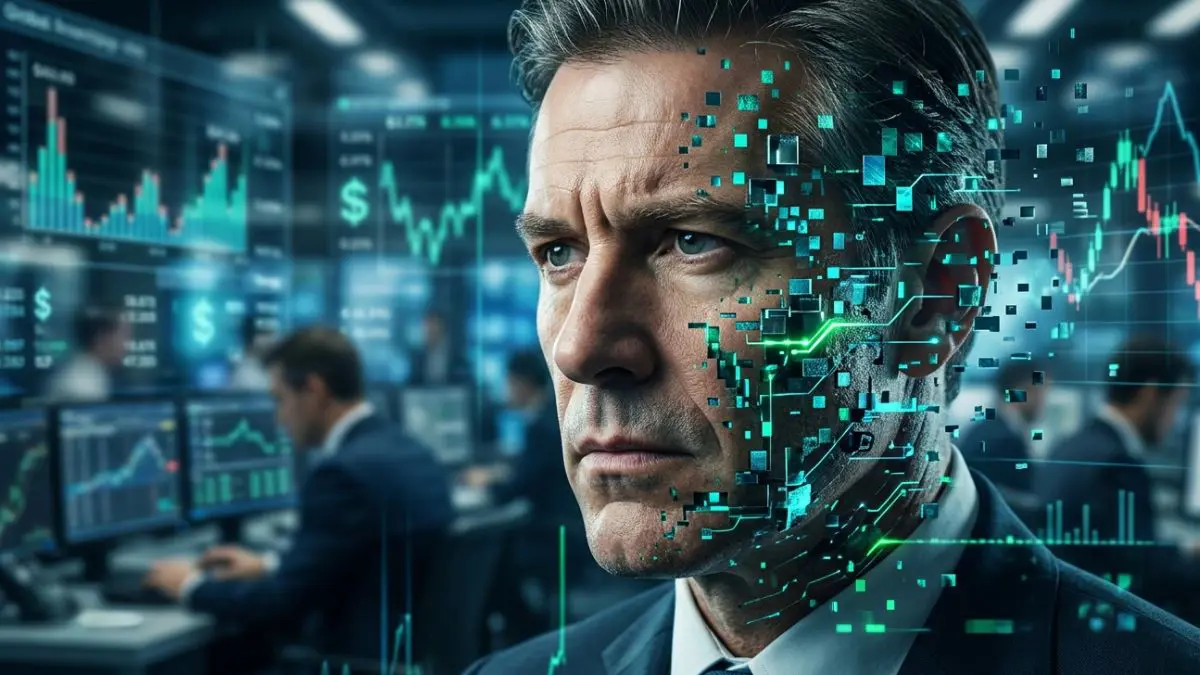
In March 2026, the global financial landscape is shifting from a war of narratives to a war of synthetics. A hypothetical scenario—dubbed the “March 24th Mirage”—illustrates how a deepfake-driven diplomatic signal could erase $50 billion in market value within minutes. The episode highlights how AI-generated information is emerging as a market-moving force and why “information hardening” is becoming essential for investors.
MUMBAI / LONDON, March 30, 2026 — In the modern global economy, “seeing is believing” is no longer a safe assumption. As generative artificial intelligence advances, market participants are confronting a new class of risk: synthetic information capable of triggering real financial consequences.
A hypothetical scenario—referred to by analysts as the “March 24th Mirage”—demonstrates how a high-fidelity deepfake of a diplomatic breakthrough could trigger algorithmic trading systems, driving a rapid market surge followed by a sharp correction once the content is verified as false.
While illustrative, the scenario reflects growing concern among investors and policymakers that AI-generated content could be used to manipulate financial markets at scale. Although no single confirmed event of this magnitude has been publicly verified, smaller incidents involving misleading or false information have previously triggered sharp market reactions.
The anatomy of a mirage: How synthetic diplomacy works
In a high-speed trading environment, timing and sentiment are critical. A synthetic video—featuring a realistic diplomatic announcement—can be rapidly amplified across digital platforms, reaching both human traders and algorithmic systems within seconds.
Automated trading models, designed to react to signals such as “positive sentiment” or “geopolitical stability,” may interpret such content as credible. This can trigger immediate buy-side activity, inflating asset prices before verification mechanisms catch up.
By the time analysts confirm the content as fabricated, markets may have already experienced significant volatility. This emerging dynamic is increasingly described as “synthetic diplomacy”—the use of AI-generated personas or events to influence financial systems.
The weaponization of identity
The threat has evolved beyond basic manipulated media. Advances in generative AI now enable the realistic replication of vocal tone, facial expressions, and communication styles of public figures, including corporate executives and government officials.
- Market-moving personas: A fabricated statement from a CEO or finance minister could influence stock prices, currencies, or commodities within minutes.
- Timing advantage: Such content is often deployed during periods of heightened uncertainty or low liquidity, when verification delays are more likely and market reactions are amplified.
This convergence of identity and technology introduces a new layer of systemic vulnerability.
Fact-checking as strategic defense
In this environment, fact-checking is evolving from a journalistic function into a core element of financial risk management.
- Forensic verification: Advanced tools are used to detect inconsistencies in audio, video, and metadata that may indicate synthetic manipulation.
- Contextual validation: Cross-referencing digital claims with real-world indicators—such as official statements, supply chain data, or geopolitical developments—helps identify discrepancies.
- The verification buffer: Institutional investors are increasingly adopting short delays before acting on breaking information, allowing time for confirmation from trusted sources.
Together, these measures form the foundation of what analysts describe as “information hardening.”
Why this matters
- Algorithmic vulnerability: Trading systems are not yet equipped to reliably distinguish between authentic and synthetic information
- Market risk: False signals can trigger rapid capital movement, increasing volatility and potential losses
- Reputation as infrastructure: The digital identity of executives and policymakers is becoming a critical asset that requires protection
- Shift in market behavior: Investors may increasingly prioritize verified information over speed, altering trading dynamics
FAQs
Q1: What is “synthetic diplomacy”?
It refers to the use of AI-generated content, such as deepfake videos or audio, to simulate diplomatic or official communication that can influence markets.
Q2: Was the “March 24th Mirage” a real event?
No, it is a hypothetical scenario used to illustrate how such an incident could unfold and impact financial markets.
Q3: Why are deepfakes a risk to financial markets?
Because markets react quickly to news and sentiment, and synthetic content can spread before it is verified.
Q4: Can deepfakes be reliably detected?
Detection tools are improving, but combining technology with human verification remains the most effective approach.
Q5: How can investors protect themselves?
By relying on trusted sources, applying verification delays, and avoiding immediate reactions to unverified breaking news.

























