122 countries adopt UN treaty on N-weapons ban
08 Jul 2017
Representatives of 122 member countries of the United Nations on Friday approved the first-ever treaty banning nuclear weapons at a UN meeting boycotted by all nuclear-armed nations.
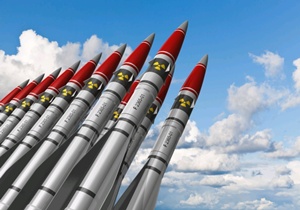
Delegates cheered and applauded as the UN Conference that negotiated a legally binding instrument to prohibit nuclear weapons completed its work, adopting a treaty that would ban such weapons of mass destruction with a view to their total elimination.
Friday's vote was 122 countries in favour with the Netherlands opposed and Singapore abstaining.
Under the terms of the treaty each party (state) would never, under any circumstances, develop, test, produce, manufacture, otherwise acquire, possess or stockpile nuclear weapons or other explosive devices. In addition, states would never transfer such weapons or devices; use or threaten to use them; or allow them to be stationed, installed or deployed on their territory.
States already in possession of nuclear weapons or other nuclear explosive devices would immediately remove them from operational status and destroy them as soon as possible. Moreover, a state possessing on its territory nuclear weapons or devices belonging to or owned by another state would ensure their prompt removal.
Also, the treaty states that a state which is party to the treaty having used or tested nuclear weapons or devices would have a responsibility to provide adequate assistance to affected states for the purpose of assisting victims, as well as remedies for environmental damage.
The UN Secretary-General would convene the first meeting of parties to the treaty within one year of the treaty's entry into force, with a review conference to be held four years after that, according to the text. States not party to the treaty, as well as relevant United Nations entities and organisations - including the International Committee of the Red Cross (ICRC) - would be invited to attend as observers.
Further, the treaty would open for signature at the UN Headquarters on 20 September, and enter into force 90 days after the fiftieth instrument of ratification, acceptance, approval or accession had been deposited with the Secretary-General.
Nuclear-armed states have dismissed the ban as unrealistic, arguing it will have no impact on reducing the global stockpile of 15,000 atomic weapons.
"Is there anyone that believes that North Korea would agree to a ban on nuclear weapons?" asked US Ambassador Nikki Haley when negotiations began in March. "There is nothing I want more for my family than a world with no nuclear weapons, but we have to be realistic."
But supporters hailed a historic achievement.
"We have managed to sow the first seeds of a world free of nuclear weapons," said Costa Rica's ambassador, Elayne Whyte Gomez, the president of the UN conference that negotiated the treaty.
Led by Austria, Brazil, Mexico, South Africa and New Zealand, 141 countries joined in drafting the treaty that they hope will increase pressure on nuclear states to take disarmament more seriously.
None of the nine countries that possess nuclear weapons - the United States, Russia, Britain, China, France, India, Pakistan, North Korea and Israel - took part in the negotiations or the vote.
Even Japan - the only country to have suffered atomic attacks, in 1945 - boycotted the talks as did most NATO countries.
Nuclear powers argue their arsenals are only a deterrent against nuclear attack and claim that the nuclear Non-Proliferation Treaty (NPT) would guard against a spread of nuclear arms.
But the NPT that seeks to prevent the spread of atomic weapons and puts the onus on nuclear states to reduce their stockpiles, has done neither.

























