New $100,000 H-1B Visa Fee Tests U.S. Tech's Global Talent Strategy
By Axel Miller | 22 Sep 2025
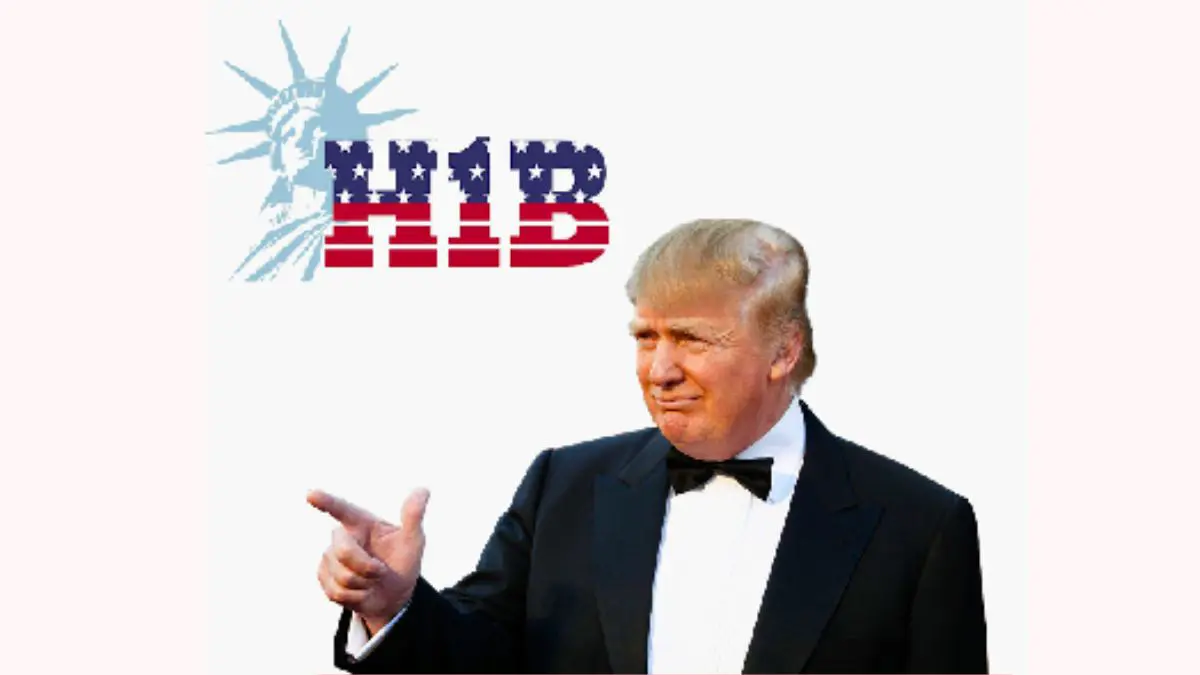
The ability to attract top global talent has long been a key advantage for U.S. tech giants, but that equation is now being put to the test. A new $100,000 fee on H-1B visa applications has stirred unease among companies like Amazon, Microsoft, Apple, and Meta, which depend heavily on a global pool of expertise.
While the policy adds friction to hiring highly skilled foreign workers, it isn't without loopholes. The administration has included potential exemptions for applications deemed in the “national interest” and limited the rule to a 12-month timeline unless renewed. Nevertheless, the move highlights Washington’s escalating tension over immigration and skilled labor.
For years, Indian IT outsourcing firms have been criticized for using H-1B visas to staff projects with lower-cost engineers instead of prioritizing American hires. This pressure has already reshaped the market: Tata Consultancy Services (TCS), once a top user of the program, now holds roughly half the visas it did in 2021. Even so, Indian nationals still account for over 70% of all H-1B holders, with U.S.-based companies now dominating the list of top sponsors.
Limited Short-Term Financial Impact
The immediate financial hit appears manageable, as the White House has clarified the fee applies only to new applications. For a major corporation like JPMorgan, the cost would represent less than half a percent of its annual profit. For an outsourcing firm like TCS, the figure could approach 10%, but it remains an expense most companies can absorb.
What is more significant is how corporations will adapt. Two responses seem likely. First, they may accelerate offshoring, redirecting more work to countries like India, Mexico, and the Philippines—a trend that gained traction during the pandemic. Second, they could ramp up the adoption of artificial intelligence to reduce their dependence on scarce and costly human talent. If a project once required ten H-1B engineers, a firm might now hire five and use AI-driven tools to bridge the gap.
A Strategic Crossroads
Ironically, this shift could undermine the administration’s goal of pushing firms to hire more American STEM graduates. By incentivizing automation and offshore work, the policy risks accelerating the very trends that can limit domestic hiring.
The new rule reflects an inconsistent stance on H-1B visas, resulting in a patchwork approach: restrictive in appearance, yet porous enough to give companies room to maneuver.
Still, a broader risk looms. The U.S. has historically thrived on a mix of homegrown and international talent. Should such anti-immigration measures become permanent, America’s long-term leadership in technology and innovation could face a significant strain.
Summary:
A new $100,000 H-1B visa fee is creating uncertainty for U.S. companies reliant on global talent. While the immediate financial impact is modest, the policy is likely to accelerate offshoring and AI adoption, reshaping tech hiring. The larger concern is that a sustained anti-immigration stance could erode America's competitive edge in the global innovation race.
FAQs: New $100,000 H-1B Visa Fee and Its Impact on U.S. Tech
1. What is the new $100,000 H-1B visa fee?
The U.S. government has introduced a $100,000 fee for new H-1B visa applications, which are used to hire highly skilled foreign workers in the technology and business sectors. The fee is intended to reduce reliance on foreign labor, but it currently applies only to new applicants and may include exemptions for cases deemed in the “national interest.”
2. Which companies are most affected by this fee?
Major U.S. tech giants like Amazon, Microsoft, Apple, and Meta, as well as outsourcing firms such as Tata Consultancy Services (TCS), are among the companies most affected, as they rely heavily on H-1B visas to access global talent.
3. Does the fee apply to existing H-1B visa holders?
No. The White House clarified that the $100,000 fee applies only to new applications. Existing visa holders are not required to pay the fee.
4. How will this fee impact U.S. businesses financially?
The immediate financial impact is relatively small for large corporations. For example, for JPMorgan, the cost would represent less than 0.5% of annual profit. For outsourcing companies like TCS, it could be as high as 10%, but spread over the employee’s tenure, it remains manageable.
5. How might companies respond to the fee?
Companies are likely to respond in two main ways:
Accelerating offshoring: Shifting more work to countries like India, Mexico, and the Philippines, where labor is less expensive.
Adopting AI and automation: Reducing dependence on human H-1B talent by leveraging AI tools to perform tasks previously handled by multiple engineers.
6. Could this policy increase domestic hiring for U.S. STEM graduates?
Ironically, it may not. By encouraging offshoring and automation, companies may reduce domestic hiring instead of increasing it, potentially undermining the policy’s goal of boosting U.S. STEM employment.
7. How long will the new fee policy remain in effect?
The policy is currently limited to 12 months unless extended. The Department of Homeland Security can grant exemptions if applications are deemed in the national interest.
8. What is the broader economic and industry impact?
If sustained, the policy could accelerate AI adoption, reshape tech hiring strategies, and weaken America’s competitive edge in global technology and innovation by reducing access to international talent.
9. Are Indian IT companies the main users of H-1B visas?
Indian nationals hold over 70% of H-1B visas, and companies like TCS and Infosys have historically been among the top users. However, U.S.-based tech companies now dominate the list of top sponsors.
10. Why does this matter for investors and the tech industry?
Changes in H-1B visa policy affect talent supply, operational costs, and workforce strategy. Companies may invest more in automation, offshore operations, or restructuring, impacting profitability, innovation, and market competitiveness.

























