China's annual parliament to map next phase of tech race with the West
By Cygnus | 02 Mar 2026
Summary
China is expected to outline the next phase of its technology strategy at the National People’s Congress, signaling priorities for artificial intelligence, advanced manufacturing, robotics, space and supply-chain resilience as geopolitical competition with the West intensifies.
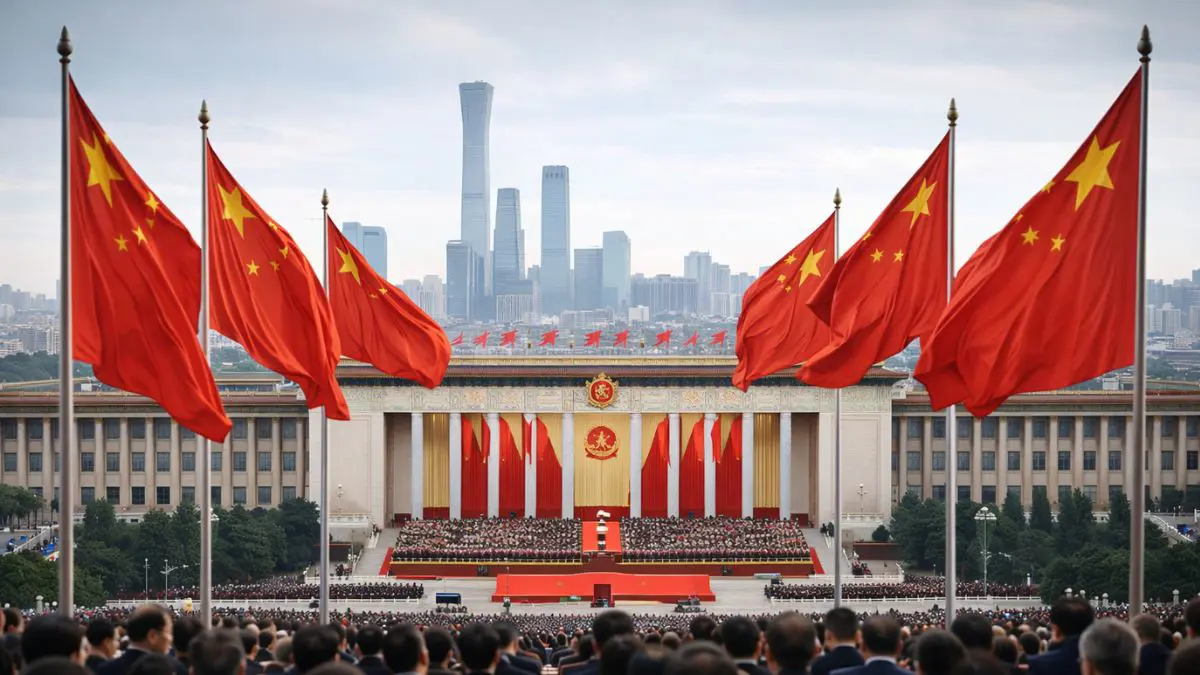
BEIJING, March 2, 2026 — China is preparing to set the direction for its next stage of technological development as lawmakers convene for the annual meeting of the National People’s Congress (NPC), where the government will present its work report, fiscal plans and early signals for the 15th Five-Year Plan covering 2026–2030.
The roadmap is expected to indicate which sectors will receive policy support, funding and regulatory backing, offering investors and companies insight into Beijing’s industrial priorities at a time when technology competition and export controls remain central to global economic tensions.
AI after a turbulent year
The NPC comes after a volatile period in global technology markets, with rapid advances by Chinese artificial intelligence firms highlighting the country’s capacity to innovate despite restrictions on advanced semiconductors.
Analysts expect policymakers to emphasize an “AI-plus” strategy aimed at integrating artificial intelligence into manufacturing, logistics and energy systems, expanding its role beyond consumer internet applications into the core industrial economy.
However, economists note that widespread AI adoption could widen disparities between large state-backed enterprises and smaller firms that face higher deployment costs, potentially accelerating consolidation in some sectors.
Humanoid robotics, space and industrial upgrading
Embodied AI — including humanoid robotics — is also likely to feature prominently in policy discussions, reflecting Beijing’s push to move up the value chain in advanced manufacturing.
At the same time, China continues to invest in commercial space capabilities, with domestic launch providers advancing reusable rocket technology. Officials view the sector as both strategically important and a driver of new industrial ecosystems.
Despite rapid progress, analysts caution that emerging technology industries alone may not fully offset structural economic headwinds, suggesting policymakers will continue to prioritize sectors with near-term productivity gains such as autonomous driving and industrial automation.
Supply chains as strategic leverage
Supply chain security is expected to remain a central theme of the policy agenda. Over the past year, Beijing has expanded export controls on certain critical materials and technologies, underscoring how industrial policy and geopolitics are increasingly intertwined.
The new roadmap is likely to balance technological self-reliance with efforts to maintain global trade ties, particularly in sectors where China remains deeply integrated into international manufacturing networks.
Why this matters
- Signals policy direction: The NPC provides one of the clearest indicators of China’s industrial priorities and funding flows for the coming years.
- Impacts global tech competition: Policies on AI, semiconductors and supply chains influence global markets and corporate strategies.
- Investor implications: Sector emphasis can shape capital allocation, valuations and cross-border partnerships.
- Economic outlook: The plan will offer clues on how China aims to sustain growth amid structural challenges.
FAQs
Q1. What is the significance of the National People’s Congress meeting?
The NPC sets China’s annual policy agenda and introduces economic and industrial priorities that guide government spending and regulation.
Q2. Which sectors are expected to receive support?
Artificial intelligence, robotics, advanced manufacturing, space technology and supply-chain resilience are widely expected to be key focus areas.
Q3. Why is AI central to the strategy?
China aims to use AI to boost productivity and strengthen competitiveness in manufacturing and other core industries.
Q4. How do supply chains factor into the plan?
Geopolitical tensions have elevated supply chains to a strategic priority, driving policies focused on resilience and domestic capability.
Q5. Will emerging tech alone drive growth?
Most economists expect high-tech sectors to complement — rather than replace — broader industrial and export activity.