The mainframe moment: how AI-driven modernization is reshaping the COBOL economy
By Axel Miller | 24 Feb 2026
Summary
A sharp market reaction to new AI coding capabilities has reignited debate about the future of legacy mainframe systems. While automation could dramatically speed up modernization, experts warn the transition carries operational and systemic risks for industries that still rely on decades-old infrastructure.
ARMONK, N.Y., Feb. 24, 2026 — For decades, large parts of the global financial system have depended on software written in COBOL, a programming language created in the mid-20th century that continues to power core banking, insurance, and government systems.
Recent advances in artificial intelligence — particularly tools designed to analyze and refactor legacy code — are now forcing a reassessment of how quickly those systems can be modernized, and what that means for the companies that built businesses around maintaining them.
A market jolt sparks a broader debate
A sharp sell-off in IBM shares this week highlighted investor sensitivity to the idea that AI could accelerate software modernization timelines.
The catalyst was renewed attention on claims from Anthropic that its coding tools can significantly reduce the time required to understand and update legacy systems — work that has historically taken years of consulting effort.
While such tools are still evolving, the episode underscored how central legacy modernization remains to enterprise technology spending.
Why COBOL still matters
Despite its age, COBOL continues to underpin critical transaction processing systems across industries.
Banks, insurers, and government agencies rely on mainframes because they are stable, secure, and capable of handling massive volumes of transactions — qualities that make wholesale replacement both costly and risky.
For decades, the complexity of these systems has supported a sizable ecosystem of consulting, integration, and support services.
The promise — and limits — of AI-driven migration
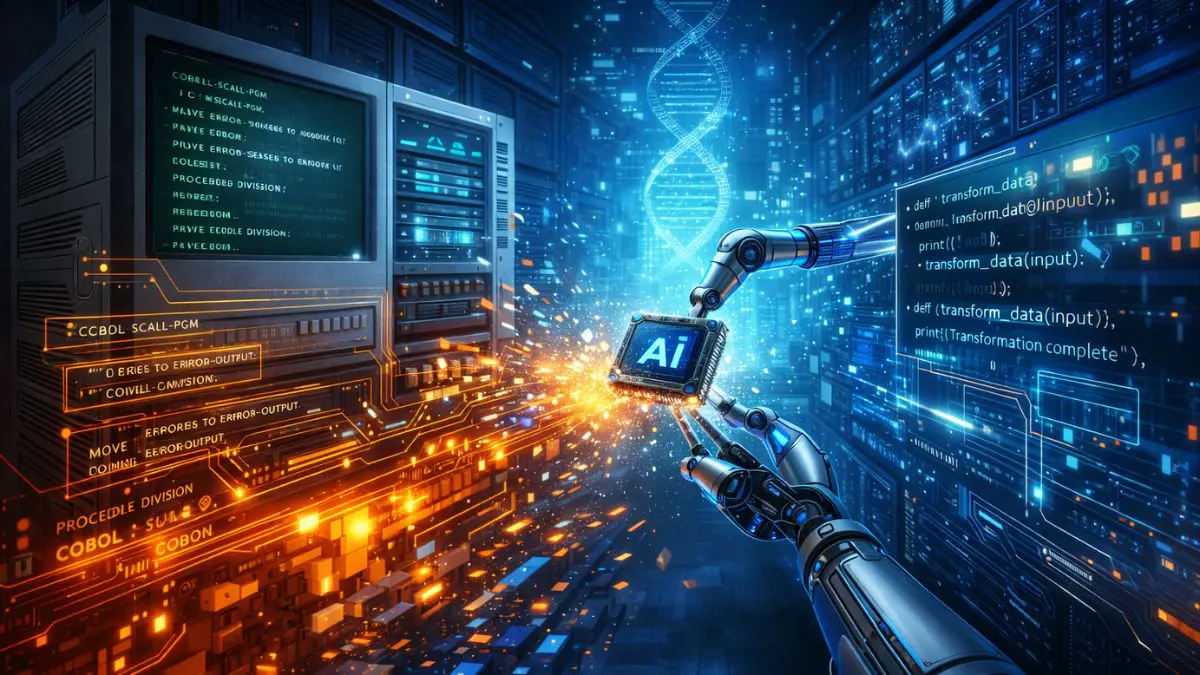
New “agentic” coding tools aim to automate parts of the modernization process, including code discovery, documentation, and translation into newer languages or architectures.
Technology leaders say these tools could shorten project timelines and reduce costs. But most emphasize that human oversight remains essential, particularly for systems tied to payments, settlements, or regulatory reporting.
Modernization projects often involve not just rewriting code but re-engineering business logic accumulated over decades — a process that rarely lends itself to full automation.
Systemic risk vs. productivity gains
For enterprise IT executives, the central question is not whether AI can help, but how quickly it can be trusted in mission-critical environments.
Mainframes are valued precisely because of their reliability. Introducing automated changes to complex systems raises concerns about testing, governance, and accountability — especially in sectors where errors could have financial or operational consequences.
As a result, many organizations are expected to adopt hybrid approaches, combining AI-assisted analysis with traditional engineering controls.
A turning point for the consulting industry
The rise of AI-assisted modernization could reshape the economics of enterprise IT services.
Firms that historically relied on large teams and multi-year migration projects may increasingly shift toward advisory, orchestration, and assurance roles — helping clients manage AI-driven workflows rather than performing every task manually.
Companies with deep domain expertise and long-standing client relationships are still likely to play a central role, even as automation changes how work is delivered.
Why this matters
Legacy systems sit at the heart of global commerce. Any technology that accelerates their modernization has implications far beyond the tech sector — affecting banks, governments, insurers, and millions of customers who rely on these systems every day.
If AI successfully reduces the cost and complexity of modernization, it could unlock productivity gains across industries. But the transition will need to balance speed with reliability, given the critical functions these systems perform.
FAQs
Q1. Why is COBOL still widely used?
Because it powers highly reliable transaction systems that have been refined over decades and are costly to replace.
Q2. What are AI coding tools trying to do?
They aim to analyze legacy code, generate documentation, and help convert systems to modern architectures.
Q3. Will AI replace mainframes entirely?
Unlikely in the near term. Most organizations are expected to modernize gradually while retaining core systems.
Q4. What risks are involved?
Errors in critical systems could disrupt operations, so strong testing and oversight are essential.
Q5. How could this affect IT consulting firms?
Business models may shift from labor-intensive migrations to AI-enabled advisory and integration services.