U.S. military aircraft crash in Kuwait as regional tensions escalate
By Cygnus | 02 Mar 2026
Summary
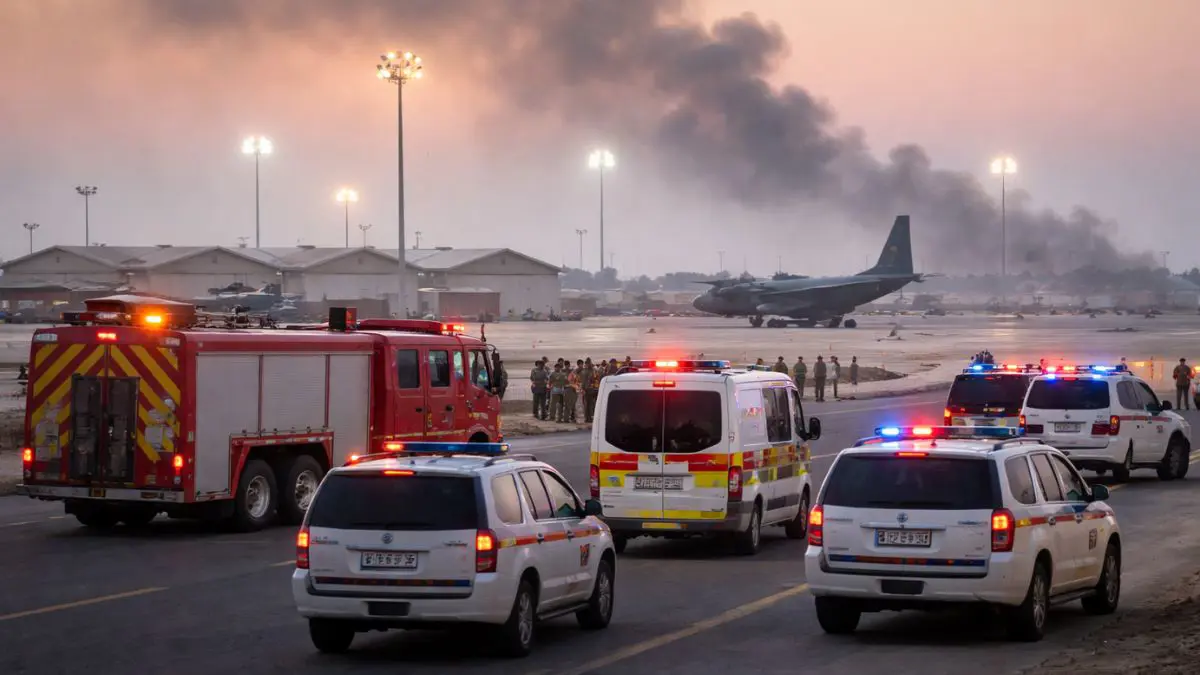
Several U.S. military aircraft crashed in Kuwait early Monday, with all crew members evacuated and reported in stable condition, according to Kuwaiti officials. The incidents come amid escalating regional tensions following Iranian retaliatory strikes across Gulf states, raising concerns over aviation safety, energy infrastructure, and broader geopolitical risks.
KUWAIT CITY, March 2, 2026 — Several U.S. military aircraft crashed in Kuwait early Monday, though all crew members were evacuated and remain in stable condition, according to Kuwait’s Ministry of Defence and officials cited by Reuters.
Emergency response teams worked in coordination with U.S. forces to secure the crash sites and transfer personnel to hospitals. Authorities did not disclose the number of aircraft involved, and officials said the cause of the crashes remains under investigation.
Smoke was also seen rising near the U.S. Embassy compound in Kuwait City, where fire trucks and ambulances were deployed. Authorities did not confirm the cause of the incident, and no official statement reported structural damage to the embassy.
Drone interceptions and refinery disruption
Kuwait said it intercepted hostile drones for the third consecutive day as regional hostilities intensified. Tehran has described the attacks as retaliation for recent U.S. and Israeli strikes on Iranian territory.
Iranian state media cited the Islamic Revolutionary Guard Corps as claiming responsibility for striking a U.S. aircraft that later crashed in Kuwait, though this assertion has not been independently verified.
Separately, minor injuries were reported at the Mina Al-Ahmadi refinery after falling debris, according to Kuwait National Petroleum Company. Authorities said operations at key energy infrastructure continue to be closely monitored.
The U.S. Embassy issued a security advisory warning American citizens of ongoing missile and drone threats and urged them to shelter in place and avoid visiting diplomatic facilities.
Witnesses also reported loud explosions earlier in the day, while residents in Dubai and Doha said they heard blasts, underscoring the widening geographical scope of the confrontation.
Tehran has said it would target U.S. bases in the region following weekend strikes on Iranian territory. Recent missile and drone activity has affected both military and civilian areas, heightening concerns over regional aviation routes, shipping corridors, and energy infrastructure.
Why This Matters
- Energy markets: Escalation in the Gulf — a key oil-producing region — could disrupt production or shipping routes, increasing volatility in global crude prices.
- Aviation risk: Military activity near major flight corridors raises operational and insurance risks for airlines operating in the region.
- Geopolitical stability: Continued retaliation cycles between Iran and U.S. allies increase the risk of broader regional conflict.
- Investor sentiment: Heightened tensions typically trigger risk-off moves across global equities and emerging markets.
FAQs
Q1. Were there casualties in the aircraft crashes?
No fatalities have been reported. All crew members were evacuated and are in stable condition.
Q2. Has the cause of the crashes been confirmed?
No. Officials said the cause remains under investigation. Iran has claimed responsibility for striking a U.S. aircraft, but this has not been independently verified.
Q3. Were civilian facilities affected?
Minor injuries were reported at the Mina Al-Ahmadi refinery due to falling debris, with no major structural damage confirmed.
Q4. What has the U.S. Embassy advised?
The embassy warned of ongoing missile and drone threats and advised U.S. citizens to shelter in place and avoid visiting diplomatic facilities.
Q5. What are the broader economic risks?
Escalation could disrupt energy flows, aviation routes, shipping lanes, and regional trade, potentially impacting global markets and supply chains.

























