The great memory squeeze: Why your next RAM upgrade could cost more
By Axel Miller | 02 Mar 2026
Summary
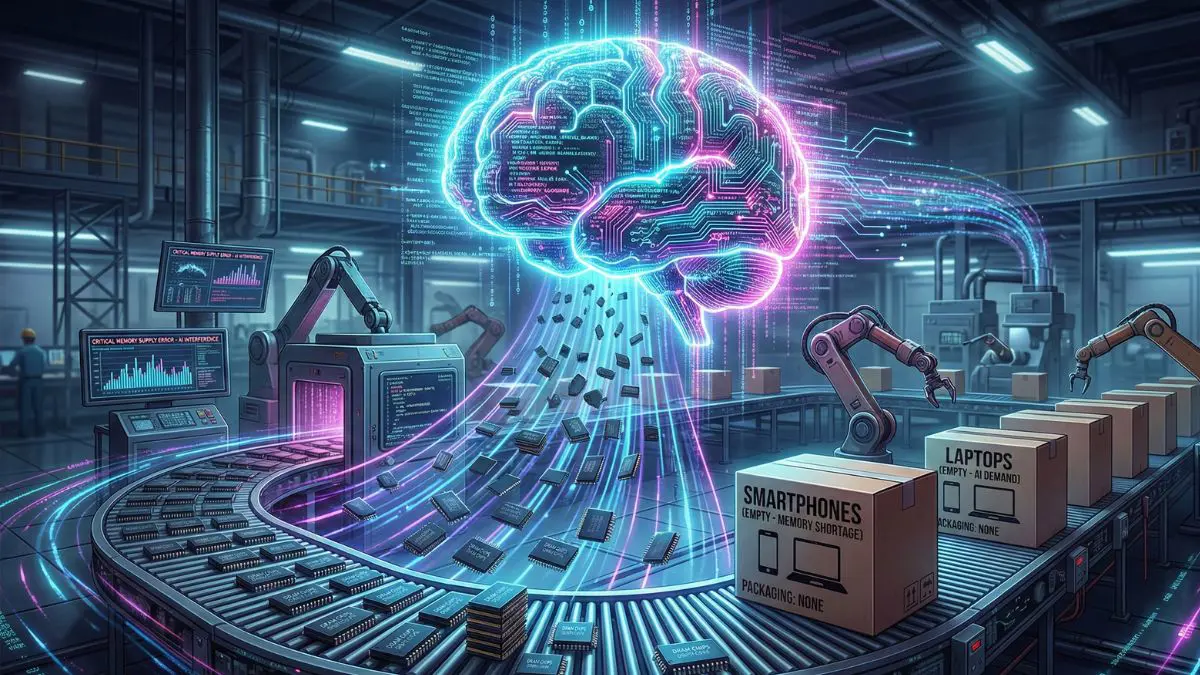
The global memory market is tightening in 2026 as demand from AI data centers surges and manufacturers prioritize higher-margin products such as high-bandwidth memory (HBM). While not a universal shortage, the supply shift is putting upward pressure on prices for PCs, smartphones, and other consumer devices — a trend analysts say could persist for several cycles.
The AI pull: How data centers are reshaping memory supply
The biggest force behind rising memory prices is structural rather than accidental. Instead of disruptions like factory outages, the market is being reshaped by the rapid expansion of AI infrastructure, which relies heavily on advanced memory technologies such as HBM and high-capacity DDR5 modules.
Major memory makers — including Micron, SK hynix, and Samsung — have increasingly prioritized production lines for data-center and AI applications, where demand visibility and margins are stronger than in the consumer PC segment. This shift doesn’t eliminate consumer supply, but it tightens availability and reduces pricing flexibility.
As hyperscale cloud providers continue to expand AI clusters, the memory industry is effectively balancing two markets: high-volume enterprise demand and cyclical consumer electronics demand.
Price pressure builds across consumer segments
Market trackers and industry commentary indicate that memory pricing entered an upcycle in late 2025, with contract and spot prices trending upward into 2026.
Key dynamics include:
- DDR5 adoption: As the industry transitions toward newer standards, high-performance modules remain relatively expensive compared with prior generations.
- Legacy supply tightening: Gradual phase-downs in older DDR4 production are reducing supply, which can keep prices elevated even for older systems.
- Device cost ripple effects: Memory is a significant component cost for smartphones, laptops, and servers, meaning sustained increases can influence retail pricing and product configurations.
While dramatic percentage spikes vary by segment and timing, the broader trend is clear: memory is moving from a deflationary to a cyclical upswing phase.
Smartphones and on-device AI demand
The push toward on-device artificial intelligence — including generative features, local processing, and advanced multitasking — is increasing memory requirements for premium smartphones. As a result, handset makers must balance performance expectations with bill-of-materials costs, sometimes adjusting base configurations or pricing strategies.
Compared with PCs, smartphones tend to feel memory cost swings more quickly because of shorter product cycles and tighter margins.
When could the market rebalance?
Memory markets are historically cyclical. New fabrication capacity and technology transitions typically take several years to affect supply. Industry roadmaps suggest that additional production coming online later this decade could ease tightness, but timing depends on demand growth and capital investment cycles.
For now, the market remains in an expansion phase driven by AI infrastructure spending, meaning pricing volatility is likely to persist rather than normalize immediately.
Why this matters
- Consumer costs: Higher memory prices can raise the cost of PCs, smartphones, and upgrades.
- AI economics: Memory is becoming a key bottleneck in scaling AI workloads, influencing data-center investment decisions.
- Industry cycle shift: The memory sector appears to be entering a new demand paradigm where enterprise AI workloads play a larger role than traditional consumer electronics.
- Product strategy changes: Device makers may adjust configurations, pricing tiers, or release cycles in response to sustained component inflation.
FAQs
Q1. Are we in a true RAM shortage?
Not universally. Supply is available, but tighter capacity and strong data-center demand are pushing prices higher.
Q2. Why is AI affecting memory prices so much?
AI servers require large amounts of high-performance memory, and this demand is growing faster than consumer demand.
Q3. Should consumers expect higher device prices?
Potentially. Memory is a meaningful cost component, so sustained increases can feed into retail pricing.
Q4. When might prices stabilize?
Historically, memory cycles take several years to rebalance as new capacity comes online and demand growth moderates.

























