Google and Apple move closer to seamless Android–iPhone switching
By Cygnus | 10 Dec 2025
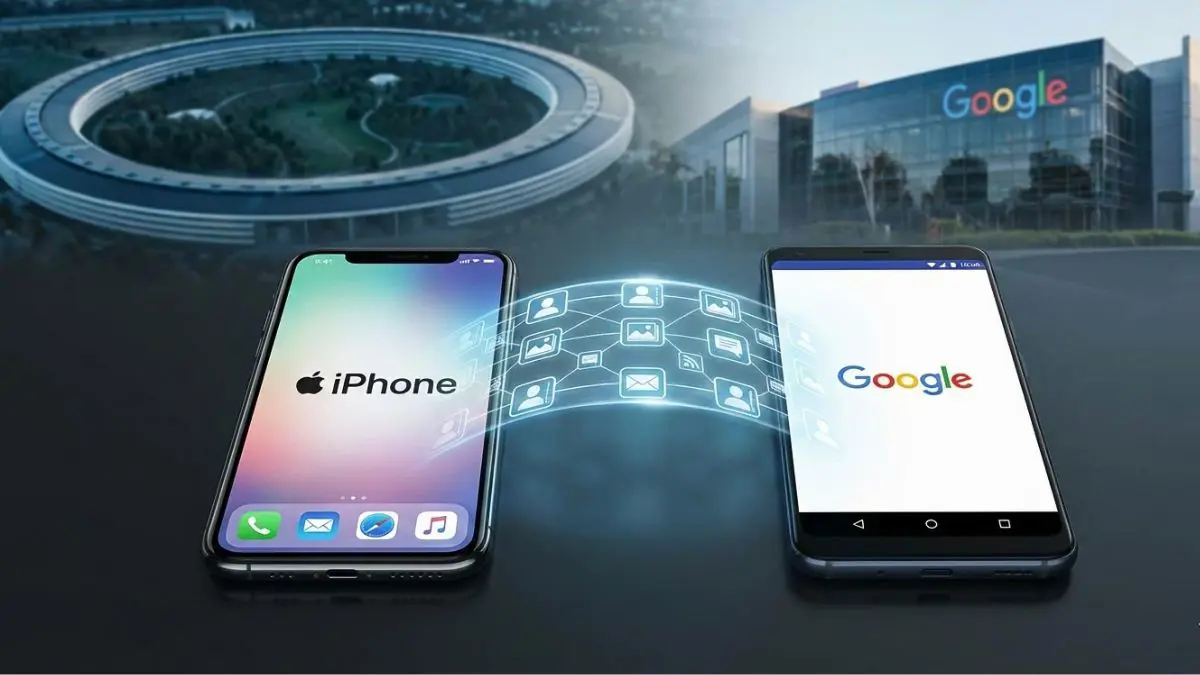
Switching between Android and iPhone has long been a sticking point for users, but that barrier may soon ease. Google and Apple are working to simplify how data moves between their devices, marking a rare area of cooperation between two companies better known for competing fiercely across hardware and software ecosystems.
The initiative focuses on improving data transfers during the phone setup process, expanding the range of supported data types and reducing manual steps when users change platforms. Early signs of the updated feature are already visible in experimental Android builds rolling out to Pixel devices. Support on Apple’s side is expected to follow in a future iOS developer beta, though no public release timeline has been confirmed.
Lowering ecosystem barriers
For consumers, the changes promise a smoother transition between smartphones. For the industry, the implications are broader. Easier switching weakens ecosystem lock-in, a topic increasingly scrutinized by regulators globally.
By lowering friction, both companies may face higher user churn, forcing greater emphasis on service quality, hardware innovation, and long-term customer value rather than platform dependence.
This cooperation also reflects a shift in how mature technology markets operate. As smartphone hardware reaches saturation, competition is increasingly driven by software experience, cross-platform services, and ease of use. Reducing barriers to switching could reshape buying behavior, especially in price-sensitive markets where consumers are more likely to alternate between Android and iOS devices.
Android mimics ‘NameDrop’
In a separate but related development, Google appears to be building its own Android-based contact-sharing feature, mirroring Apple’s NameDrop. Internally referred to as “Gesture Exchange” or “Contact Exchange,” the feature is designed to let users exchange contact details by bringing two Android devices close together—eliminating the need for QR codes or manual number entry.
Animations linked to this feature have surfaced in recent Google Play Services beta updates, indicating active development. While the interface triggers when two phones are tapped together, the actual contact transfer is not yet functional.
The system is expected to rely on NFC to detect nearby devices, with Bluetooth or Wi-Fi handling the data exchange. However, inconsistent NFC antenna placement across Android smartphones could prove a technical challenge, potentially affecting usability when compared with Apple’s more standardized hardware approach.
Brief Summary
Google and Apple are improving tools that make it easier for users to switch between Android and iPhone, reducing friction during data transfers and weakening ecosystem lock-in. Google is also developing a tap-to-share contact feature for Android, similar to Apple’s NameDrop. Together, these moves signal a shift toward greater interoperability, with potential implications for competition, user loyalty, and the broader smartphone market.
Frequently Asked Questions (FAQs)
Q1: What is the new switching feature?
It is a collaborative effort by Google and Apple to standardize and simplify the data transfer process (contacts, photos, apps) when a user moves from an Android phone to an iPhone, or vice versa.
Q2: When will this be available?
There is no confirmed release date. Code for the feature has appeared in early Android beta builds, but the corresponding update for iOS has not yet been released to developers.
Q3: Why are they working together?
The collaboration is likely driven by regulatory pressure to reduce "anti-competitive" lock-in practices. By making it easier to leave their platforms, both companies can demonstrate compliance with fair competition laws.
Q4: What is "Gesture Exchange"?
This is a new feature in development for Android that allows users to share contact info by tapping two phones together. It is Google’s answer to Apple’s "NameDrop."
Q5: Will the tap-to-share feature work on all Androids?
Likely yes, but it may face challenges due to hardware differences. Unlike iPhones, Android phones have NFC antennas in different spots (top, middle, rear), which might make aligning the phones for the "tap" slightly more difficult.

























