Omron and Comau form global robotics alliance for chip manufacturing
By Axel Miller | 11 May 2026
Summary
- Industrial automation partnership: Omron Corporation and Italian robotics firm Comau have entered a strategic collaboration to co-develop next-generation industrial automation systems for high-precision manufacturing environments.
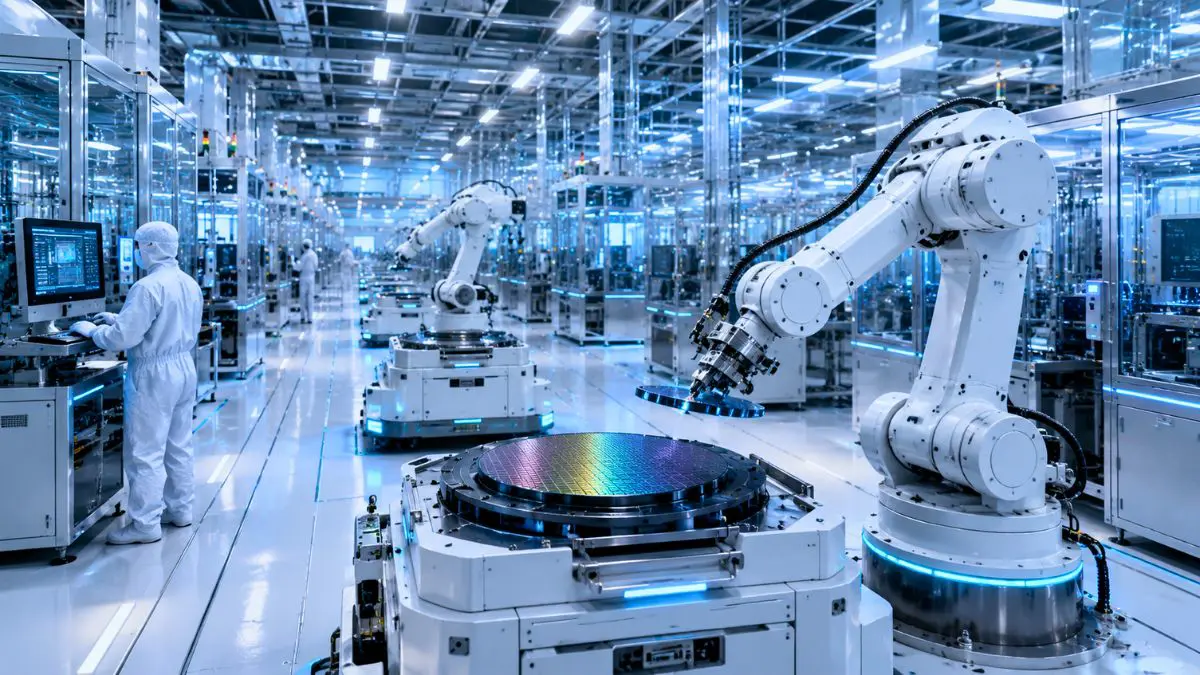
- Semiconductor and advanced industry focus: The alliance is aimed at semiconductor fabs, electronics assembly, and life sciences manufacturing, where cleanroom-grade robotics and high-accuracy sensing systems are increasingly critical.
- Complementary technology stack: The partnership combines Omron’s sensing, control, and vision systems with Comau’s heavy-duty robotic arms and industrial integration platforms to improve flexibility and scalability in automated factories.
MILAN, May 11, 2026 — Japanese industrial automation company Omron Corporation and Italian robotics manufacturer Comau have announced a strategic global collaboration aimed at accelerating the development of advanced automation solutions for semiconductor, electronics, and precision manufacturing industries.
The agreement brings together Omron’s expertise in sensing, control systems, and machine intelligence with Comau’s strengths in high-payload robotics and large-scale industrial system integration. The companies plan to develop a unified automation framework designed to improve interoperability across factory environments.
Expanding beyond automotive automation
For Comau, the partnership reflects its ongoing diversification beyond traditional automotive manufacturing, following its ownership structure led by One Equity Partners with Stellantis as a minority stakeholder. The company has been increasingly focusing on industrial automation, intralogistics, and high-growth non-automotive sectors.
Executives from Comau stated that the collaboration supports its strategy to expand into semiconductor manufacturing ecosystems and other advanced industries that require highly controlled production environments.
Targeting semiconductor and cleanroom manufacturing
The partnership is positioned to support the global expansion of semiconductor fabrication facilities, where demand for ultra-precise robotics, autonomous transport systems, and contamination-free manufacturing is rising rapidly.
The companies indicated that joint research and development programs are already underway, with early solutions expected to be showcased at major industrial automation exhibitions later this year.
Why this matters
- Semiconductor capacity expansion: New chip fabs globally require highly specialized robotics for cleanroom operations and precision handling.
- Industrial automation shift: Manufacturing is moving toward integrated “plug-and-play” robotics ecosystems rather than isolated proprietary systems.
- Supply chain resilience: Diversified automation suppliers reduce dependence on single-region industrial robotics ecosystems.
- Advanced manufacturing growth: The partnership strengthens robotics deployment in electronics, pharmaceuticals, and precision engineering sectors.
FAQs
Q1. Is this a merger between Omron and Comau?
No. It is a strategic collaboration agreement. Both companies remain independent while sharing technology development and system integration efforts.
Q2. What industries will benefit from this partnership?
Semiconductor manufacturing, electronics assembly, and life sciences production facilities are the primary target sectors.
Q3. Does Comau still operate in automotive manufacturing?
Yes, but it is increasingly diversifying into broader industrial automation markets beyond automotive.
Q4. Will these automation systems be used globally?
Yes. The companies plan global deployment, including regions expanding semiconductor manufacturing capacity.