India hosts global ISO space meet to advance orbital safety and “physical AI” standards
By Axel Miller | 08 May 2026
Summary
- India hosted the ISO Technical Committee 20/Subcommittee 14 (Space Systems and Operations) plenary meeting for the first time, marking a step forward in global space governance engagement.
- Discussions focused on developing international standards to improve compatibility across commercial space systems and emerging private-sector space technologies.
- Delegates emphasized space debris mitigation and long-term orbital safety as satellite constellations rapidly expand.
NEW DELHI, May 8, 2026 — India has concluded a week-long international space standards meeting in New Delhi, reinforcing its growing role in global aerospace governance and standard-setting for the space industry.
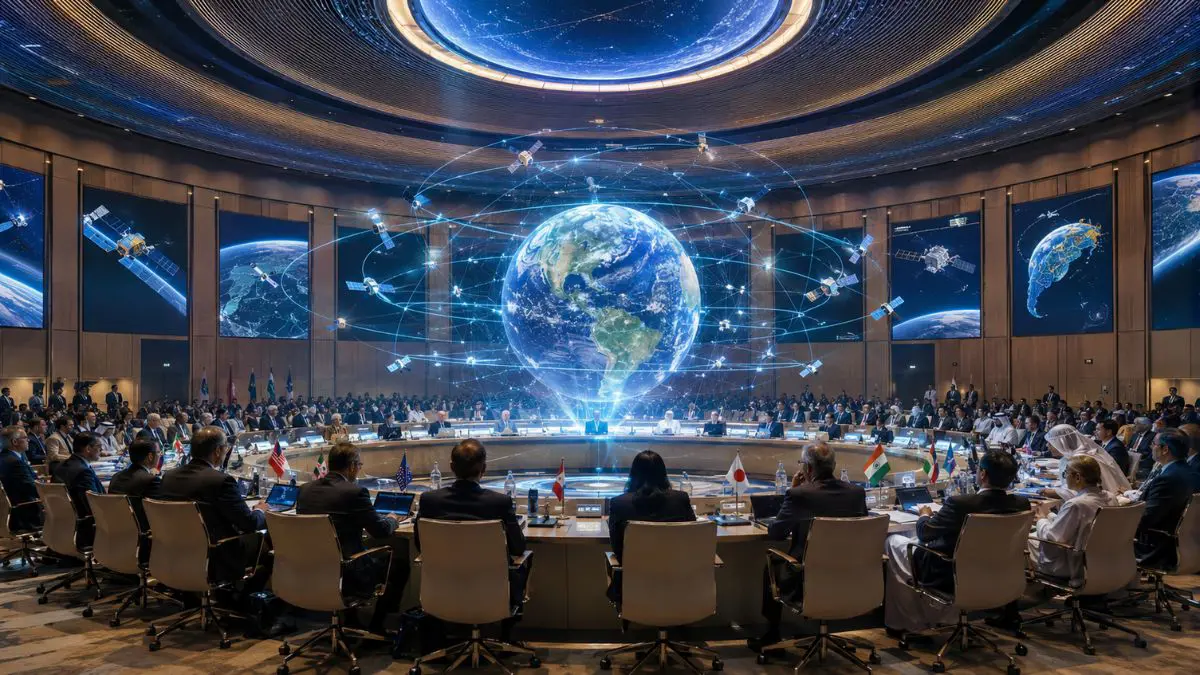
The 35th Plenary of ISO Technical Committee 20/Subcommittee 14 (Space Systems and Operations) was organized by the Bureau of Indian Standards (BIS) and brought together experts from multiple countries at Bharat Mandapam.
Officials said the meeting highlighted India’s expanding space ecosystem and its efforts to align domestic frameworks with global standards as the private space sector continues to grow.
Strengthening global space standards
The discussions focused on improving interoperability across space systems, particularly as private companies increasingly participate in satellite launches, space services and component manufacturing.
Speakers emphasized the importance of creating standardized “plug-and-play” frameworks that would allow space hardware and software systems from different countries and companies to work together more efficiently.
Indian officials also highlighted the role of regulatory reforms and institutional frameworks such as IN-SPACe in supporting the growth of the country’s space startup ecosystem.
Focus on space debris and orbital safety
A major area of discussion during the plenary was space debris mitigation, as the number of satellites in low Earth orbit continues to grow rapidly.
Delegates examined international coordination mechanisms aimed at reducing collision risks, improving tracking systems and ensuring the long-term sustainability of orbital environments.
Experts noted that the expansion of satellite constellations and commercial space activity makes global cooperation increasingly important for maintaining safe and sustainable space operations.
India’s growing role in space governance
Officials said India’s hosting of the ISO meeting reflects its rising influence in shaping global space policy and technical standards.
Industry representatives and international delegates also discussed the importance of aligning national standards with ISO frameworks to support cross-border collaboration in space technology development.
Why this matters
- Global standard-setting role: India is increasingly participating in shaping international rules for space systems and operations.
- Commercial space growth: Standardized frameworks could help startups and private companies integrate into global space supply chains.
- Orbital safety concerns: Rising satellite deployments make space debris management a critical global issue.
- Interoperability needs: Unified standards are essential for ensuring compatibility across rapidly evolving space technologies.
FAQs
Q1. What is ISO TC 20/SC 14?
It is a technical committee under the International Organization for Standardization focused on space systems and operations.
Q2. Why was the meeting important for India?
It marked the first time India hosted this global space standards meeting, highlighting its growing role in space governance.
Q3. What was a key topic of discussion?
Delegates focused on space debris mitigation, interoperability standards and sustainability of orbital environments.
Q4. Which organizations were involved from India?
The Bureau of Indian Standards (BIS) and IN-SPACe played key roles in organizing and supporting the event.