India explores large-scale 3D printing for space manufacturing
By Axel Miller | 29 Apr 2026
Summary
- There is no verified public record that Rosatom has commissioned a “RusBeam 2800” system at ISRO or the Vikram Sarabhai Space Centre as of April 2026.
- ISRO is actively researching 3D printing (additive manufacturing), especially for rocket engines and space components, but at smaller and experimental scales.
- India and Russia continue collaboration in space and nuclear sectors, though no specific ₹20 crore EBAM deal or summit-linked deployment is officially confirmed.
NEW DELHI, April 29, 2026 — India’s push toward advanced manufacturing for space applications is gaining momentum, with ISRO increasingly exploring additive manufacturing technologies to improve efficiency and reduce production timelines.
However, claims that Rosatom has installed a large-scale industrial 3D printer such as the “RusBeam 2800” at the Vikram Sarabhai Space Centre are not supported by publicly available official disclosures.
Additive manufacturing gains traction
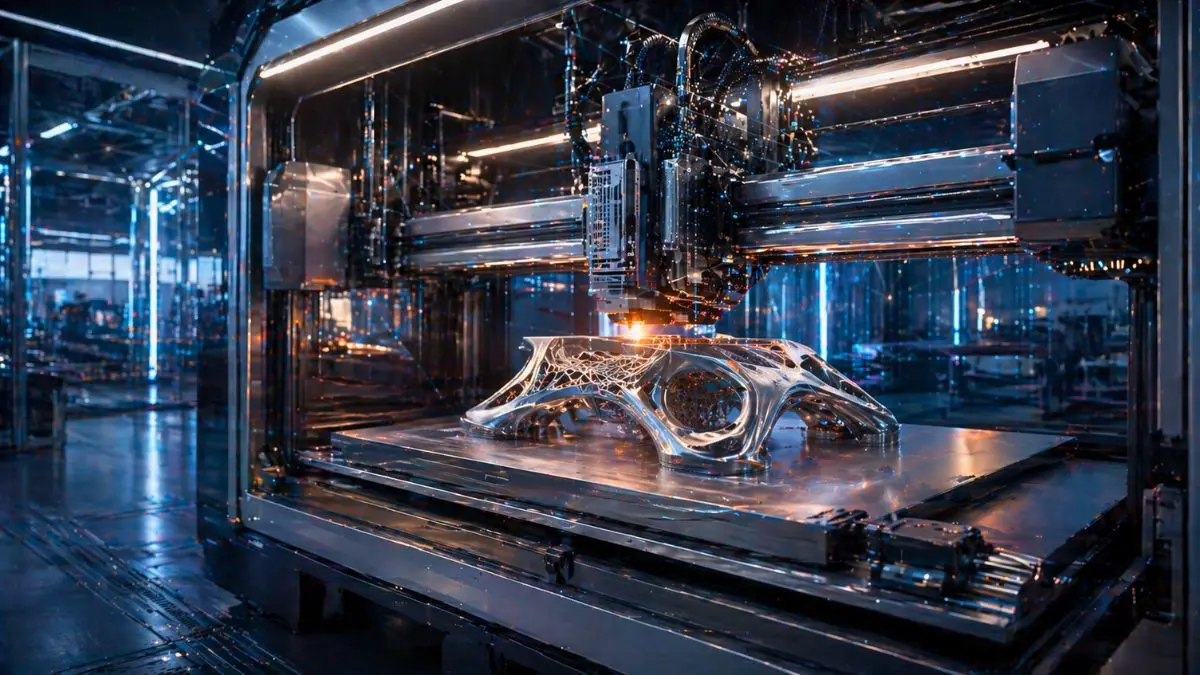
ISRO has been steadily investing in additive manufacturing, particularly for producing complex rocket engine components. The technology allows engineers to build parts layer by layer, reducing material waste and enabling intricate geometries that are difficult to achieve through traditional machining.
In recent years, ISRO has successfully tested 3D-printed engine parts, demonstrating the potential to cut manufacturing time and costs.
Advantages and limitations
Additive manufacturing offers several advantages for space programs:
- Reduced material wastage compared to conventional machining
- Faster prototyping and design iteration
- Ability to produce complex, lightweight structures
However, large-scale systems capable of producing multi-tonne aerospace structures are still rare globally and typically require extensive validation before deployment in mission-critical applications.
India–Russia collaboration context
India and Russia maintain long-standing cooperation in strategic sectors, including space and nuclear energy. While joint initiatives continue, there is no confirmed evidence linking a specific additive manufacturing deployment to recent bilateral summits.
Any future collaboration in advanced manufacturing would likely be announced through official government or agency channels.
Why this matters
- Faster space development: Additive manufacturing can significantly reduce the time required to build rocket and satellite components.
- Cost efficiency: Lower material waste and streamlined production can reduce mission costs.
- Technology self-reliance: Developing in-house manufacturing capabilities supports India’s long-term space ambitions.
FAQs
Q1. Has ISRO installed a large industrial 3D printer from Russia?
No confirmed official information supports this claim as of April 2026.
Q2. Does ISRO use 3D printing?
Yes. ISRO has been using additive manufacturing for selected components, especially in propulsion systems.
Q3. Can 3D printing replace traditional manufacturing in space tech?
Not entirely. It complements traditional methods but still requires validation for large-scale and critical components.