Hardened compute: The rise of the data bunker
By Axel Miller | 11 Mar 2026
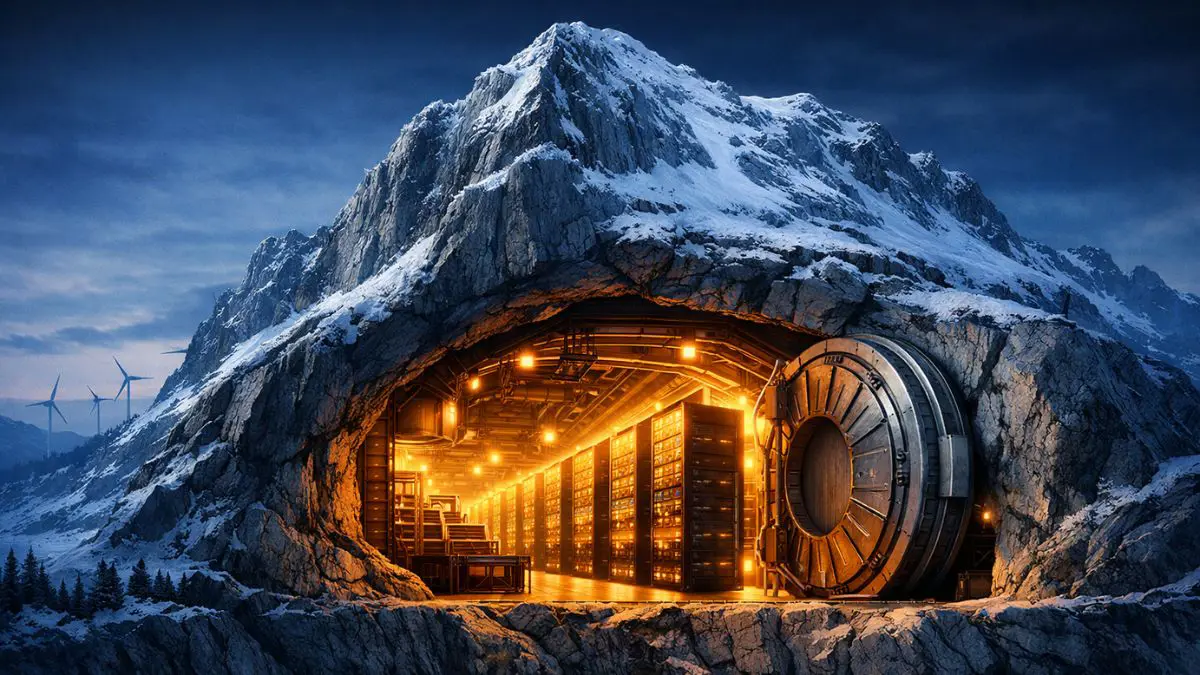
Summary
As geopolitical tensions and AI infrastructure demands intensify, governments and corporations are investing in “hardened compute” — fortified data centers built underground or in remote environments to improve resilience, cooling efficiency and security.
For decades, the tech industry sold the idea of “the cloud” as borderless and abstract. In reality, digital infrastructure has always depended on physical systems — cables, power grids and server facilities — vulnerable to disruption.
By 2026, shifting geopolitical risks and the growing scale of AI workloads are prompting a reassessment of where and how critical data is stored. The result is a growing focus on physically fortified infrastructure.
From cloud campuses to hardened facilities
New projects reflect a trend toward protected environments designed to withstand operational shocks. In Europe, firms such as Polarise are expanding domestic AI infrastructure with facilities designed for enhanced resilience and local control.
Some hardened sites repurpose existing underground structures such as former bunkers, while others are purpose-built with reinforced construction and restricted access systems.
Industry analysts say the shift reflects a broader push toward “digital sovereignty,” as countries seek tighter control over critical data infrastructure.
Cooling, scale and the physics of AI
The growth of large-scale AI systems has made cooling a central design challenge. Underground and remote locations offer potential advantages:
- Stable temperatures: Subsurface environments provide consistent cooling conditions.
- Energy efficiency: Reduced reliance on active cooling systems can lower operating costs.
- Environmental alignment: Some projects integrate renewable energy sources nearby.
Experimental concepts such as subsea data centers are also under exploration, though deployment remains limited.
Resilience and continuity planning
Beyond efficiency, hardened infrastructure addresses continuity risks. Governments and corporations increasingly prioritize facilities capable of operating during disruptions to global connectivity or energy networks.
In some cases, critical systems are partially isolated from external networks, a strategy known as air-gapping, to reduce cybersecurity exposure.
A shifting infrastructure model
The rise of hardened compute signals a broader transition in digital strategy — from globally distributed infrastructure toward regionally anchored systems designed for reliability and control.
While traditional hyperscale campuses remain essential, fortified facilities are becoming an additional layer for high-value workloads.
Why this matters
- Infrastructure resilience: Hardened facilities help protect critical services during disruptions.
- Energy efficiency pressures: Cooling and power costs are shaping future data center design.
- Policy alignment: The shift reflects growing emphasis on national digital sovereignty.
FAQs
Q1. Are data bunkers immune to cyberattacks?
No. Physical hardening protects infrastructure, but cybersecurity remains essential. Many facilities combine both approaches.
Q2. Who is building hardened facilities?
Governments, sovereign infrastructure firms and private enterprises in sectors like finance and healthcare.
Q3. Is this replacing the cloud?
Not entirely. Hardened compute complements traditional cloud infrastructure rather than replacing it.

























