Study points to Rimae Bode as possible site for China’s 2030 Moon landing
By Axel Miller | 12 Mar 2026
Summary
A new study published in Nature Astronomy suggests the Rimae Bode region on the Moon’s near side could be a strong candidate for China’s planned crewed landing later this decade.
BEIJING, March 12, 2026 — While international focus has largely centered on the lunar south pole, new research indicates China may target an equatorial region for its first crewed Moon mission.
The study highlights Rimae Bode, located near the lunar equator on the near side, as a scientifically valuable and operationally practical landing zone due to its relatively flat terrain, steady sunlight and accessible volcanic materials.
Scientists described the region as a “geological museum” because of its ancient pyroclastic deposits, including volcanic glass beads believed to preserve clues about the Moon’s interior and early evolution.
Mission architecture
China’s human lunar program is expected to use a dual-launch approach led by the China Manned Space Agency.
The Long March 10 rocket will launch the Mengzhou spacecraft, while a second launch will carry the Lanyue lander. The spacecraft are planned to rendezvous in lunar orbit before astronauts descend to the surface.
Recent system tests, including maximum dynamic pressure (“Max Q”) trials, indicate progress toward the program’s end-of-decade timeline.
Surface exploration plans
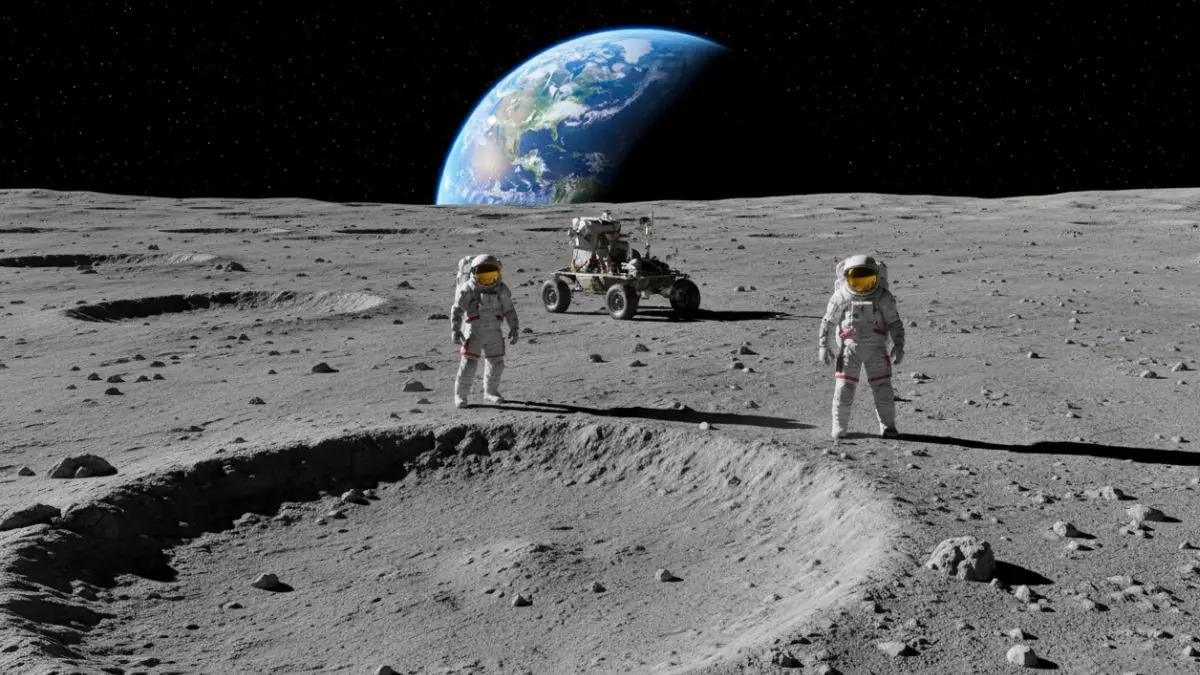
Astronauts are expected to use the Tansuo rover, an unpressurised vehicle designed to carry two crew members for short-range exploration missions.
Researchers say samples collected at Rimae Bode could help scientists better understand volcanic activity on the Moon and its geological connection to Earth.
Why this matters
- Scientific value: Rimae Bode offers access to rare volcanic deposits.
- Operational feasibility: Equatorial conditions may simplify early crewed missions.
- Global competition: China’s plans reflect growing international momentum in lunar exploration.
FAQs
Q1. Where is Rimae Bode located?
On the Moon’s near side near the equator, close to the Sinus Aestuum region.
Q2. Why consider it over the south pole?
It offers flatter terrain, consistent sunlight and simpler communications for initial missions.
Q3. What spacecraft will be used?
China plans to use the Mengzhou crew vehicle and the Lanyue lunar lander.
Q4. What will astronauts study there?
They aim to collect volcanic glass beads and other geological samples.
Q5. How far can the rover travel?
The Tansuo rover is designed to support exploration within roughly 10 km of the landing site.

























