The energy island: Why Big Tech is building its own power systems for the AI era
By Cygnus | 04 Mar 2026
Summary
The explosive growth of artificial intelligence is reshaping the global energy landscape. As AI data centers demand unprecedented amounts of electricity, technology giants such as Amazon, Microsoft and Google are increasingly investing in dedicated power generation, microgrids and nuclear partnerships to secure reliable, long-term electricity supplies.
WASHINGTON, March 4, 2026 — For decades, the relationship between Big Tech and the electricity grid was simple: technology companies plugged in, and utilities supplied the power.
But the artificial intelligence boom is rewriting that equation.
The rapid expansion of AI infrastructure — particularly large-scale data centers used to train and run advanced models — is pushing electricity demand to levels that traditional power networks were never designed to handle. In response, some technology firms are shifting toward what analysts describe as “power-first” infrastructure strategies, securing dedicated energy sources alongside their computing facilities.
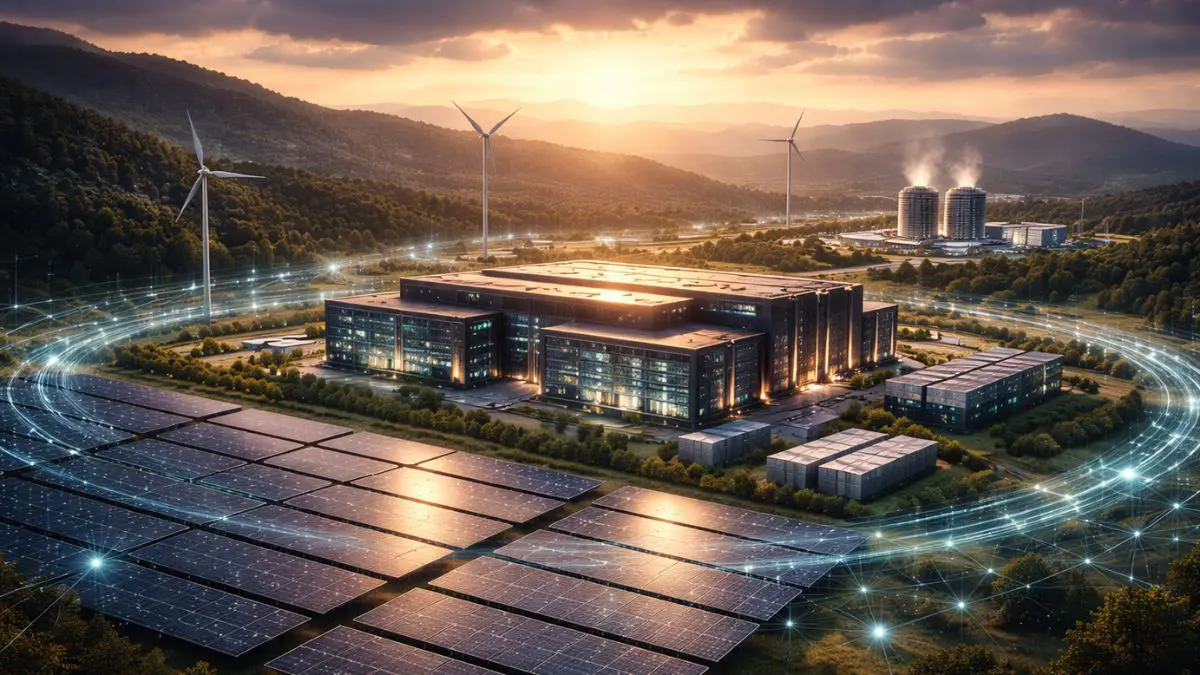
Instead of relying solely on public grids, companies are investing in co-located generation, renewable energy farms, and emerging nuclear technologies to guarantee stable, long-term electricity supplies.
The rise of “power-first” development
In the past, data center developers focused primarily on connectivity — proximity to fiber networks, internet exchanges and major population hubs.
Today, the key factor is increasingly power availability.
Large AI data center campuses can require hundreds of megawatts of electricity, comparable to the demand of major industrial facilities. Some next-generation computing clusters are projected to require even more as AI workloads scale.
As a result, technology companies are scouting locations where power infrastructure can be built alongside the data center itself.
This approach often combines multiple energy sources, including:
- Large solar and wind installations
- Massive battery storage systems
- Natural gas turbines for backup reliability
- Emerging geothermal projects
- Potential partnerships around small modular nuclear reactors (SMRs)
By pairing computing infrastructure directly with energy generation, companies aim to reduce dependence on congested transmission networks and ensure continuous operations.
Why the public grid is under pressure
The surge in AI investment comes as electricity systems in many countries are already under strain.
Power grids in the United States and Europe were designed decades ago for predictable industrial demand patterns — not the massive, localized spikes required by modern hyperscale data centers.
Upgrading transmission infrastructure can take years or even decades due to permitting challenges and construction costs.
Meanwhile, AI development is moving at breakneck speed.
Energy analysts say the mismatch between AI demand growth and grid expansion timelines is pushing technology companies to take a more active role in securing their own energy supply.
Political pressure and ratepayer concerns
The debate over AI power consumption has also become increasingly political.
Regulators and policymakers have raised concerns that the enormous electricity needs of data centers could drive costly grid upgrades, potentially passing those costs on to ordinary households.
Some state regulators in the United States have begun examining whether utilities should create special tariffs or cost structures for large data center operators.
By investing in dedicated power infrastructure, technology companies can reduce the pressure on public grids while shielding themselves from energy price volatility and regulatory uncertainty.
The strategic race for AI power
For technology companies, energy security is becoming just as important as computing hardware.
The global race to build advanced AI systems requires vast clusters of graphics processors and specialized chips running around the clock — and those systems cannot afford power disruptions.
As a result, the competition for AI leadership is increasingly tied to the ability to secure reliable, long-term electricity supplies.
Countries and companies that can deliver large-scale, stable energy for data centers may gain a decisive advantage in the next phase of technological development.
Why this matters
- AI power demand is surging: The growth of generative AI is driving unprecedented electricity consumption in the technology sector.
- Energy is becoming a strategic resource: Access to reliable power is now a critical factor in where AI infrastructure is built.
- Utilities face growing pressure: Grid operators must expand capacity while managing concerns about costs and reliability.
- Tech companies are reshaping the energy market: Investments in renewables, nuclear and microgrids could accelerate broader changes in electricity systems.
FAQs
Q1. What is an “energy island” in the context of data centers?
It refers to a large computing facility that generates much of its electricity on-site using dedicated energy infrastructure such as renewable power, nuclear partnerships or gas generation.
Q2. Why can’t public power grids simply handle AI demand?
Many electricity networks were built decades ago and expanding them requires lengthy permitting and construction timelines. AI infrastructure is scaling faster than grid upgrades.
Q3. Are technology companies building nuclear reactors?
Some firms are exploring partnerships around small modular reactors (SMRs) and other advanced nuclear technologies as part of long-term clean energy strategies.
Q4. Does this shift help the environment?
It depends on the energy mix. Many projects rely heavily on renewable energy, but some also use natural gas for reliability.
Q5. Will private power systems lower electricity prices?
Not directly, but dedicated generation could reduce strain on public grids and limit the need for costly infrastructure upgrades.

























