Eveready commissions Jammu plant to boost domestic alkaline battery production
By Axel Miller | 27 Apr 2026
Summary
Eveready Industries India Ltd. has commissioned a new alkaline battery manufacturing facility in Jammu with an investment of around ₹200 crore, marking a significant step toward expanding domestic production capacity. The plant is expected to strengthen India’s push for import substitution in the battery segment, where alkaline cells are still largely sourced from overseas. With a planned high-volume output and focus on premium battery products, the facility also supports regional industrial development while incorporating energy-efficient and environmentally conscious manufacturing practices.
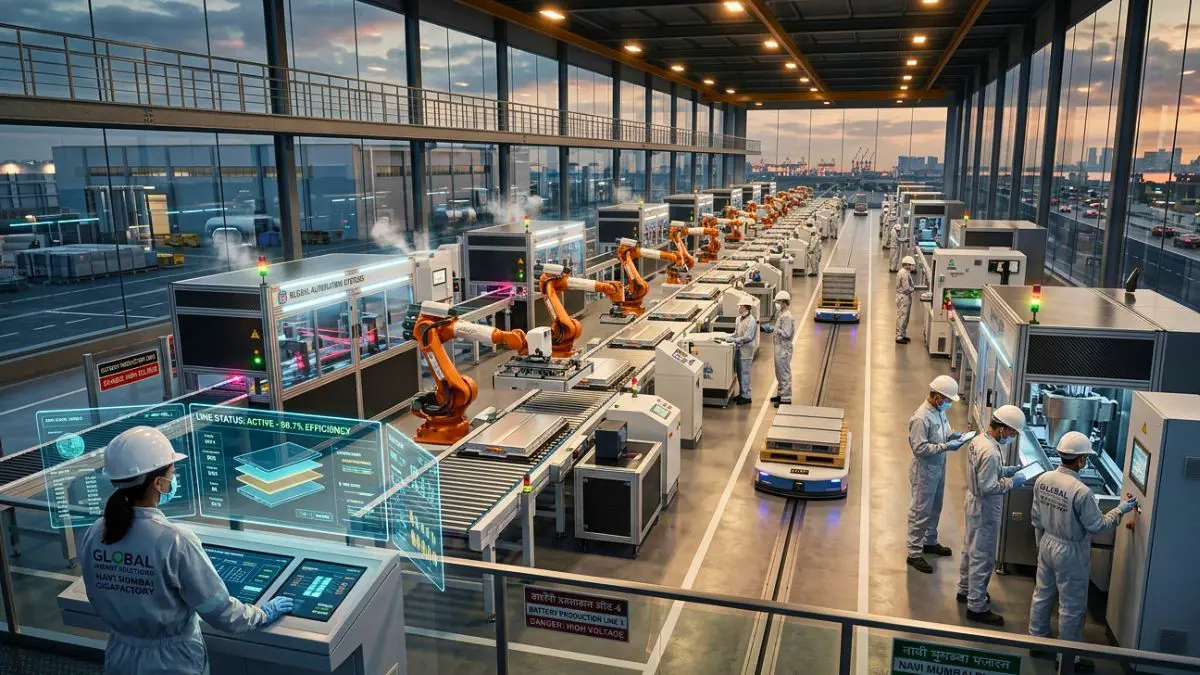
NEW DELHI, April 27, 2026 — Eveready Industries India Ltd. has commissioned a new alkaline battery manufacturing plant in Jammu, reinforcing its strategy to expand into the premium battery segment and reduce reliance on imports. The greenfield facility represents one of the company’s largest recent capital investments and aligns with India’s broader “Make in India” manufacturing push.
Expanding domestic manufacturing capacity
The facility, inaugurated in the presence of Manoj Sinha, is designed to produce alkaline batteries at scale, helping Eveready reduce dependence on imports, particularly from China and Southeast Asia.
While the company has indicated a large installed capacity, exact figures reported publicly vary, and analysts note that the plant is expected to ramp up production in phases rather than immediately operating at peak output.
“This investment supports our transition toward higher-value products as consumer demand evolves,” said company leadership, highlighting growing usage in high-drain devices such as wireless accessories, IoT products, and smart home electronics.
Moving beyond the legacy dry-cell business
Eveready has historically dominated India’s zinc-carbon battery segment, but alkaline batteries—offering longer life and higher performance—represent a faster-growing category. The new plant is expected to support expansion of the company’s premium portfolio, including its alkaline product lines.
Industry estimates suggest alkaline batteries still account for a smaller share of India’s overall battery consumption compared to global markets, indicating strong headroom for growth rather than immediate market dominance.
Investment phase impacts financials
Recent financial results from Eveready Industries India Ltd. reflect the transition phase. While revenue growth has remained steady, profitability has been impacted by higher marketing spend and upfront costs associated with commissioning the new facility.
Management has indicated that localized manufacturing is expected to improve margins over time by reducing logistics costs, import duties, and currency exposure.
Why this matters
- Supply chain resilience: Expanding domestic production reduces reliance on imported alkaline batteries and helps stabilize supply during global disruptions.
- Premiumization trend: The shift from zinc-carbon to alkaline batteries reflects rising demand for higher-performance power solutions in modern electronics.
- Regional industrial growth: The Jammu facility contributes to employment generation and manufacturing development in the Samba industrial belt.
FAQs
Q1. Is Eveready the only company making alkaline batteries in India?
It is among the few with domestic manufacturing capabilities, but other players also operate through imports, assembly, or limited production. The market is still evolving.
Q2. Will this eliminate battery imports in India?
Not entirely. Imports are likely to continue, but domestic capacity expansion can gradually reduce dependence over time.
Q3. What makes alkaline batteries different from zinc-carbon?
Alkaline batteries offer longer life, better performance in high-drain devices, and improved leakage resistance compared to traditional zinc-carbon cells.

























