Taiwan aims to lead ‘democratic’ high-tech supply chain with U.S. under tariffs deal
By Cygnus | 20 Jan 2026
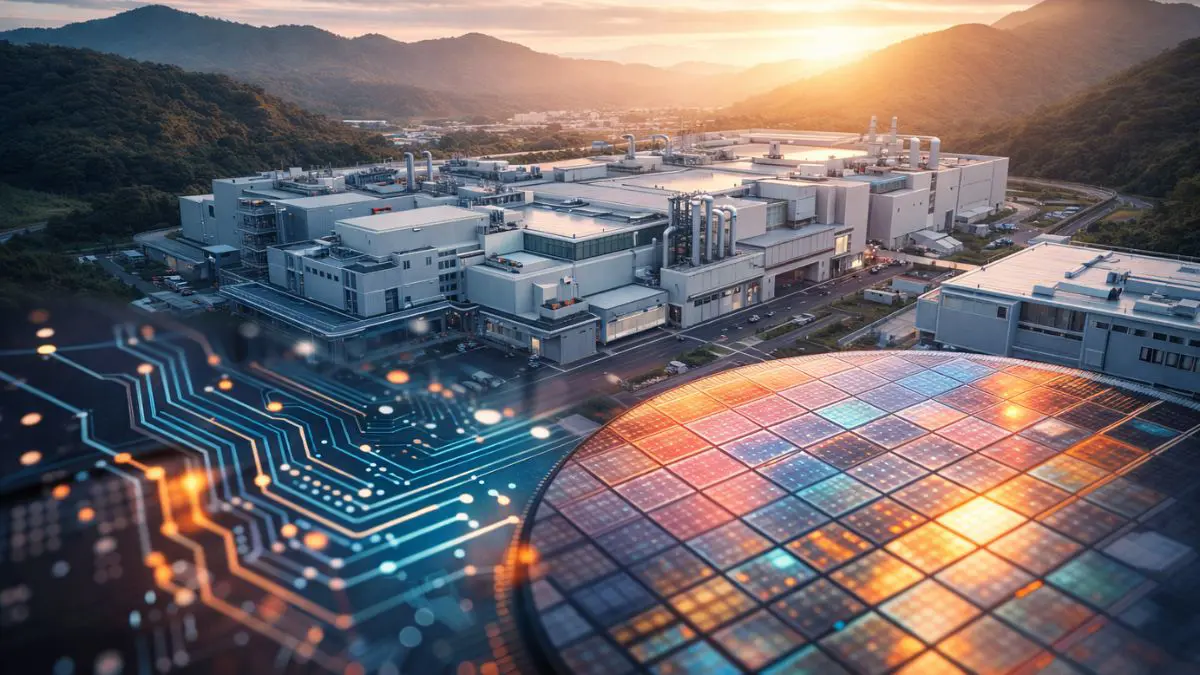
Taiwan is positioning itself as a central pillar of a “democratic” high-tech and artificial intelligence supply chain alongside the United States, following a trade deal finalised last week that aims to deepen industrial and strategic cooperation between the two economies.
Speaking in Taipei on Tuesday, Taiwan’s Vice Premier and chief trade negotiator Cheng Li-chiun said the agreement with Washington is intended to strengthen — not weaken — Taiwan’s globally critical semiconductor industry, while accelerating joint leadership in advanced technologies such as AI.
The agreement follows sustained pressure from U.S. President Donald Trump for Taiwan — home to the world’s most advanced chipmakers — to expand manufacturing capacity in the United States, particularly for semiconductors used in AI systems.
Under the deal, Taiwanese semiconductor companies that expand production in the U.S. will benefit from lower import tariffs on chips, wafers and certain manufacturing equipment. Some qualifying imports will be duty-free within approved quotas, while broader tariffs applying to most other Taiwanese exports to the U.S. will fall from 20% to 15%.
Taiwanese firms have also committed to $250 billion in new investment across semiconductors, energy and AI manufacturing in the U.S. Taipei will further support overseas expansion by providing $250 billion in credit guarantees to facilitate additional investment.
Cheng rejected concerns that the agreement could hollow out Taiwan’s chip sector — often described domestically as the country’s “sacred mountain” due to its economic and strategic importance.
“This is not supply-chain relocation,” she said. “It is about extending Taiwan’s technological strengths abroad — through expansion and multiplication — while reinforcing a strong industrial presence in the United States.”
Preferential treatment for chipmakers
As part of the agreement, semiconductor companies expanding U.S. facilities will be allowed to import up to 2.5 times their new production capacity in chips and wafers without additional tariffs during approved construction periods. Products exceeding that quota would still receive preferential tariff treatment.
Taiwan also expects favourable treatment under any future U.S. national security-driven semiconductor tariffs, currently under review as part of Washington’s Section 232 investigations.
Cheng said Taiwan aims to move beyond being a global support player and become a co-leader with the United States in the next phase of AI-driven technological development.
“We hope the future will be defined by Taiwan and the United States leading together,” she said.
The United States remains Taiwan’s most important international partner and security supporter, even as geopolitical tensions persist with China, which claims the self-governed island as its own.
Brief Summary
Taiwan says a new trade and tariffs agreement with the United States will strengthen a “democratic” high-tech and AI supply chain, offering preferential tariff treatment for Taiwanese chipmakers expanding U.S. production. The deal lowers tariffs on most Taiwanese exports to the U.S. from 20% to 15%, provides quota-based tariff relief for certain semiconductor imports, and includes a $250 billion Taiwanese investment commitment supported by $250 billion in credit guarantees, as Taipei seeks deeper strategic alignment with Washington.
Why this matters for markets and business
- Chip supply chain reshape: The deal accelerates a U.S. push to localise AI-relevant semiconductor capacity while keeping Taiwan deeply embedded in the system.
- Tariff advantage for chipmakers: Quota-based relief and preferential treatment reduce cost uncertainty for firms expanding U.S. fabs and supply lines.
- Capital deployment wave: The $250B investment pledge signals major new funding for U.S.-based semiconductor and AI manufacturing ecosystems.
- Policy signal to investors: The agreement reinforces alignment between Washington and Taipei and reduces trade-policy risk for qualifying companies.
- Geopolitical premium: Taiwan’s role in global chips continues to carry strategic value amid U.S.–China rivalry and security considerations.
FAQs
Q1) What is the core objective of Taiwan’s deal with the U.S.?
Taiwan says the agreement is designed to strengthen a “democratic” high-tech and AI supply chain with the United States, while supporting semiconductor expansion and deeper industrial cooperation.
Q2) Does the agreement weaken Taiwan’s domestic chip industry?
Taiwan says no. Officials argue the deal supports overseas expansion while keeping Taiwan’s core chip ecosystem and advanced capabilities anchored at home.
Q3) What tariffs are being reduced under the agreement?
Taiwan said broad tariffs affecting most Taiwanese exports to the U.S. will fall from 20% to 15%, while semiconductor-related imports for qualifying expansion projects receive more favourable treatment.
Q4) What tariff benefits do semiconductor companies receive?
Chipmakers expanding in the U.S. can receive lower tariffs or duty-free treatment within approved quotas for certain imports such as chips, wafers and some manufacturing equipment, with preferential terms applying beyond the quota.
Q5) What is the 2.5-times quota mechanism?
Under the deal, chipmakers expanding U.S. facilities can import up to 2.5 times their new production capacity in chips and wafers without additional tariffs during approved construction periods, according to Taiwan’s negotiators.
Q6) How much investment is involved?
Taiwan said companies have committed $250 billion in investment across semiconductors, energy and AI manufacturing in the U.S., while Taipei will provide $250 billion in credit guarantees to support further expansion.
Q7) Why does this matter for AI supply chains?
AI systems require advanced semiconductors and memory supply at scale. By incentivising U.S.-based expansion, the agreement strengthens the reliability of AI-related chip supply chains.
Q8) Why is this geopolitically significant?
Taiwan is reinforcing strategic alignment with the U.S. at a time of rising global competition over semiconductors. The framework also signals that supply chains are increasingly shaped by national security and alliance considerations.

























