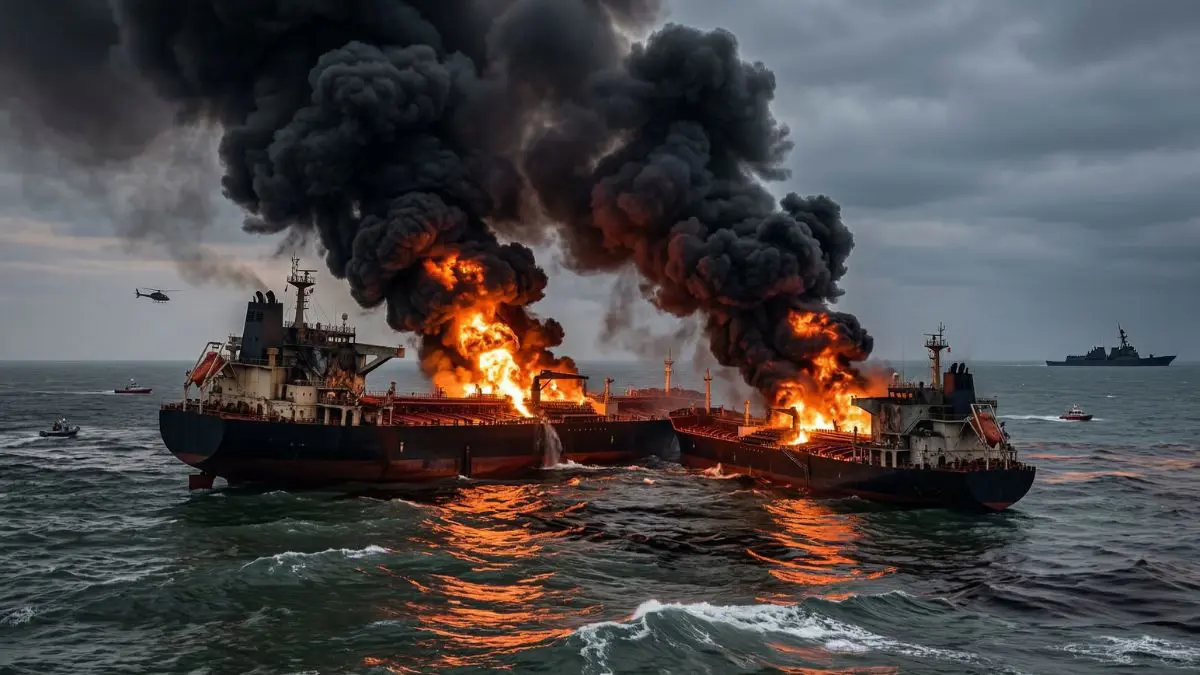
Tankers burn in Iraqi waters as Iran conflict escalates
By Cygnus | 12 Mar 2026
Summary
Oil markets were jolted again after tanker fires in Iraqi waters highlighted escalating risks to energy shipping routes, even as U.S. officials signalled no quick end to the conflict with Iran.
DUBAI/TEL AVIV/WASHINGTON, March 12, 2026 — Fires aboard oil tankers in Iraqi waters underscored mounting risks to global energy flows on Thursday, as tensions tied to the U.S.-Iran conflict continued to intensify.
Maritime security sources reported that explosive-laden boats struck two commercial vessels, killing one crew member and damaging both ships. The incidents followed a series of regional strikes affecting shipping and infrastructure across the Gulf.
Oil markets react
The attacks reignited volatility in energy markets. Oil prices rose sharply during Thursday trading, with Brent crude climbing back above $100 a barrel after earlier declines in the week.
Analysts say the renewed pressure reflects growing concern about supply disruptions through key regional chokepoints, particularly the Strait of Hormuz, which typically handles about one-fifth of global oil flows.
No quick end in sight
U.S. officials acknowledged the conflict may persist despite earlier statements suggesting progress toward stabilisation.
President Donald Trump said Washington remained committed to safeguarding shipping lanes while warning Tehran against further escalation.
Regional security reports also cited additional incidents affecting energy infrastructure in Oman and Bahrain, though details remain limited.
Energy policy response
Officials and analysts expect continued reliance on strategic reserves and alternative supply routes if tensions persist.
While the International Energy Agency has urged member states to remain prepared for coordinated action, no major emergency release beyond previously announced measures has been confirmed.
Why this matters
- Energy security: Attacks on tankers highlight ongoing risks to global oil supply chains.
- Market volatility: Even limited disruptions are driving sharp price swings.
- Geopolitical risk: The conflict’s trajectory remains uncertain with regional spillover concerns.
FAQs
Q1. Are shipping routes closed?
No. Shipping continues, though risks and insurance costs have risen sharply.
Q2. How are oil prices reacting?
Prices remain volatile, with renewed gains after tanker attacks.
Q3. Is the conflict spreading regionally?
Security reports indicate incidents across multiple Gulf locations, though details are still emerging.

























