India accelerates ethanol and EV push as energy import bill climbs
By Axel Miller | 20 May 2026
Summary
- Dual-track energy strategy: India is expanding both ethanol-blended fuel infrastructure and electric commercial vehicle incentives to reduce long-term dependence on imported crude oil.
- E100 rollout challenge: Policymakers and industry groups say wider adoption of E100 fuel will depend heavily on pricing competitiveness and the expansion of dedicated fueling infrastructure.
- Commercial EV incentives: The government is evaluating financial support mechanisms, including interest subvention and credit guarantees, to encourage private fleet electrification in buses and logistics transport.
NEW DELHI, May 20, 2026 — India is accelerating efforts to reduce its dependence on imported fossil fuels as rising geopolitical uncertainty and elevated crude prices continue to pressure the country’s energy import bill. Policymakers are simultaneously pushing biofuels and electric mobility as part of a broader energy diversification strategy.
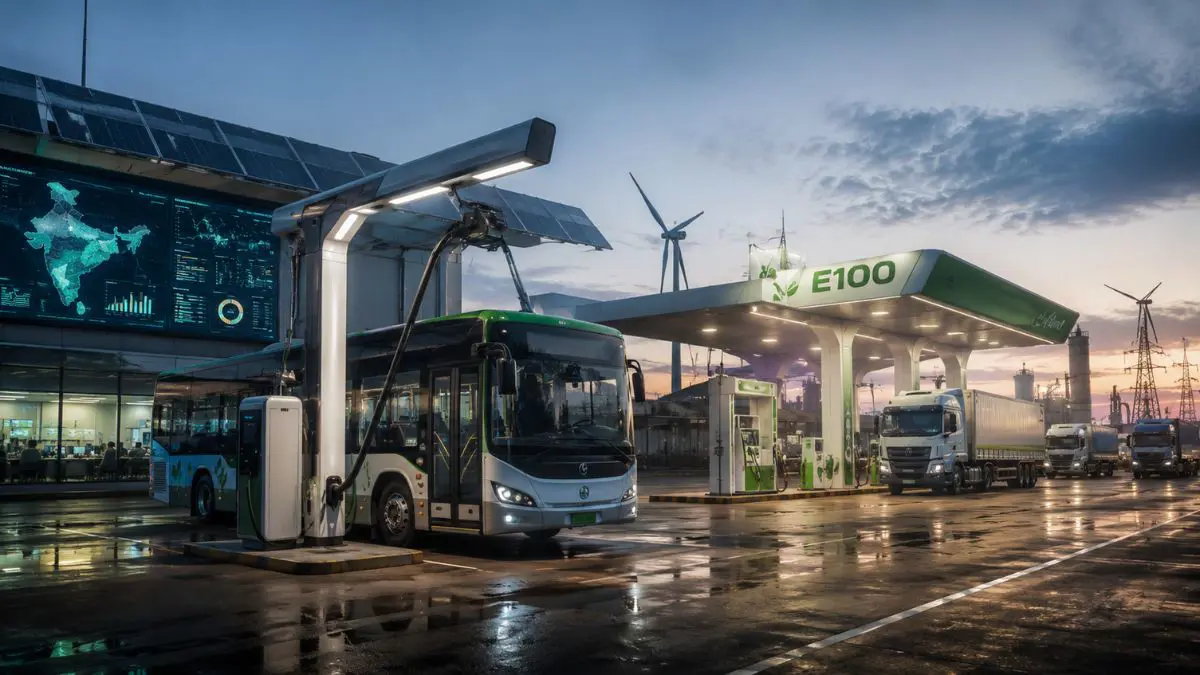
The government is scaling up plans for dedicated E100 ethanol fuel infrastructure while also working on financial incentive frameworks to support the electrification of commercial vehicle fleets, particularly buses and heavy-duty logistics transport.
E100 expansion faces pricing and infrastructure hurdles
The Ministry of Petroleum and Natural Gas has been promoting flex-fuel adoption and higher ethanol usage as part of India’s long-term energy transition roadmap. Officials and industry stakeholders have discussed expanding dedicated E100 fuel outlets across major transport corridors over the next several years.
However, industry groups have cautioned that consumer adoption of E100 fuel will depend on competitive pricing because ethanol delivers lower fuel efficiency per litre compared with petrol.
According to the Society of Indian Automobile Manufacturers, pricing incentives and broader vehicle compatibility will be critical for scaling demand in the passenger vehicle segment.
Deepak Ballani has also emphasized the economic benefits of expanding domestic ethanol production, arguing that it supports rural income generation while reducing exposure to imported energy markets.
Commercial EV transition targets private fleet operators
Alongside biofuel expansion, the government is increasing its focus on commercial EV adoption, particularly in private-sector transport fleets that account for the majority of India’s intercity bus and logistics activity.
Officials are evaluating financing support structures that may include:
- Interest subvention for electric buses and heavy-duty EVs
- Credit guarantee mechanisms for lenders
- Support for charging infrastructure deployment
- Incentives aimed at lowering fleet transition risk
The broader objective is to accelerate adoption among private operators, where high upfront vehicle costs and concerns around resale value remain major barriers.
Industry analysts say electrifying heavy commercial transport could significantly reduce diesel consumption over the next decade while also helping India lower emissions from freight mobility.
Why this matters
- Reducing import dependence: India remains one of the world’s largest crude oil importers. Expanding domestic ethanol production and EV usage can help reduce exposure to global oil price volatility and improve long-term energy security.
- Supporting rural and industrial ecosystems: Ethanol production creates additional demand for agricultural feedstocks such as sugarcane and grains, while EV expansion supports domestic battery, charging, and manufacturing ecosystems.
- Lowering commercial fleet emissions: Heavy-duty commercial vehicles are among the largest contributors to diesel consumption and transport emissions in India. Electrification incentives could accelerate modernization across the logistics sector.
FAQs
Q1. What is E100 fuel?
E100 is fuel made from 100% ethanol, designed for use in compatible flex-fuel vehicles that can operate on higher ethanol blends.
Q2. Why is pricing important for E100 adoption?
Ethanol generally provides lower mileage than petrol, meaning consumers may only adopt it at scale if retail prices are sufficiently discounted.
Q3. Why is the government focusing on private commercial fleets?
Private operators account for a major share of India’s bus and freight transport network. Transitioning these fleets could have a larger impact on fuel consumption than focusing only on public transport systems.