Renewables Push China’s Thermal Power Into First Annual Drop in a Decade
By Axel Miller | 19 Jan 2026
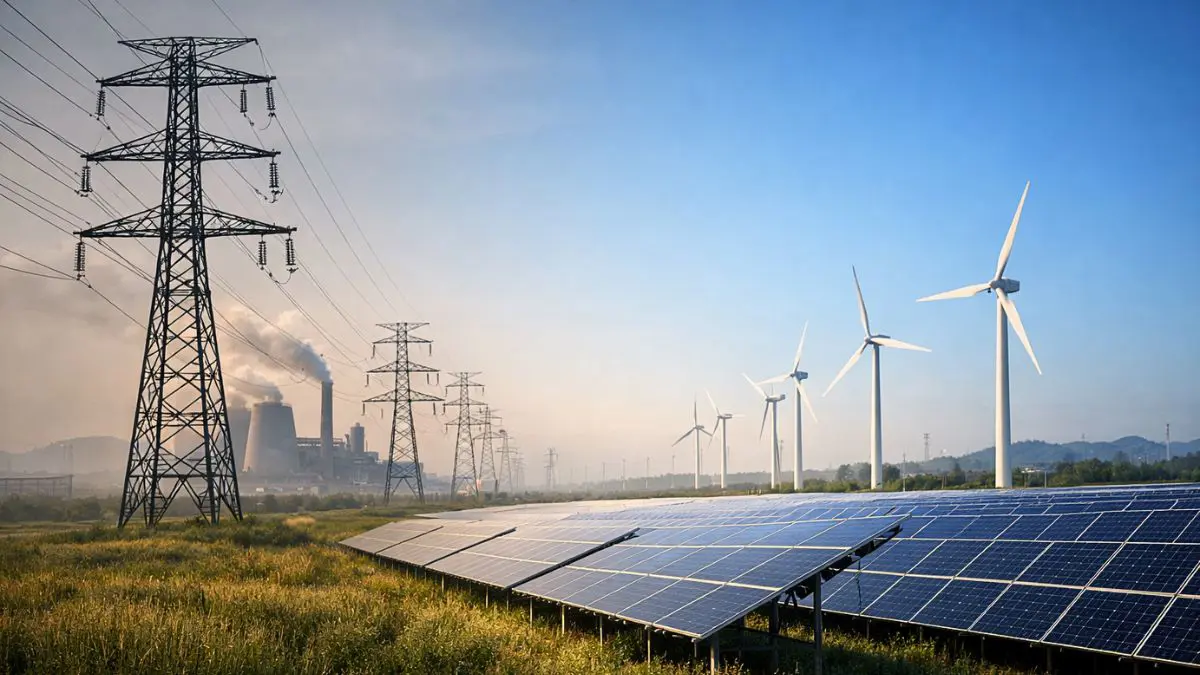
BEIJING — China’s thermal power generation recorded its first annual decline in ten years in 2025, as the country’s accelerating renewable energy buildout increasingly met new electricity demand in the world’s largest power market.
Official data released Monday by China’s National Bureau of Statistics (NBS) showed thermal power output — dominated by coal-fired generation — fell 1% in 2025 to 6.29 trillion kilowatt-hours (kWh). The weakness deepened toward year-end, with thermal generation sliding 3.2% year-on-year in December, signaling a gradual structural shift in China’s energy mix.
Clean energy gains ground
The decline came even as electricity demand continued to climb. China’s total power consumption rose 5% in 2025 to around 10.4 trillion kWh, surpassing the 10-trillion-kWh threshold for the first time, supported by growth in sectors including internet services and electric vehicle manufacturing.
With renewable and non-fossil generation expanding rapidly, China was able to meet most incremental demand without increasing fossil-fuelled power output.
NBS data showed hydropower output rose 2.8% in 2025. Nuclear power generation increased 7.7%, reinforcing the country’s low-carbon baseload supply as weather-dependent renewables scale up.
Analysts: trend hard to reverse
Analysts view the transition as increasingly structural.
“This shift towards a new power structure is difficult to reverse,” said Feng Dongbin, vice general manager at Fenwei Digital Information Technology.
Coal output still rises
Despite the decline in thermal generation, China’s domestic coal production still increased to a record high in 2025, reflecting Beijing’s continued focus on energy security and stable supply.
For global energy markets, the data suggests China’s clean-energy surge is beginning to cap growth in fossil-fuelled power generation, even as overall electricity consumption continues to expand.
Brief Summary
China’s thermal power generation fell 1% in 2025 to 6.29 trillion kWh, the first annual decline in a decade, even as electricity demand rose 5% to around 10.4 trillion kWh. Hydropower output increased 2.8% and nuclear power generation rose 7.7%, highlighting stronger non-fossil supply growth.
FAQs
1) Why did China’s thermal (coal-heavy) power drop in 2025?
Thermal power generation fell because China added large amounts of renewable and other non-fossil electricity supply — especially solar, wind and hydropower — reducing the need for fossil-fuelled generation growth even as electricity demand rose.
2) Is China’s electricity demand slowing down?
No. China’s electricity consumption continued to rise, growing 5% in 2025 to around 10.4 trillion kWh, crossing the 10-trillion-kWh threshold for the first time.
3) Does “thermal power” mean only coal?
Not exactly. Thermal power typically includes fossil-fuel power generation — mainly coal in China — but it can also include natural gas and other fuel-based generation. Coal remains the dominant component.
4) What role did renewables play?
China’s renewable buildout helped supply a large share of incremental electricity demand in 2025, allowing demand growth without a corresponding rise in fossil-fuelled power generation.
5) What about nuclear power — is it growing?
Yes. Nuclear generation rose 7.7% in 2025, supporting low-carbon baseload electricity that does not depend on weather conditions like solar or wind.
6) Does this mean China is “green” now?
Not yet. Coal remains a major source of electricity in China. However, the decline in thermal generation is a significant milestone, suggesting the power system is gradually shifting toward a higher share of non-fossil energy.
7) Will coal power rebound in 2026?
It’s possible depending on weather, hydropower conditions, industrial activity and grid constraints. However, analysts say the pace of renewables growth makes sustained increases in coal-heavy generation less likely unless demand accelerates sharply.