Technology - general
Tata Chem's low-cost water purifier in WSJ's best Asian innovations shortlist
By By Dhara Tripathi | 30 Jul 2010

Destruction of key compound of ozone detected
29 Jul 2010
For the first time, scientists successfully measure ClOOCl (a chlorine compound that affects ozone depletion) levels in the ozone layer

Metabolic disease: researchers find cause and possible cure
16 Jul 2010
An international team of scientists has discovered the gene mutation responsible for a condition in which eye and brain development is severely disrupted in affected infants

Solar powered plane completes night long flight over Switzerland
10 Jul 2010
The Solar Impulse cruised at a height of 28,000 feet and a top speed of 78 mph, in a night long flight, in what, according to project coordinators was the longest test flight of a piloted, solar-powered aircraft
Model helps search for moon dust fountains
By Bill Steigerwald, NASA Goddard Space Flight Center | 18 Jun 2010

BP uses Kevin Costner’s centrifuge machines to clean oil spill
16 Jun 2010
After seeing the effects of the Valdez spill in Alaska on TV, Costner put in $24 million of his money in 1995 to fund a team of scientists, including his brother Dan Costner, to develop a technology that could deal with huge oil spills
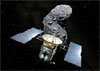
Japanese spacecraft Hayabusa returns from seven-year odyssey
14 Jun 2010
The mission nevertheless has proved enlightening as the spacecraft has shown that the 535-metre asteroid is not a solid body, but rather a lump of rubble resulting from an earlier asteroid collision
Nearby black hole is feeble and unpredictable
09 Jun 2010

Brown chemists report promising advance in fuel-cell technology
08 Jun 2010
A nanoparticle with a palladium core and an iron-platinum shell outperforms commercially available pure-platinum catalysts and lasts longer — a promising advance in fuel-cell technology, developed by chemists at Brown University
Brown chemists report promising advance in fuel-cell technology
08 Jun 2010
A nanoparticle with a palladium core and an iron-platinum shell outperforms commercially available pure-platinum catalysts and lasts longer — a promising advance in fuel-cell technology, developed by chemists at Brown University
Brown chemists report promising advance in fuel-cell technology
08 Jun 2010
A nanoparticle with a palladium core and an iron-platinum shell outperforms commercially available pure-platinum catalysts and lasts longer — a promising advance in fuel-cell technology, developed by chemists at Brown University
STEREO, SOHO spacecraft catch comet diving into sun
By By Robert Sanders, Media Relations, University of California, Berkeley | 26 May 2010
US scientists create synthetic living cell
21 May 2010

New microscopy technique reveals mechanics of blood cell membranes
21 May 2010
Thanks to an interdisciplinary team of researchers, scientists now have a more complete understanding of one of the human body’s most vital structures: the red blood cell.
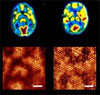
Lessons from the brain: toward an intelligent molecular computer
20 May 2010
A team of researchers from Japan and Michigan Technological University has built a molecular computer using lessons learned from the human brain.

Cell phone sensors for toxins developed at UC San Diego
14 May 2010
A tiny silicon chip that works a bit like a nose may one day detect dangerous airborne chemicals and alert emergency responders through the cell phone network.

Latest articles







Featured articles

The decoupling paradox: Why Wall Street keeps funding AI despite $100 oil
By Axel Miller | 11 May 2026
AI infrastructure stocks continue rallying despite $100 oil as investors bet on productivity gains and semiconductor demand in 2026.

Hybrid bonding gains attention as AI chip packaging demand grows
By Cygnus | 23 Apr 2026
Hybrid bonding is driving AI chip packaging demand as backend technologies gain importance in the semiconductor supply chain.

The agentic transition: how enterprises are scaling AI from pilot to profit
By Cygnus | 22 Apr 2026
AI has entered its execution era. Discover how companies like Valeo and Microsoft are scaling agentic AI systems—from copilots to autonomous workflows driving real business impact.

Post-splashdown: What Artemis II taught us about the ‘deep space wall’
By Axel Miller | 15 Apr 2026
Artemis II splashdown marks a breakthrough in deep space exploration. Discover AVATAR radiation data, Orion’s distance record, and insights shaping NASA’s 2028 Moon mission.

Can aviation go green? The multi-billion dollar race for sustainable fuel
By Cygnus | 10 Apr 2026
Airlines are racing to adopt sustainable aviation fuel, but limited supply and high costs challenge the future of green aviation.

The battery race: who will control the future of electric vehicles?
By Axel Miller | 08 Apr 2026
The global battery race is reshaping the electric vehicle industry, with China, the US, and Europe competing for control over supply chains and technology.

AI vs governments: Who controls the future of intelligence?
By Cygnus | 07 Apr 2026
Governments and AI companies like OpenAI and Anthropic are shaping the future of intelligence amid rising policy conflicts and global competition.

Strait of Hormuz: how one chokepoint controls the global economy
By Axel Miller | 06 Apr 2026
The Strait of Hormuz is a critical global chokepoint. Learn how disruptions impact oil prices, shipping, and the global economy.

The $2 trillion AI infrastructure race: Who will control global compute?
By Cygnus | 06 Apr 2026
AI spending is set to exceed $2 trillion in 2026, driving a global race in data centers, chips, and energy infrastructure.






