OpenAI, Oracle and SoftBank to Build $500 Billion Stargate AI Data Centers Across U.S.
By Axel Miller | 24 Sep 2025
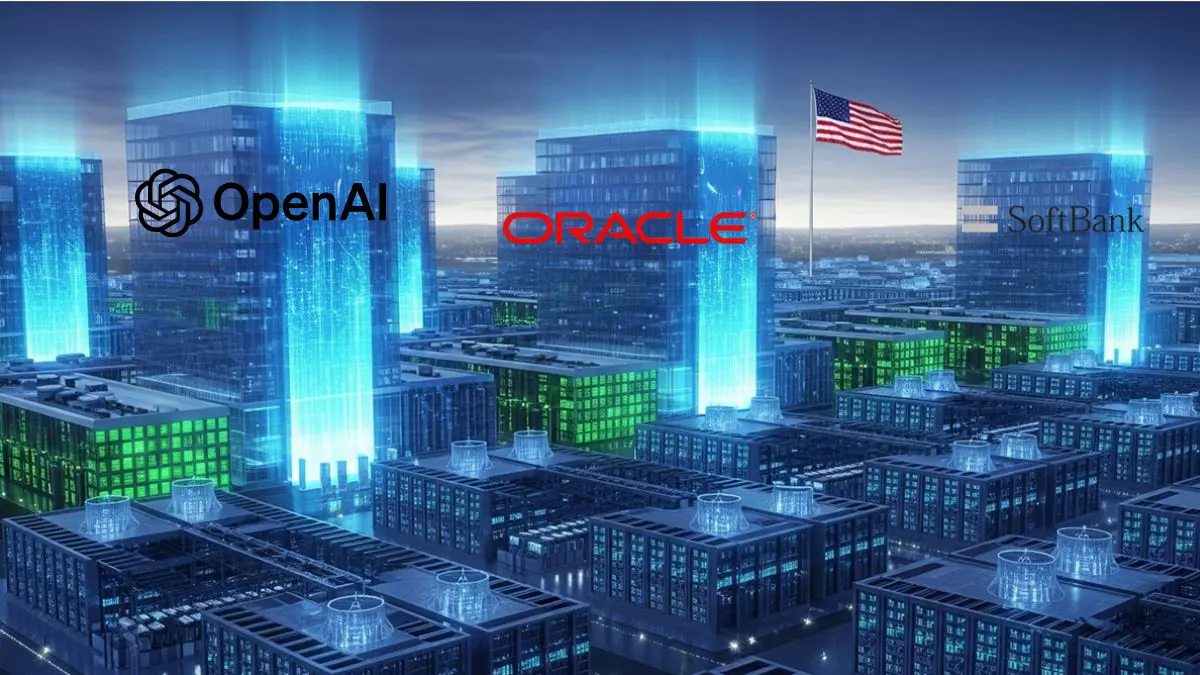
OpenAI, Oracle, and Japan’s SoftBank have unveiled plans to construct five new artificial intelligence data centers in the United States, marking a major step forward in the $500 billion Stargate initiative. The project, a private-sector initiative launched in January after U.S. President Donald Trump hosted top technology executives, aims to create one of the world’s largest AI infrastructure networks.
The scale of the investment underscores the private sector’s urgency to secure America’s lead in the global AI race. AI has become a strategic priority for former President Trump, while companies such as OpenAI, Microsoft, Oracle, and SoftBank are committing hundreds of billions to build the compute-heavy systems that power generative AI.
OpenAI confirmed Tuesday that it will open three new facilities with Oracle in Shackelford County, Texas; Doña Ana County, New Mexico; and another undisclosed Midwest location. In addition, two more sites will rise in Lordstown, Ohio, and Milam County, Texas, backed jointly by OpenAI, SoftBank, and a SoftBank affiliate.
Expanding America’s AI Infrastructure
These new builds will significantly expand Stargate’s footprint, adding to ongoing projects with CoreWeave and Oracle’s expansion in Abilene, Texas. Together, the new and existing sites are expected to push total data center capacity close to 7 gigawatts and investment above $400 billion over the next three years. The long-term goal remains 10 gigawatts of capacity under the $500 billion program.
“AI can only fulfill its promise if we build the compute to power it,” OpenAI CEO Sam Altman said in a statement.
The latest announcement also highlights the job-creation potential of the initiative. OpenAI projects the new facilities will generate around 25,000 onsite jobs—an economic boost to local communities that could further strengthen support for large-scale AI investment.
The timing is notable. Just a day earlier, Nvidia pledged up to $100 billion in investment for OpenAI and will supply the advanced chips that fuel data center operations. To manage costs, OpenAI and its partners are exploring debt financing to lease semiconductors needed for Stargate’s massive buildout.
Broader Industry Implications
The push for data center expansion reflects how quickly AI has moved from a research frontier to an economic and strategic priority. Tech giants from Microsoft to Nvidia are racing to secure resources and capacity. The initiative also reflects a view of AI as essential for both economic growth and national security—especially as China accelerates its own AI efforts, a concern highlighted as a top priority for Trump.
For businesses, the scale of Stargate highlights the growing demand for infrastructure that can sustain AI-driven services such as ChatGPT, Microsoft’s Copilot, and future enterprise applications. The race to secure compute power is set to reshape investment patterns across technology, real estate, and energy sectors.
Summary:
OpenAI, Oracle, and SoftBank will invest in five new U.S. data centers under the $500 billion Stargate project, which was launched with former President Donald Trump. The plan aims to push capacity toward 7 gigawatts and create 25,000 jobs. Backed by Nvidia’s $100 billion chip supply deal, the initiative underscores America’s aggressive push to dominate global AI infrastructure and signals massive ripple effects for energy, real estate, and technology markets.
FAQs on the $500 Billion Stargate AI Data Center Project
1. What is the Stargate project?
The Stargate project is a private-sector initiative led by OpenAI, Oracle, SoftBank, and other partners. With an investment goal of up to $500 billion, it aims to build one of the largest AI infrastructure networks in the world, providing the computing power needed to scale generative AI.
2. Where will the new data centers be located?
Five new facilities are planned across the U.S.: Shackelford County, Texas; Doña Ana County, New Mexico; an undisclosed site in the Midwest; Lordstown, Ohio; and Milam County, Texas.
3. How much capacity will these data centers add?
The expansion will bring Stargate’s total capacity close to 7 gigawatts in the next three years, with a long-term target of 10 gigawatts.
4. Why is this project significant for the U.S.?
It strengthens America’s leadership in artificial intelligence by expanding critical computing infrastructure. It also carries economic benefits, including an estimated 25,000 new jobs, and supports national security goals as AI competition with China intensifies.
5. How is Nvidia involved?
Nvidia has pledged up to $100 billion to supply chips for Stargate’s data centers. These advanced processors are essential to powering AI workloads at scale.
6. How will the project be financed?
According to reports, OpenAI and its partners are exploring debt financing models to lease chips and manage the massive upfront costs of building and equipping the data centers.
7. What industries will be most impacted by Stargate?
Technology, energy, and real estate are likely to see immediate effects. Long term, businesses across finance, healthcare, manufacturing, and defense could benefit from the enhanced capabilities of generative AI powered by this infrastructure.
8. What role does the government play in this initiative?
Although Stargate is privately funded, the project was launched following support from the U.S. government. Former President Donald Trump positioned AI as a national priority, hosting tech CEOs at the White House to back the initiative.
9. How does this compare to global AI investments?
While the U.S. is committing hundreds of billions through private partnerships, China is also accelerating AI investments. The race highlights how AI has become both an economic driver and a geopolitical issue.
10. What does this mean for businesses using AI tools like ChatGPT or Copilot?
With expanded compute capacity, businesses can expect faster, more reliable, and more scalable AI services. This infrastructure growth could lower costs, enable broader adoption, and support new enterprise applications.

























