Chinese typewriters used predictive text 50 years back
By By Max McClure | 03 Dec 2012
For most Americans, predictive text is something cell phones do. From the T9 system on clamshell phones to autocomplete on smartphones, tough-to-type-on cell phones have been natural candidates for this kind of labor-saving input technology.
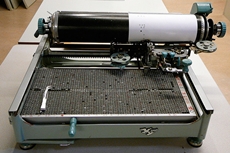 |
| To use a Chinese typewriter, the typist moves a character-selection lever over a tray bed filled with metal character slugs. The typist then presses a type bar, and the lever picks up the character, inks it, types it and returns it to its place. (Photo: derickafox / Creative Commons) |
But in China, predictive text has been around far longer – since Mao Zedong was in power more than 50 years ago, in fact, discovered Stanford history associate professor Thomas Mullaney.
Mullaney is an expert – virtually the only expert – on the Chinese typewriter. Though viewed as little more than a joke in the West, the device is a remarkable engineering feat.
Chinese typewriters have no keys. Instead, the typist moves a character-selection lever over a tray bed filled with metal character slugs. The typist then presses a type bar, and the lever picks up the character, inks it, types it and returns it to its place.
But with upward of 2,500 characters crammed into the tray bed, simply locating the correct one could be a daunting task for early Chinese typists. And when they rearranged the tray bed to improve their typing speeds, these workers happened to anticipate many of the advances of modern text prediction software.
"Input issues that we're dealing with now are questions that China was thinking about in the mid-20th century," said Mullaney.

























