Vestibular function declines starting at age 40
29 Nov 2016
A new study led by researchers at Massachusetts Eye and Ear found that vestibular thresholds begin to double every 10 years above the age of 40, representing a decline in our ability to receive sensory information about motion, balance and spatial orientation. The report was published online ahead of print in Frontiers in Neurology.
 ''In our study, vestibular decline was clearly evident above the age of 40,'' said senior author Daniel M. Merfeld, Ph.D. (at right in photo), Director of the Jenks Vestibular Physiology at Mass. Eye and Ear and a Professor of Otolaryngology at Harvard Medical School. ''Increased thresholds correlate strongly with poorer balance test results, and we know from previous studies that those who have poorer balance have much higher odds of falling.''
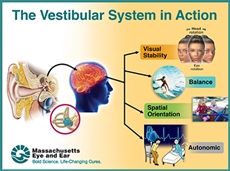
More than half of the population will see a doctor at some point in their lives with symptoms related to the vestibular system (e.g., dizziness, vertigo, imbalance and blurred vision). The vestibular system, made up of tiny canals in the inner ear, is responsible for receiving information about motion, balance and spatial orientation.
With the goal of determining whether sex or age affected the function of the vestibular system, the researchers administered balance and motion tests to 105 healthy people ranging from 18 to 80 years old and measured their vestibular thresholds (''threshold'' refers to the smallest possible motion administered that the subject is able to perceive correctly). While they found no difference between the thresholds of male and female subjects, they found that the thresholds increased above the age of 40 for all motions studied.
The researchers also found that these increasing thresholds strongly correlated with failure to complete a standardized test for balance. This correlation shows that fall risk is substantially impacted by vestibular function. Using data from previous studies, the researchers suggest that vestibular dysfunction could be responsible for as many as 152,000 American deaths each year. This estimate would place vestibular dysfunction third in the United States behind heart disease and cancer as a leading cause of death among Americans.
The correlation between vestibular thresholds and balance also suggests that there may be better ways to screen vestibular function and ways to develop therapies that may improve their thresholds.
''We've known for a long while that patients with vestibular disorders have disturbed balance,'' said Dr. Merfeld. ''If worse vestibular function leads to falls, perhaps we can develop balance aids or physical therapy exercises to improve balance or vestibular function and prevent those falls.''

























