Promising new treatment could kill cancer cells in 2 hours
29 Jun 2016
Researchers have developed a new, non-invasive method that can kill cancer cells in two hours, an advance that may significantly help people with inoperable or hard-to-reach tumours as well as young children stricken with the deadly disease.
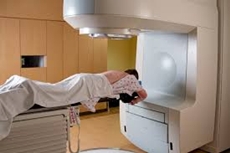 | |
| Image for illustrative purpose only |
The method involves injecting a chemical compound, nitrobenzaldehyde, into the tumour and allowing it to diffuse into the tissue.
A beam of light is then aimed at the tissue, causing the cells to become very acidic inside and, essentially, ''commit suicide'', researchers said.
Within two hours, up to 95 per cent of the targeted cancer cells are dead or are estimated to be dead, they said.
''Though there are many different types of cancers, the one thing they have in common is their susceptibility to this induced cell suicide,'' said Matthew Gdovin from University of Texas in the US.
Gdovin tested his method against triple negative breast cancer, one of the most aggressive types of cancer and one of the hardest to treat. The prognosis for triple negative breast cancer is usually very poor.
After one treatment in the laboratory, he was able to stop the tumour from growing and double chances of survival in mice.
''All forms of cancer attempt to make cells acidic on the outside as a way to attract the attention of a blood vessel, which attempts to get rid of the acid,'' said Gdovin.
''Instead, the cancer latches onto the blood vessel and uses it to make the tumour larger and larger,'' he added.
Chemotherapy treatments target all cells in the body, and certain chemotherapeutics try to keep cancer cells acidic as a way to kill the cancer. This is what causes many cancer patients to lose their hair and become sickly. Gdovin's method, however, is more precise and can target just the tumour.
He has now begun to test the method on drug-resistant cancer cells to make his therapy as strong as possible. He has also started to develop a nanoparticle that can be injected into the body to target metastasised cancer cells.
The nanoparticle is activated with a wavelength of light that it can pass harmlessly through skin, flesh and bone and still activate the cancer-killing nanoparticle, said Gdovin.
He hopes that his non-invasive method will help cancer patients with tumours in areas that have proven problematic for surgeons, such as the brain stem, aorta or spine.
It could also help people who have received the maximum amount of radiation treatment and can no longer cope with the scarring and pain that go along with it, or children who are at risk of developing mutations from radiation as they grow older, he said.

























