New findings could influence the development of therapies to treat dengue disease
03 Aug 2013
New research into the fight against Dengue, an insect-borne tropical disease that infects up to 390 million people worldwide annually, may influence the development of anti-viral therapies that are effective against all four types of the virus.
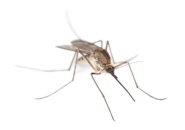 | |
| The dengue mosquito, or Aedes aegypti, is the main type of mosquito that transmits dengue fever |
The findings, led by researchers at the University of Bristol and published in the Journal of Biological Chemistry yesterday (2 August), show for the first time that there may be significant differences in specific properties of the viral proteins for the four dengue virus types.
Due to the effects of globalisation, including increased travel and urbanisation of human populations and the expanded geographical distribution of the mosquito vector that is responsible for the transmission of viral infections to millions of people, the number of individuals afflicted with dengue is rising.
Infection with any one of the four types of dengue virus (DENV types 1 - 4) may result in a spectrum of illnesses ranging from dengue fever, a mild flu like illness which causes high fever and joint pains, to the potentially fatal dengue haemorrhagic fever.
Despite intensive research, dengue disease is not wholly understood, and there are no vaccines or anti-viral treatments available that can safely or effectively control the disease.
Dr Andrew Davidson, senior virologist and lead researcher from the University of Bristol, and colleagues examined the nuclear localisation properties of the NS5 protein of all four DENV types and found that there are major differences in the cellular localisation of the viral NS5 protein for the four DENV types.
The four types of DENV are genetically distinct. Although they can all cause dengue disease, little is known about how the genetic differences between them may translate into differences in virus replication and pathogenesis.
Previous studies by the team focusing on DENV-2, have shown that the viral NS5 protein is essential for DENV genome replication and is able to modulate the host immune response.
As such, the NS5 protein is a key target for the development of anti-viral agents. Importantly, the team also showed that the DENV-2 NS5 protein accumulates in the nucleus during infection which is believed to effect host cell function.
Dr Davidson, senior lecturer in Virology, School of Cellular and Molecular Medicine at the University of Bristol, says, ''The study shows for the first time that there may be significant differences in specific properties of the viral proteins for the four DENV types. This is important as it impacts on our understanding of viral replication and pathogenesis and the design of anti-viral therapies that are effective against all DENV types.''
Present studies in the laboratory are focused on comprehensively comparing the effects of different DENV types on the host cell, using the state-of-the-art proteomics facilities at the University of Bristol.

























