Tesla Plans $20 Billion Capex Surge to Accelerate Shift Beyond Traditional EVs
By Cygnus | 29 Jan 2026
Summary
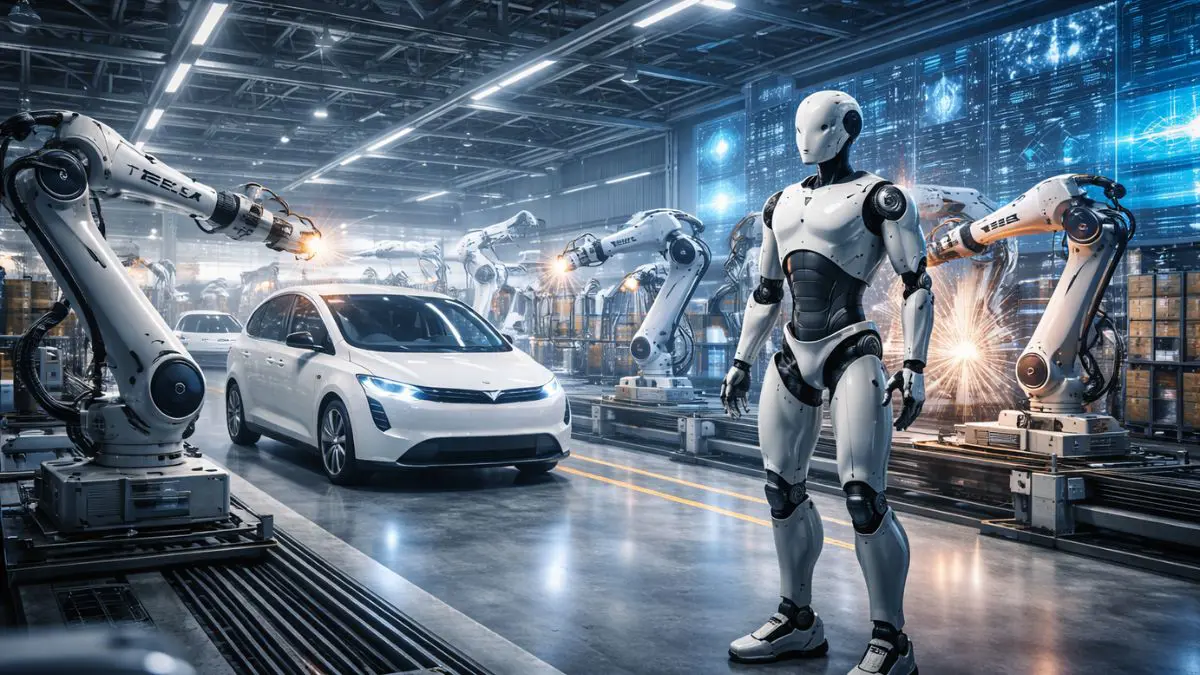
In a strategic shift, Tesla plans to more than double its capital expenditure to over $20 billion in 2026, redirecting resources from legacy luxury EVs to robotics, autonomous transport and AI-related infrastructure. Tesla executives say production of the Model S and Model X will end so that factory capacity can be repurposed for Optimus humanoid robots and the Cybercab robotaxi — a move that reflects CEO Elon Musk’s ambition to transform the company into a leader in autonomous systems and robotics.
AUSTIN, Texas — Tesla is preparing for its most aggressive investment cycle yet, with capital spending set to exceed $20 billion this year. The record outlay marks a decisive pivot away from Tesla’s traditional luxury EV lineup toward next-generation autonomous and robotics platforms.
Chief Executive Elon Musk described 2026 as a “structural transformation,” saying the company will wind down production of the Model S sedan and Model X SUV to reallocate production space for next-generation robotics and autonomous assembly lines at its Fremont, California factory.
Factories for Robots and AI
Tesla’s planned capital will be distributed across key strategic priorities:
- Optimus & Cybercab: Dedicated lines for humanoid robots and fully autonomous robotaxis.
- Autonomous Vehicle Systems & AI Infrastructure: Investment in compute and hardware for advanced autonomy.
- Battery & Lithium Scale-Up: Expansion of 4680 cell production and lithium supply chain investments.
- Tesla Semi: Finalizing high-volume electric heavy-duty truck production.
A Valuation Shift
While Tesla’s revenues remain rooted in the Model 3 and Model Y, investor focus increasingly reflects growth expectations for autonomy, robotics and AI-driven platforms. The decision to retire the Model S and Model X underscores the company’s strategic realignment toward scalable technology markets, echoing broader industry trends where compute and automation command premium valuations.
“Necessary Spending” or Financial Risk?
Critics note that returns from humanoid robots and fully autonomous vehicles are not yet proven, particularly as Tesla faces stiffer competition in core EV markets. Tesla enters this spending cycle with strong liquidity — holding over $44 billion in cash and investments — which executives say will provide runway even as the company explores further financing options for ambitious projects.
Why This Matters
Tesla’s $20 billion capital spending surge marks one of the clearest signals yet that the company’s future is no longer centered on selling electric cars alone.
By retiring legacy luxury models and redirecting factory capacity toward robotics, AI infrastructure, and autonomous mobility, Tesla is effectively betting that software, automation, and machine intelligence will become far more valuable than vehicle hardware over the next decade.
For investors, the move explains why Tesla continues to trade at a technology-style valuation rather than as a traditional automaker. For the auto industry, it highlights a widening strategic gap between companies focused on electrification alone and those attempting to dominate the full autonomous and AI-driven mobility stack.
If Tesla succeeds, it could redefine transportation economics entirely — shifting profits from car sales to autonomous services, robotics, and AI platforms. If it fails, the company will have committed unprecedented capital to technologies still facing regulatory and commercial uncertainty.
Either way, 2026 is shaping up to be a turning point in Tesla’s transformation from carmaker to AI infrastructure company.
Frequently Asked Questions
Q1. Why is Tesla stopping production of the Model S and Model X?
To prioritize manufacturing space and engineering resources for the Optimus humanoid robot. Tesla is moving away from low-volume luxury models to focus on high-scale AI and robotics platforms.
Q2. How does the $20 billion spending compare to previous years?
This represents a more than 100% increase over the 2024-2025 average spending, marking the largest investment year in the company’s history.
Q3. Will this affect Model 3 and Model Y production?
No. The Model 3 and Model Y remain the company’s primary revenue drivers. The production shifts are specifically targeting the capacity previously used for the older S and X platforms.
Q4. Where is the money coming from?
Tesla is utilizing its $44 billion cash reserve to fund this expansion, though executives noted they may explore strategic debt or alternative financing to maintain liquidity for other global projects.

























