STMicroelectronics ships over 5 billion chips for Starlink, sees sharp growth ahead
By Cygnus | 15 Dec 2025
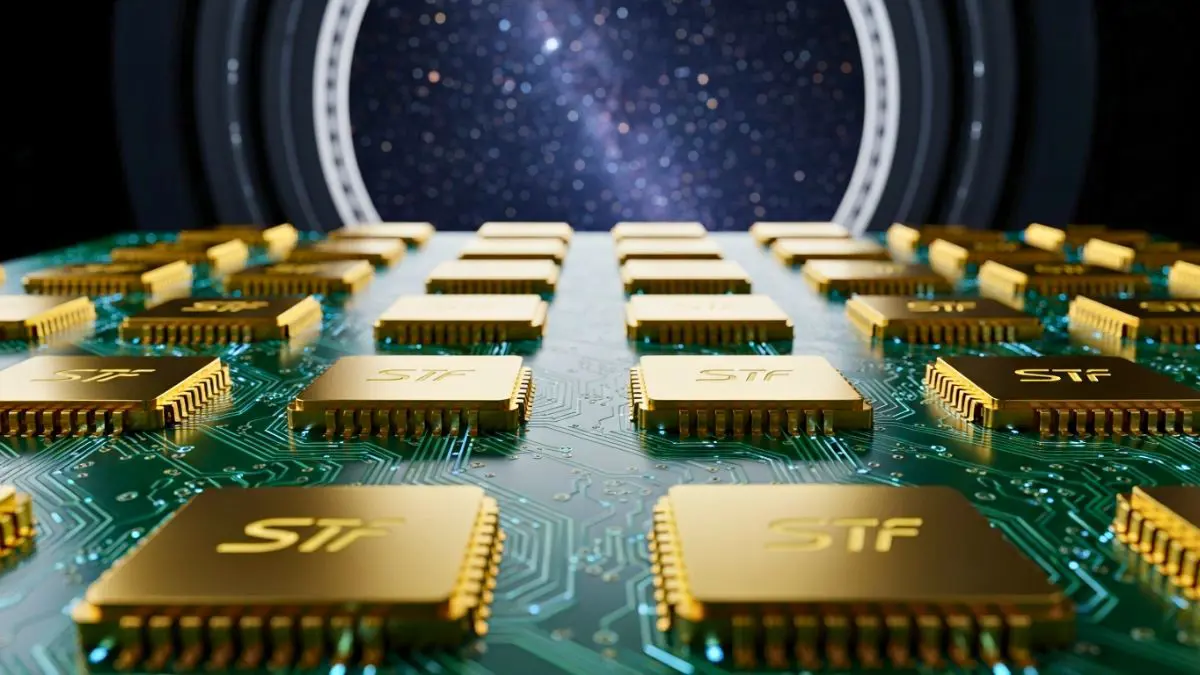
STMicroelectronics has quietly become a key supplier powering one of the world’s most ambitious satellite internet projects. Over the past decade, the European chipmaker has shipped more than 5 billion radio-frequency antenna chips to SpaceX for its Starlink network. This staggering volume—averaging hundreds of chips per user terminal to power the system’s phased-array antenna—could rise sharply in the coming years as satellite deployments accelerate.
According to Remi El-Ouazzane, President of Microcontrollers, Digital ICs, and RF Products Group at STMicroelectronics, volumes delivered over the next two years alone could rival what has been shipped across the last ten. The long-running partnership, which dates back to around 2015, has evolved into a major growth engine for STMicro’s specialised semiconductor business, particularly in radio-frequency and mixed-signal technologies.
The chips are used in Starlink’s user terminals, enabling high-speed data transmission between satellites and ground-based customers. As Starlink expands its footprint and adds capacity, demand for these components is expected to rise in tandem. The scale-up reflects both the rapid growth of low-Earth orbit (LEO) satellite networks and the increasing sophistication of their hardware requirements.
The broader backdrop is a fundamental shift in the space industry. What was once dominated by government-led missions is now being reshaped by commercial players such as SpaceX, OneWeb, and Amazon, all racing to deploy global satellite broadband constellations. This transition is driving demand for chips capable of handling massive data throughput while operating reliably in extreme space environments.
STMicro’s BiCMOS-based antenna technology, originally developed for Starlink, is also attracting interest beyond a single customer. Company executives expect other LEO satellite operators to adopt similar designs as competition intensifies and networks scale up. That opens the door to wider commercial applications for STMicro’s space-grade semiconductor portfolio.
By the numbers, the opportunity is already substantial. Starlink now operates in more than 150 markets worldwide and serves around 8 million users. Each new user terminal adds to chip demand, reinforcing the importance of long-term supplier relationships in the satellite value chain.
Looking ahead, STMicroelectronics is positioning itself for the next phase of space connectivity. The company is set to supply components for inter-satellite laser communication links on future SpaceX platforms and is also working with European aerospace groups, including Thales and Eutelsat, on projects such as the European Union’s planned Iris² satellite constellation.
For STMicro, these programs underscore how space is becoming a meaningful contributor to revenue growth, not just a niche segment. As commercial satellite networks multiply, the company’s decade-long bet on specialised space-ready chips appears increasingly well timed.
Summary
STMicroelectronics has delivered over 5 billion radio-frequency chips to SpaceX’s Starlink network over the past decade, with shipments potentially doubling by 2027 as satellite deployments accelerate. The partnership highlights the growing role of commercial space in driving demand for specialised semiconductors, positioning STMicro as a key supplier in the rapidly expanding low-Earth orbit satellite market.
FAQs
Q1: What type of chips does STMicroelectronics supply to Starlink?
STMicroelectronics supplies radio-frequency front-end modules, also known as antenna elements. Hundreds of these chips are used in each Starlink user terminal to manage the beam-forming capabilities required for high-speed data transmission.
Q2: Why are these chips critical for satellite internet networks like Starlink?
Satellite broadband requires chips that can handle high data rates, low latency, and extreme environmental conditions. The RF chips supplied by STMicro play a key role in maintaining reliable connectivity across Starlink’s global network.
Q3: How significant is the Starlink partnership for STMicroelectronics?
The partnership has become a major growth driver for STMicro’s specialised semiconductor business. With more than 5 billion chips already shipped and volumes expected to double in the next two years, space-related applications are emerging as a meaningful revenue stream for the company.
Q4: Why could chip shipments double by 2027?
Starlink continues to expand its satellite constellation and user base worldwide. As more user terminals are deployed and network capacity increases, demand for antenna chips is expected to grow rapidly over the next two years, according to STMicro executives.
Q5: How does this reflect broader trends in the space industry?
The space sector is shifting from government-led programs to commercially driven projects. Private companies are building large satellite constellations, creating sustained demand for specialised, high-performance semiconductors.
Q6: Are other satellite operators likely to use similar chip technology?
Yes. STMicro expects other low-Earth orbit satellite operators to adopt similar BiCMOS-based antenna technologies as competition grows and networks scale globally.
Q7: What is BiCMOS technology, and why is it used here?
BiCMOS combines bipolar and CMOS technologies, offering both high-speed performance and energy efficiency. This makes it well-suited for satellite communications, where power efficiency and signal integrity are critical.
Q8: How large is Starlink’s current global footprint?
Starlink operates in more than 150 markets and serves around 8 million users worldwide, making it one of the largest commercial satellite internet networks in operation.
Q9: What other space projects is STMicroelectronics involved in?
Beyond Starlink, STMicro is working with European aerospace companies such as Thales and Eutelsat, including participation in the European Union’s planned Iris² satellite constellation.
Q10: What are inter-satellite laser links, and why do they matter?
Inter-satellite laser links allow satellites to communicate directly with each other, improving network speed, coverage, and resilience. STMicro plans to supply components for these systems on future SpaceX platforms.
Q11: How could growth in space semiconductors impact STMicro’s business long term?
As commercial satellite networks expand, space-grade semiconductors could become a stable, high-margin segment for STMicro, diversifying its revenue beyond traditional automotive and industrial markets.
Q12: What does this mean for the global semiconductor industry?
The rise of satellite internet is creating a new, scalable market for advanced RF and communication chips, encouraging chipmakers to invest in specialised technologies tailored for space applications.

























