Scientists uncover how ‘checkpoint’ proteins bind chromosomes
21 Apr 2012
1
The development of more effective cancer drugs could be a step nearer thanks to the discovery, by scientists at Warwick Medical School, of how an inbuilt 'security check' operates to guarantee cells divide with the correct number of chromosomes.
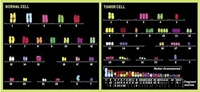 Most cells in our bodies contain 23 pairs of chromosomes that encode our individual genetic identities. The process of chromosome segregation is monitored by a system called the spindle checkpoint that ensures daughter cells receive the correct number of chromosomes.
If daughter cells receive an unequal number of chromosomes, known as 'aneuploidy', this drives normal cells to become cancerous. The cells of aggressive human tumours are frequently 'aneuploid', with many components of the spindle checkpoint being mutated or mis-expressed. Therefore, determining how the spindle checkpoint operates is vital to understanding what causes, and what can prevent, the formation of tumours.
Current Biology has published research by Professor Jonathan Millar at the University of Warwick that pinpoints the precise mechanism by which spindle checkpoint proteins bind chromosomes.
Professor Millar explained, ''Components of the spindle assembly checkpoint were first discovered 22 years ago by researchers in America and yet, until now, the binding sites for these proteins on chromosomes have remained unknown. We have been able to answer this question and as a result, we are now in a much better position to design more selective and effective drugs.''
Currently, one of the most frequently used anti-cancer drugs are taxanes, which prevent proper inactivation of the spindle checkpoint and result in selective death of cancer, but not normal cells. However, this class of drug can have debilitating side effects including permanent neurological damage and hair loss - side effects that could be reduced if cancer cells could be targeted more selectively.
Professor Millar was quick to point out that this is not an overnight cure, ''This research is a significant advance in our understanding of how the spindle checkpoint operates but it is really just the start. More research has to be done before we can convert this into a commercial treatment for patients. But we are greatly encouraged that our research here at Warwick is leading the way in the search for more effective cancer drugs.''
Most cells in our bodies contain 23 pairs of chromosomes that encode our individual genetic identities. The process of chromosome segregation is monitored by a system called the spindle checkpoint that ensures daughter cells receive the correct number of chromosomes.If daughter cells receive an unequal number of chromosomes, known as 'aneuploidy', this drives normal cells to become cancerous. The cells of aggressive human tumours are frequently 'aneuploid', with many components of the spindle checkpoint being mutated or mis-expressed. Therefore, determining how the spindle checkpoint operates is vital to understanding what causes, and what can prevent, the formation of tumours.
Current Biology has published research by Professor Jonathan Millar at the University of Warwick that pinpoints the precise mechanism by which spindle checkpoint proteins bind chromosomes.
Professor Millar explained, ''Components of the spindle assembly checkpoint were first discovered 22 years ago by researchers in America and yet, until now, the binding sites for these proteins on chromosomes have remained unknown. We have been able to answer this question and as a result, we are now in a much better position to design more selective and effective drugs.''
Currently, one of the most frequently used anti-cancer drugs are taxanes, which prevent proper inactivation of the spindle checkpoint and result in selective death of cancer, but not normal cells. However, this class of drug can have debilitating side effects including permanent neurological damage and hair loss - side effects that could be reduced if cancer cells could be targeted more selectively.
Professor Millar was quick to point out that this is not an overnight cure, ''This research is a significant advance in our understanding of how the spindle checkpoint operates but it is really just the start. More research has to be done before we can convert this into a commercial treatment for patients. But we are greatly encouraged that our research here at Warwick is leading the way in the search for more effective cancer drugs.''

























