Tesla and Elon Musk Trade EV Dominance for Bigger Promises as 2026 Begins
By Axel Miller | 06 Jan 2026
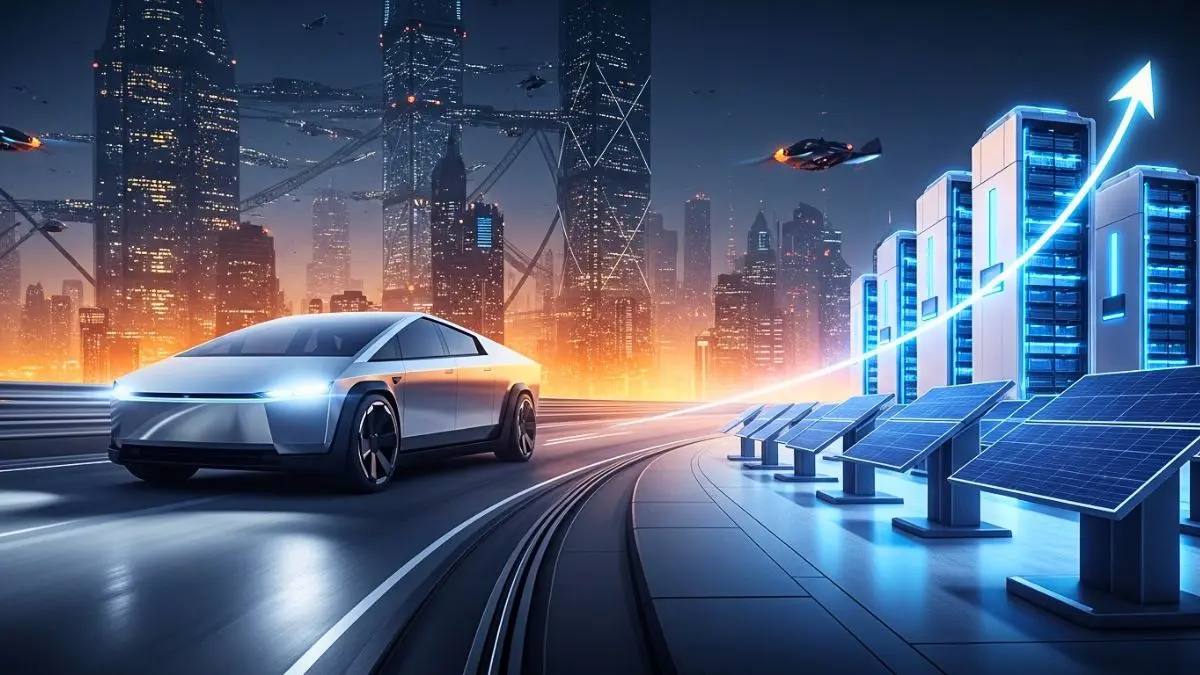
As 2026 gets underway, Tesla Inc. faces a stark dichotomy: a core automotive business in a historic retreat and a “moonshot” portfolio that investors are now valuing at over $1.5 trillion.
The EV Retreat: Ceding the Crown
Full-year 2025 data confirms that Tesla has officially relinquished its title as the world’s largest battery EV (BEV) seller to BYD Co., which delivered 2.26 million vehicles against Tesla’s 1.636 million. Tesla’s annual deliveries fell 9%, marking the company’s second consecutive yearly decline—a trend unseen since its early scaling days.
The fourth quarter was particularly bruising. Tesla produced 434,358 vehicles but delivered only 418,227, missing the company-compiled analyst consensus of 422,850. The “Other Models” segment, which includes the Cybertruck, saw a dramatic cooldown, delivering just 11,642 units in Q4. This “demand cliff” followed the expiration of U.S. federal tax credits in September 2025, which had artificially pulled sales into the third quarter.
The “Energy” Hedge
While the car business sputters, Tesla’s Energy Generation and Storage segment has emerged as a critical financial life raft. In Q4 2025, Tesla deployed a record 14.2 GWh of energy storage—a 48.7% increase for the full year, totaling 46.7 GWh.
This segment now operates with gross margins exceeding 30%, providing an estimated $830 million profit cushion. This growth is essential as automotive gross profits saw a decline of nearly $1.8 billion over the first nine months of 2025 due to aggressive price cuts and slowing demand.
2026: The “Singularity” and Regulatory Stays
Elon Musk has dubbed 2026 “epic,” pivoting the company’s mission toward an “AI Singularity.” The roadmap for the first half of the year includes:
- FSD Europe: Tesla is working with the Netherlands’ RDW regulator, targeting a demonstration of supervised Full Self-Driving in February 2026 to pave the way for an EU-wide rollout.
- The Cybercab: While production testing has begun, Musk confirmed that the “real production ramp” at Gigafactory Texas is scheduled for April 2026.
- The California “Stay”: In a high-stakes legal battle, the California DMV recently granted a 90-day stay (effective through March 2026) on a proposed sales license suspension. This gives Tesla a window to rebrand “Autopilot” and “FSD” to satisfy deceptive marketing claims without halting its $5 billion annual California revenue stream.
Summary
Tesla enters 2026 as a company in transition. While it has lost its global EV sales crown and faces significant regulatory headwinds in California and Florida, its Energy Storage business is growing at a nearly 50% annual clip. Investors remain focused on the April 2026 Cybercab ramp and the February FSD European expansion as the primary catalysts to justify a valuation that remains disconnected from traditional automotive metrics.
Frequently Asked Questions (FAQs)
Q1: Why did Tesla’s annual sales decline again in 2025?
A combination of the “Trump effect” (expiration of the $7,500 federal tax credit in Sept 2025) and intense competition from BYD in China and Europe led to a 9% year-over-year drop in deliveries.
Q2: Is Tesla actually banned from selling cars in California?
No. A judge recommended a suspension, but the DMV stayed the order until March 2026. Tesla is expected to resolve this by adding prominent “Supervision Required” disclaimers to its marketing.
Q3: What is the status of the Cybercab?
Production testing is underway in Austin. The full production ramp is officially slated for April 2026, though regulatory approval for “unsupervised” (no steering wheel) operation remains a significant hurdle.
Q4: When is the next financial update?
Tesla will post its full Q4 2025 financial results on Wednesday, January 28, 2026, after market close.