Nissan, Uber and Wayve partner for Tokyo robotaxi pilot
By Cygnus | 12 Mar 2026
Summary
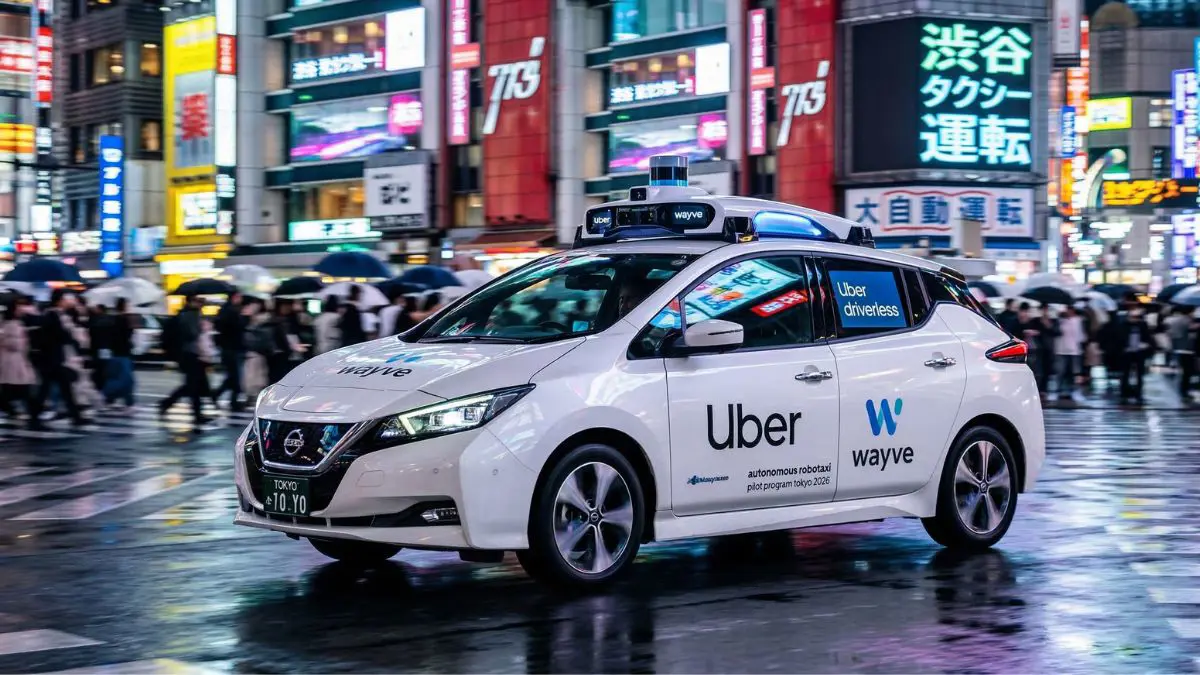
Nissan Motor, Uber Technologies and UK-based autonomous driving firm Wayve have agreed to launch a robotaxi pilot in Tokyo by late 2026 using Nissan Leaf electric vehicles equipped with Wayve’s self-driving technology.
TOKYO, March 12, 2026 — Nissan Motor, Uber Technologies and Wayve on Thursday announced a partnership to deploy autonomous robotaxis in Tokyo, marking Uber’s first autonomous vehicle collaboration in Japan.
Under the agreement, a fleet of Nissan Leaf electric vehicles will be fitted with Wayve’s “Embodied AI” driving system and integrated into Uber’s ride-hailing platform.
Passengers in Tokyo will be able to access the service through the Uber app once the pilot begins.
Phased rollout
The companies said the initial deployment will include trained safety drivers behind the wheel as part of a gradual rollout aligned with local regulations.
Uber plans to operate the service with a licensed taxi partner in Japan, reflecting the country’s strict transport frameworks.
“We have been testing our technology throughout Japan since early 2025,” said Wayve CEO Alex Kendall in a joint statement, adding the pilot is designed to prioritize safety and real-world integration.
Global ambitions
While the Tokyo pilot is the immediate focus, Nissan CEO Ivan Espinosa said the companies are exploring broader international cooperation.
Wayve previously signed a wider agreement with Uber in 2024 to expand autonomous mobility services across multiple cities globally.
Nissan’s autonomy roadmap
The partnership also supports Nissan’s longer-term automation strategy. The automaker began testing Wayve-enabled driver-assistance systems in 2025 and is targeting broader commercial autonomy deployments later in the decade.
Why this matters
- Market expansion: Japan’s aging population and dense cities make it a key testbed for robotaxis.
- Technology validation: Tokyo offers one of the world’s most demanding urban driving environments.
- Industry shift: The tie-up highlights growing collaboration between automakers, AI firms and ride-hailing platforms.
FAQs
Q1. When will robotaxis launch in Tokyo?
The companies plan to begin pilot operations in late 2026.
Q2. Will the vehicles be fully autonomous?
Initially no — trained safety drivers will remain onboard during the pilot phase.
Q3. What makes Wayve’s system different?
Wayve uses machine learning-based driving systems that rely less on fixed mapping compared with traditional AV approaches.

























