Silicon Sovereignty: Why the 2026 AI Race is Being Won on the Factory Floor, Not the Cloud
By Cygnus | 07 Jan 2026
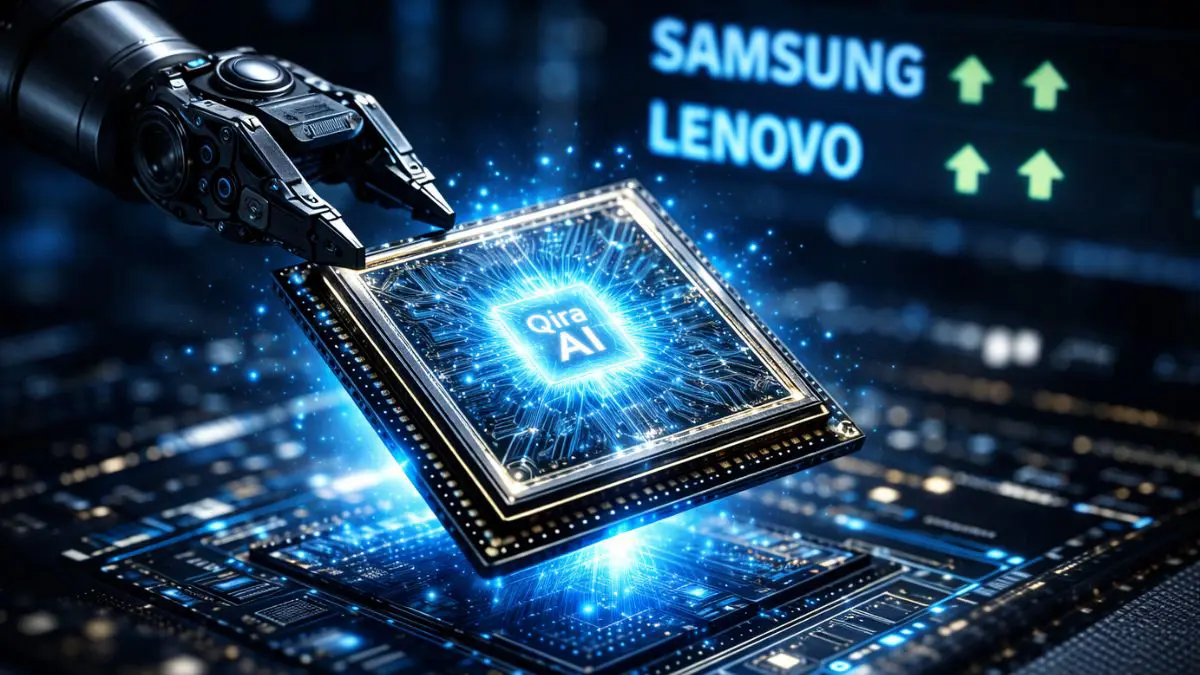
For the past three years, the AI narrative was dominated by Large Language Models (LLMs) living in massive, distant data centers. But as we cross the first week of 2026, a new reality is setting in: if AI cannot live on your device or control your hardware without a Wi-Fi signal, it isn't sovereign.
Two major moves this week—one from the world’s largest PC maker and another from the titan of memory—signal that the “Cloud Era” of AI is yielding to the “Edge Era.”
Lenovo’s Qira: The Ghost in the Machine
At CES 2026, Lenovo unveiled “Qira,” branding it as “Personal Ambient Intelligence.” Unlike the chatbots of 2024, Qira is a system-level agent deeply integrated across the Lenovo and Motorola hardware ecosystem. It doesn't require you to open an app; it anticipates needs by sensing context across laptops, phones, and wearables.
The significance of Qira isn't just utility, but architecture. By prioritizing on-device processing via Neural Processing Units (NPUs), Lenovo is making a play for “Hardware Sovereignty.” In a world increasingly wary of data privacy and latency, the brand that owns the local silicon owns the user experience.
Samsung’s Billion-Dollar Talent Moat
While Lenovo builds the interface, Samsung is shoring up the foundations. On Wednesday, January 7, Samsung Electronics announced a 2.5 trillion won ($1.73 billion) share buyback. Crucially, this isn't a traditional move to boost the stock price; the shares are being reallocated for a massive employee incentive program.
The timing is critical. Samsung is currently in a “do-or-die” race with SK Hynix to dominate the HBM4 (High Bandwidth Memory) supply chain for Nvidia’s next-generation Blackwell-Ultra and Rubin chips. By tying engineers' compensation to equity, Samsung is signaling that its turnaround depends on “Human Capital Sovereignty.” They are no longer just fighting for market share; they are fighting to retain the minds capable of shrinking transistors to the 1.4nm limit.
The Pivot to the Physical
What binds these stories together—along with the Tata Power energy play—is the realization that AI has become a physical commodity. Whether it is the HBM4 chips inside a server or the Qira intelligence inside a ThinkPad, the “Industrial Reset” of 2026 is about who owns the physical touchpoints.
For India, this represents a unique window. As Lenovo targets aggressive growth in the Indian market and Samsung considers expanding its local semiconductor footprint, the race for hardware sovereignty is no longer just a global chess match—it is the primary driver of the domestic industrial economy.
Summary
The launch of Lenovo's “Qira” AI and Samsung’s $1.73 billion strategic buyback mark a shift toward “Hardware Sovereignty” in 2026. Industry leaders are moving away from cloud-dependent AI to on-device, “ambient” intelligence and high-performance memory (HBM4). These moves emphasize that the next phase of the AI revolution will be won by those who control local hardware and the specialized talent required to build it.
Frequently Asked Questions (FAQs)
Q1: What is Lenovo Qira?
It is a “Personal Ambient Intelligence” launched at CES 2026 that works across Lenovo and Motorola devices, focusing on on-device processing and context-aware assistance rather than cloud-based chat.
Q2: Why did Samsung announce a $1.73 billion buyback?
Unlike traditional buybacks, this program is designed to fund performance-based equity incentives for employees. It aims to stop top engineers from leaving for rivals like Nvidia or SK Hynix during the critical HBM4 development cycle.
Q3: What is HBM4 and why does it matter?
HBM4 is the next generation of High Bandwidth Memory. It is the critical bottleneck for AI accelerators; whoever wins the HBM4 race essentially controls the speed of AI progress for the rest of the decade.
Q4: Is AI moving away from the cloud?
Yes. The trend in 2026 is toward “Edge AI,” where processing happens locally on devices (laptops, phones, cars). This improves privacy, reduces latency, and ensures users retain sovereignty over their data.

























