Nvidia Reportedly Requires Full Upfront Payment for H200 Chip Sales to China
By Cygnus | 08 Jan 2026
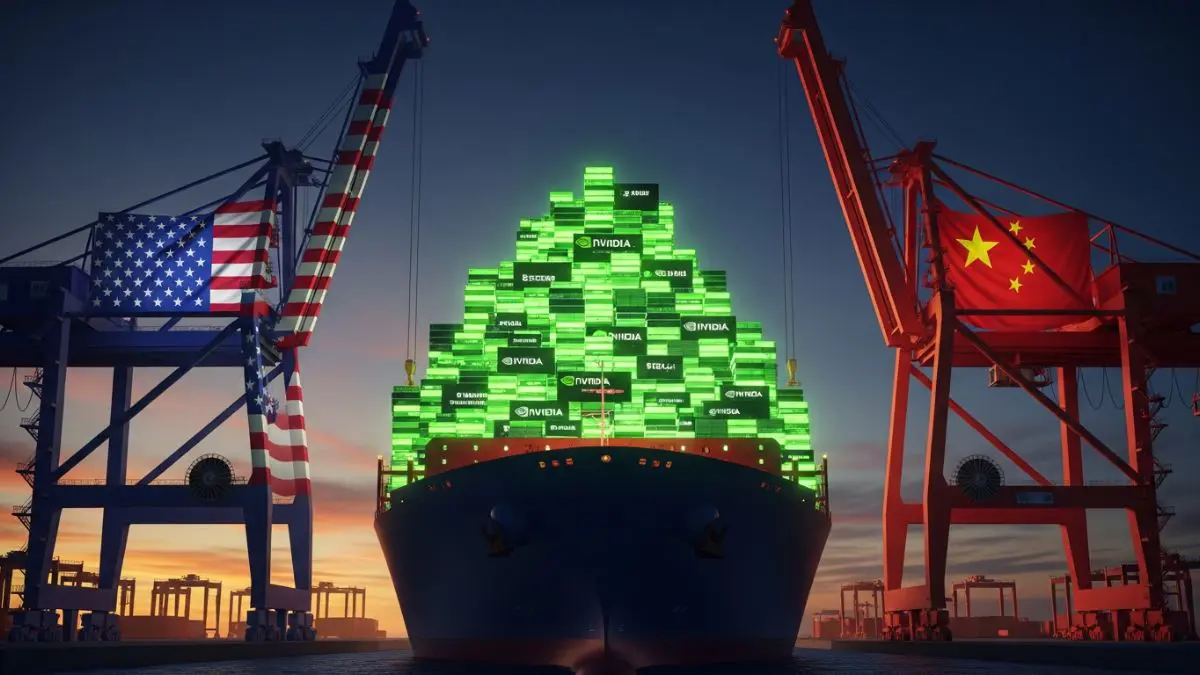
In a move that highlights its significant pricing power, Nvidia has reportedly shifted the financial burden of the U.S.–China tech standoff directly onto its customers. According to people familiar with recent commercial negotiations, the chipmaker is now requiring some Chinese clients to pay 100% of their contract value upfront for the H200—its second-most powerful AI accelerator.
The reported terms are among the most stringent in the industry: payments are allegedly non-refundable, and orders cannot be canceled or modified once placed. This “all-risk” model comes at a moment of extreme volatility. On Wednesday, reports surfaced that Beijing has informally instructed several domestic tech giants to pause new H200 orders as regulators weigh a possible mandate that would require firms to purchase a specific ratio of domestic hardware, such as Huawei’s Ascend 910C, alongside any foreign imports.
Scarcity as a Shield
Nvidia’s leverage stems from a massive supply-demand imbalance. Industry estimates suggest that Chinese cloud leaders and AI labs have sought to place orders for more than 2 million H200 units for 2026 delivery—a figure that dwarfs Nvidia’s estimated current inventory of roughly 700,000 China-spec chips. By requiring full payment upfront, Nvidia effectively insulates its balance sheet from the risk of sudden regulatory shifts in either Washington or Beijing.
The stakes are further complicated by the unique fiscal environment of 2026. Following the Trump administration’s December 2025 decision to reverse the H200 export ban, reports have consistently pointed to a unique “surcharge” or 25% revenue-sharing condition tied to these licenses. While neither the U.S. government nor Nvidia has publicly detailed the mechanics of such an arrangement, the reported levy has done little to dampen the urgency of Chinese buyers who view the H200 as a non-negotiable asset for large-scale model training.
Analysis: AI Chips as Strategic Commodities
The high-end semiconductor is no longer treated as a standard component, but as a strategic commodity akin to energy or rare earth metals. Nvidia’s reported prepayment model for China reflects a new industrial reality: when hardware is this critical, the buyer—not the seller—must absorb the geopolitical shock.
For the broader market, this signals that “hardware sovereignty” has moved beyond policy discussions and into the realm of hard capital. Only firms with sufficient financial depth and risk tolerance can remain competitive at the top end of the AI race, as geopolitical exposure increasingly becomes part of the cost structure.
Summary
Nvidia has reportedly moved to a full, non-refundable prepayment model for its H200 AI chips in China, shielding itself from the financial risks of potential regulatory disruptions. The shift comes as demand for the H200 continues to significantly outstrip supply and as Beijing reportedly weighs measures to increase the use of domestic alternatives. The development underscores the growing status of advanced AI hardware as a high-risk strategic commodity in the 2026 global economy.
Frequently Asked Questions (FAQs)
Q1: Why is Nvidia reportedly asking for full payment from China?
To hedge against the risk that either the U.S. or Chinese governments could block shipments or alter export rules before orders are fulfilled.
Q2: Is there a surcharge on H200 sales to China?
Reports from late 2025 suggest that the current U.S. administration allowed H200 exports on the condition of a 25% revenue-sharing or surcharge mechanism, though official details have not been disclosed.
Q3: Has Beijing stopped H200 imports?
There is no official ban, but reports from January 7, 2026, indicate regulators have asked firms to pause new orders while deliberations on domestic hardware quotas continue.
Q4: How does the H200 compare to Chinese chips?
While domestic processors such as Huawei’s Ascend 910C are advancing, the H200 retains a performance and software-ecosystem advantage through Nvidia’s CUDA platform, which remains the industry standard.

























