EU Warns Meta Over WhatsApp AI Restrictions, Weighs Interim Measures
By Cygnus | 09 Feb 2026
Summary
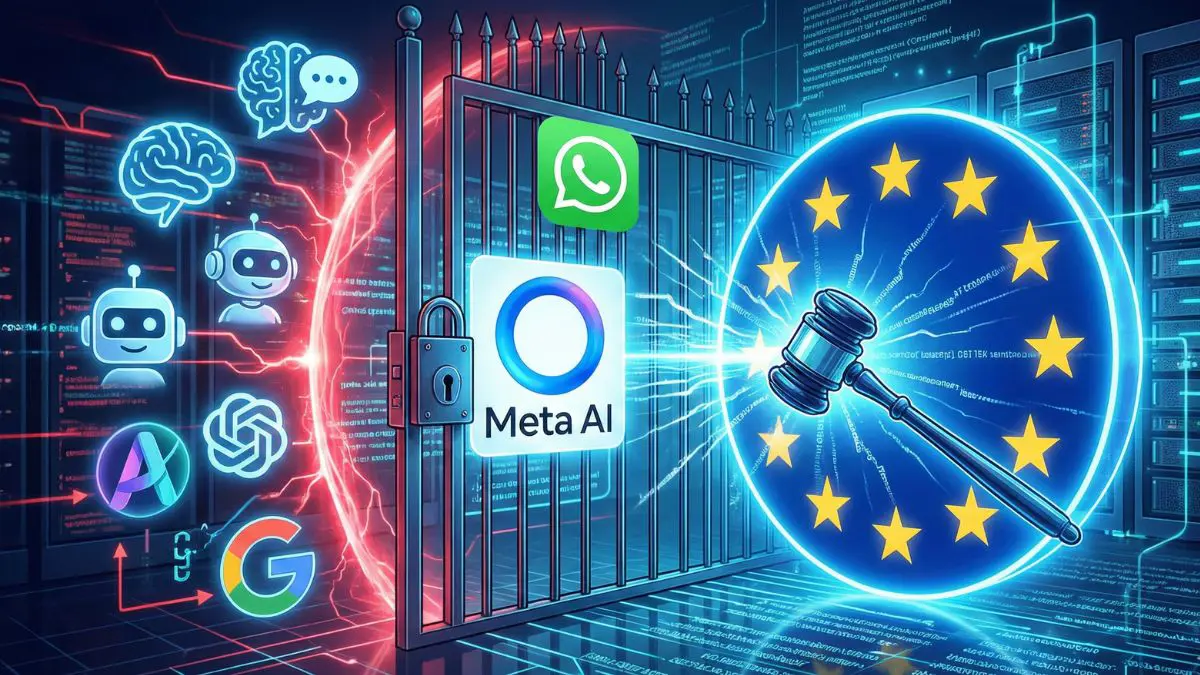
European Union antitrust regulators have warned Meta Platforms that they may impose temporary measures to prevent the company from restricting rival AI assistants on WhatsApp. The European Commission said Meta’s policy change that took effect in January 2026 could risk “serious and irreparable harm” to competition in the fast-evolving AI market, prompting consideration of unusually swift enforcement action.
BRUSSELS, Feb 9 — The European Union is moving to challenge Meta Platforms’ control over artificial intelligence services on WhatsApp, signaling it could order the company to temporarily reopen the platform to competing AI assistants while a full antitrust investigation continues.
The case centers on an update to Meta’s WhatsApp Business Solution Terms that took effect on January 15, 2026. Under the revised policy, third-party, general-purpose AI assistants are barred from operating on the WhatsApp Business API, while Meta’s own “Meta AI” assistant remains integrated and prominently available.
EU regulators argue that the change may constitute an abuse of dominance by leveraging WhatsApp’s entrenched position in messaging to gain an unfair advantage in the emerging AI assistant market.
Regulators Signal Unusually Swift Action
EU competition officials said the pace of AI market development could justify the use of interim measures—temporary, legally binding orders designed to prevent harm before a final ruling is reached.
“We cannot allow dominant digital platforms to use their existing power to foreclose competition in adjacent markets while investigations drag on,” an EU antitrust official said, adding that the Commission is examining whether immediate action is necessary to preserve competitive conditions.
Interim measures are rare in EU antitrust enforcement and require a high legal threshold, including evidence of potential irreversible damage to competition.
Meta Pushes Back: “Not a Gatekeeper for AI”
Meta has rejected the Commission’s preliminary concerns, arguing that WhatsApp is not an essential distribution channel for AI assistants and that the broader AI ecosystem remains highly competitive.
“The assumption that WhatsApp Business is a necessary gateway for AI services is incorrect,” a Meta spokesperson said. “Users can access AI tools through mobile apps, operating systems, web browsers, and enterprise platforms that are entirely independent of WhatsApp.”
Meta also maintains that its policy still allows “ancillary” AI tools—such as customer service, booking, or logistics bots—on the Business API, and that the restrictions apply only to standalone, general-purpose AI assistants.
Broader Implications for Big Tech
The case is being closely watched across the technology sector, as it may set an early precedent for how artificial intelligence can be bundled with dominant digital platforms under EU competition law.
| Issue | Meta Policy (Jan 2026) | EU Competition View |
|---|---|---|
| Third-party AI assistants | Restricted on WhatsApp Business API | Should be permitted on fair, non-discriminatory terms |
| Meta AI | Integrated and privileged | Must compete on equal footing |
| “Support-only” AI bots | Allowed | Viewed as insufficient for innovation |
| Interoperability | Proprietary, Meta-controlled | Greater openness expected |
| Potential penalties | Internal policy change | Fines up to 10% of global turnover |
The probe also intersects with the EU’s broader effort to apply competition principles to AI distribution, following similar scrutiny of search, app stores, and messaging interoperability under the Digital Markets Act.
What Happens Next
The Commission has not yet imposed interim measures but said it is assessing whether Meta’s conduct meets the legal threshold for such action. If ordered, Meta would be required to suspend or modify its WhatsApp AI restrictions immediately, pending the outcome of the full investigation.
A final antitrust ruling could still take several years, but any interim decision would have an immediate impact on how AI assistants can reach users inside the European Economic Area.
Why This Matters for AI Regulation
- Early AI Antitrust Precedent:
This case could become one of the first major tests of how traditional antitrust tools apply to artificial intelligence distribution, not just model development. Regulators are signaling that control over access may matter as much as control over the technology itself. - Gatekeeper Rules Extend to AI:
If the EU moves ahead, it would reinforce the idea that dominant digital platforms cannot bundle proprietary AI services in ways that disadvantage rivals — even in markets that are still emerging. - Speed Over Process:
The consideration of interim measures reflects a regulatory shift toward faster enforcement in fast-moving AI markets, where waiting years for a final ruling could permanently shape outcomes. - Global Spillover Risk:
Although the case applies only to Europe, similar concerns could emerge in other jurisdictions. Tech firms may preemptively adjust global product design to avoid fragmented AI access rules. - Signal to Big Tech:
The investigation sends a clear message to large platforms that AI integration strategies will be scrutinized under competition law, particularly when tied to services with billions of users.
FAQs
Q1. What are “interim measures”?
They are temporary, legally binding orders that stop a specific business practice immediately, rather than waiting for the conclusion of a full antitrust investigation.
Q2. Why is the EU acting quickly in this case?
Regulators argue that AI markets evolve so fast that even short-term exclusion of rivals could permanently distort competition.
Q3. Does this affect WhatsApp users outside Europe?
No. The enforcement action applies only to the European Economic Area, though companies sometimes align global products to avoid fragmentation.
Q4. What is the WhatsApp Business API?
It is the interface that allows companies and developers to build automated services and bots on WhatsApp. Under Meta’s current policy, general-purpose AI assistants are restricted.
Q5. What could Meta face if it loses the case?
Potential remedies include forced access for rival AI assistants and fines of up to 10% of Meta’s global annual revenue.

























