New findings from Yale labs may protect the heart during ischaemia
By By Brita Belli | 24 Jul 2013
Research from three Yale laboratories - in the fields of immunobiology, chemistry, and cardiology - could lead to new drugs to reduce complications during cardiac surgery or heart attacks.
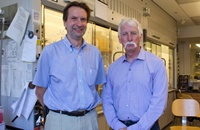 | |
| D. Richard Bucala and chemistry professor William Jorgensen are among the collaborators on research that may lead to drugs that limit damage to the heart from ischemia. |
If they work out in human trials, the drugs would limit the detrimental impact of ischemia - restriction of blood flow - thereby cutting the degree of damage to the heart. The research appeared in the June online issue of Circulation.
Dr. Richard Bucala, professor of medicine, pathology, and public health at Yale School of Medicine, led the study. ''Whenever there's an invasive procedure,'' said Bucala, ''you might be able to infuse this drug to limit damage.'' Chemistry professor William L. Jorgensen, and Dr. Lawrence H. Young, professor of cardiology and cellular and molecular physiology, collaborated on the research.
Heart disease is the leading cause of death among men and women. During a heart attack or invasive therapeutic procedures such as coronary artery stent placement and coronary bypass surgery, prolonged ischemia can permanently damage the heart muscle.
A protein called macrophage migration inhibitory factor (MIF) serves a protective role in the heart, a discovery that emerged five years ago from studies done by professors Young and Bucala that were reported in the journal Nature. During a heart attack, secreted MIF increases the activity of an important enzyme known as AMP-activated protein kinase (AMPK), which allows the heart to maintain metabolic function even when it is starved for oxygen.
Using software he developed called ''BOMB'' (biochemical and organic model builder), Jorgensen designed computer models of small molecules that should bind to and enhance the action of the protective MIF protein. His team then synthesised the actual molecules, and the results of this collaborative work were originally reported in the September 2010 issue of Bioorganic & Medicinal Chemistry Letters.
The most promising small molecule generated by Jorgensen's lab is called MIF20. In the recent Circulation study, mouse hearts were infused with MIF20 prior to cutting off blood flow and the subsequent recovery and amount of heart damage was greatly improved.
The researchers are currently talking with prospective industry partners and they anticipate that a larger mammal study will emerge from these talks.
Collaborations at Yale to develop small molecule MIF drugs are already moving forward in other therapeutic areas. Bucala says he is working on research with Yale's neurosurgery department to treat traumatic brain injury and other conditions where MIF's activity could be beneficial to patients.