Potent new compound virtually eliminates HIV in cell culture
20 Jul 2012
A new study by scientists on the Florida campus of The Scripps Research Institute shows, in cell culture, a natural compound can virtually eliminate human immunodeficiency virus (HIV) in infected cells.
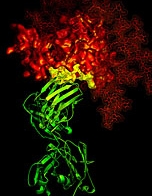 The compound defines a novel class of HIV anti-viral drugs endowed with the capacity to repress viral replication in acutely and chronically infected cells.
The HIV / AIDS pandemic continues to affect 34 million individuals worldwide, including more than 3 million children, according to the World Health Organisation. Current treatment involves the use of several antiretroviral drugs, termed 'highly active antiretroviral therapy' (HAART), which can extend the life expectancy of HIV-positive individuals and decrease viral load without, however, eradicating the virus.
''We know that there are reservoirs of HIV that aren't being eliminated by current treatment and that keep replenishing the infection,'' said Susana Valente, a Scripps Research biologist who led the study. ''Viral production from these cellular reservoirs that harbour an integrated viral genome is not affected by current antiretroviral drugs, which only stop novel rounds of infection. The compound in the current study virtually eliminates all viral replication from already-infected cells where HIV hides.''
The new study, published in the July 20, 2012 issue of the journal Cell Host and Microbe, focused on a medically promising compound known as Cortistatin A. This natural product was isolated in 2006 from a marine sponge, Corticium simplex, discovered more than 100 years ago. In 2008, Scripps Research chemist Phil Baran and his team won the global race to synthesise the compound, presenting an efficient and economical method.
In the new study, Valente and her colleagues collaborated with the Baran lab, using a synthetic version of the compound, didehydro-Cortistatin A, to study the compound's effect on two strains of HIV. The strains were HIV-1, the most common form of the virus, and HIV-2, which is concentrated in West Africa and some parts of Europe.